
Loading, please wait...
_900x900.jpg "Western Asiatic Stone Cylinder Seal Group")
_200x200.jpg "Western Asiatic Stone Cylinder Seal Group")
.jpg "Western Asiatic Stone Cylinder Seal Group")
LOT 1671
Western Asiatic Stone Cylinder Seal Group
2ND-1ST MILLENNIUM B.C.
5/8 - 1 in. (22.7 grams total, 15.7-26 mm).
Comprising: profile gryphons flanking a scorpion; stylised linear design; combat scene with two figures tackling a rearing lion; ibexes running amid hatched foliage; supplied with a museum-quality impression. [4, No Reserve]
ProvenanceFrom the private collection of a European gentleman (1942-2024), formed since the 1970s.
CONDITIONTimeLine Auctions follows a vetting process to ensure the authenticity and legality of all items, reinforcing our commitment to integrity and responsible trading. Each antiquity, antique, and coin lot undergoes thorough examination by a vetting committee of at least ten external specialists, professional trade association members, scientists, and archaeologists: Our Vetting Process
AUCTIONS:
TimeLine is a leading auction house specialising in antiquities, ancient art, collectables, natural history, coins, medals, and books. Our auctions offer museums, collectors, historians, and enthusiasts the opportunity to acquire unique and historically significant pieces.
-
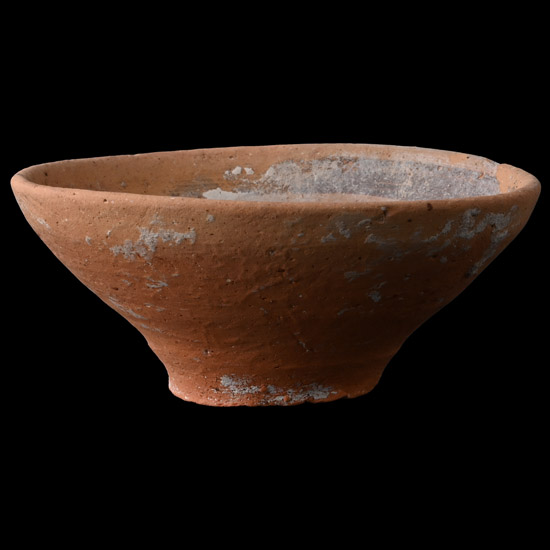
Nabataean Red Terracotta 'Eggshell' Bowl
Circa 1st century B.C.-1st century A.D.Sold for (Inc. bp): £59
Conical bowl with low foot, painted band below the rim. 53.5 grams, 89.6 mm
From the collection of a Yorkshire, UK gentleman, items collected in the Holy Land in the 1960s. -
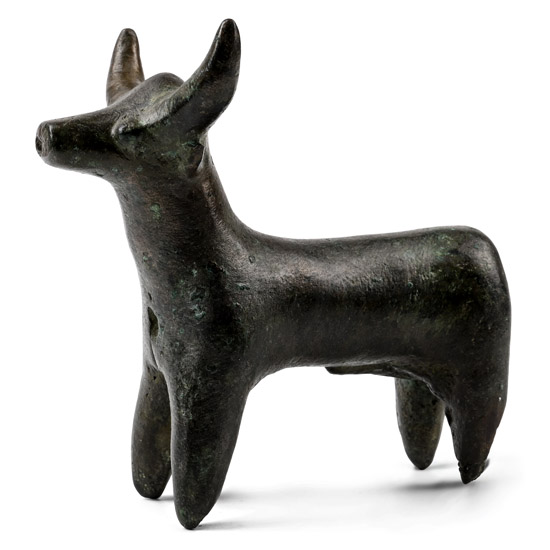
Urartu Bronze Standing Bull
8th-7th century B.C.Sold for (Inc. bp): £1,040
Modelled standing with an erect head, large curving horns and bulbous eyes, male genitals underneath. 732 grams, 10.5 cm wide
Acquired before 1983. Ex London gallery, 1990s. Private collection, London, UK. -
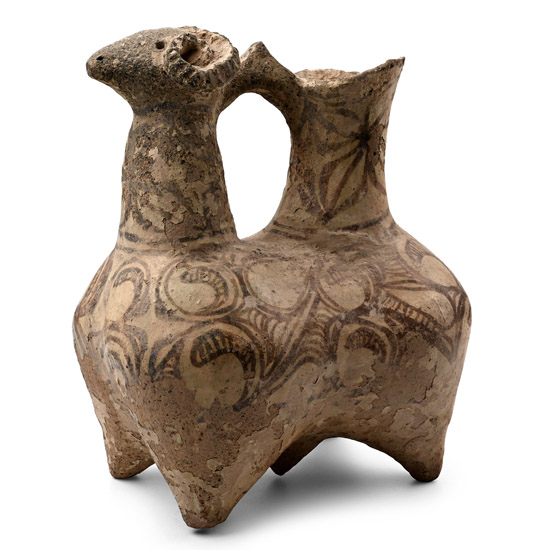
Western Asiatic Ceramic Zoomorphic Vessel
8th-9th century A.D.Sold for (Inc. bp): £468
Comprising four conical legs supporting a double globular body with conical neck and ram's head, spout to the rear with strainer connected by a bridging loop; applied painted hatched spiral detailing; old label to the underside: 'YAZDANI 211C LONDON'. 1.06 kg, 19.5 cm
UK collection, 1990s. Acquired on the UK art market, before 2000. Private collection, Mr M.V., a London-based businessman.
