
Loading, please wait...
LOT 0980
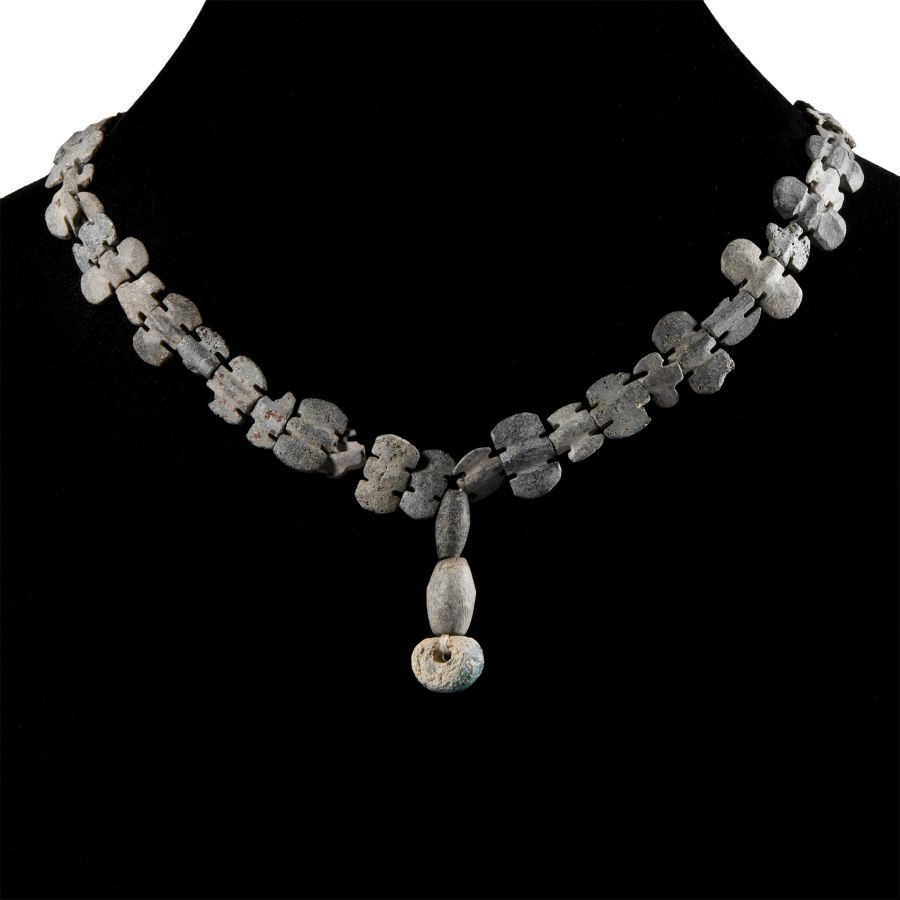
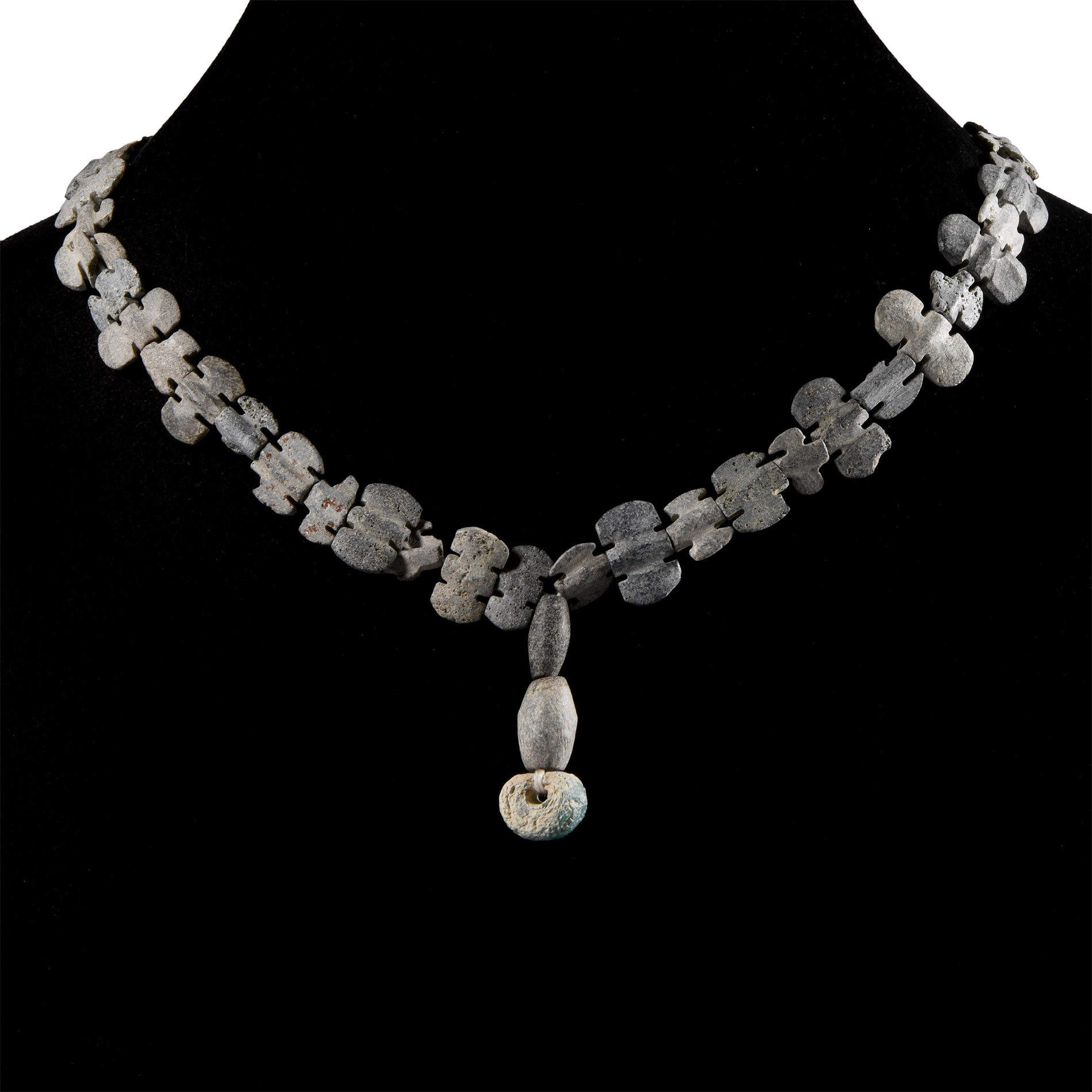
Western Asiatic Stone Butterfly Bead Necklace String
4TH MILLENNIUM B.C.
22 1/2 in. (25.6 grams, 54 cm long).
Restrung designer group of butterfly-shaped steatite beads with a feature pendant with two oval and one oblate bead.
ProvenanceAcquired 1980-2015.
Ex Abelita family collection.
TimeLine Auctions follows a vetting process to ensure the authenticity and legality of all items, reinforcing our commitment to integrity and responsible trading. Each antiquity, antique, and coin lot undergoes thorough examination by a vetting committee of at least ten external specialists, professional trade association members, scientists, and archaeologists: Our Vetting Process
AUCTIONS:
TimeLine is a leading auction house specialising in antiquities, ancient art, collectables, natural history, coins, medals, and books. Our auctions offer museums, collectors, historians, and enthusiasts the opportunity to acquire unique and historically significant pieces.
-
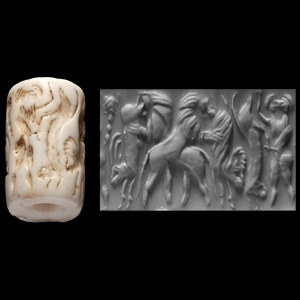
Western Asiatic Stone Cylinder Seal with Combat Scene
Circa 3rd millennium B.C.Sold for (Inc. bp): £546
With carved frieze showing fighting scenes with a hero and animals; shell or polished stone. 13.9 grams, 27 mm
Acquired 1970s-1996. Property of a North American collector, collection no.06. London collection, 2016. -
.jpg)
Jemdet Nasr Amulet of Recumbent Animal
Circa 3rd millennium B.C.Estimate: £400 - 600 (+bp*)
Opening Bid: £200
Carved shell figure of a recumbent beast with row of drilled sockets above the lower edge. 46.6 grams, 67 mm
The Erlenmeyer Collection of Western Asiatic Seals and Antiquities, formed between 1943 and the early 1960s. with Bonhams, London, 22 April 1999, lot 486. Accompanied by a copy of an IADAA Interpol search certificate. Accompanied by a copy of the relevant Bonham's catalogue pages. -
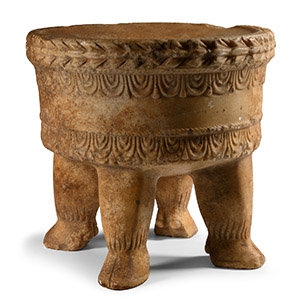
Marble Libation Table
2nd century B.C.-2nd century A.D.Estimate: £3,500 - 4,500 (+bp*)
Opening Bid: £1,750
A Nabataean or Hellenistic libation table with drum-shaped body and four stub legs ending in bovine hooves; circumferential bands of egg-and-dart ornament, ropework ornament to the rim, dished upper face to accept votive offerings. 19.2 kg, 25 cm
Ex Paris collection. French gallery, Paris, 1990-2000s. This lot has been checked against the Interpol Database of stolen works of art and is accompanied by search certificate number no.11927-209636.
Rooms in Greek and Roman houses were largely devoid of furniture, and instead more emphasis was given to the display of works of art: mosaic floors, wall paintings, and freestanding bronze and marble sculpture. However, domestic altars have been found in various Greek and Roman houses (especially in Pompeii). This unusual small table with its elaborate support was likely to have been used to deposit fruit, sweets and other types of small gifts as offerings. Such tables were used in all the Greek and provincial Roman world, even by the Nabataean Arabs during the Roman period.
