
Loading, please wait...
LOT 1374
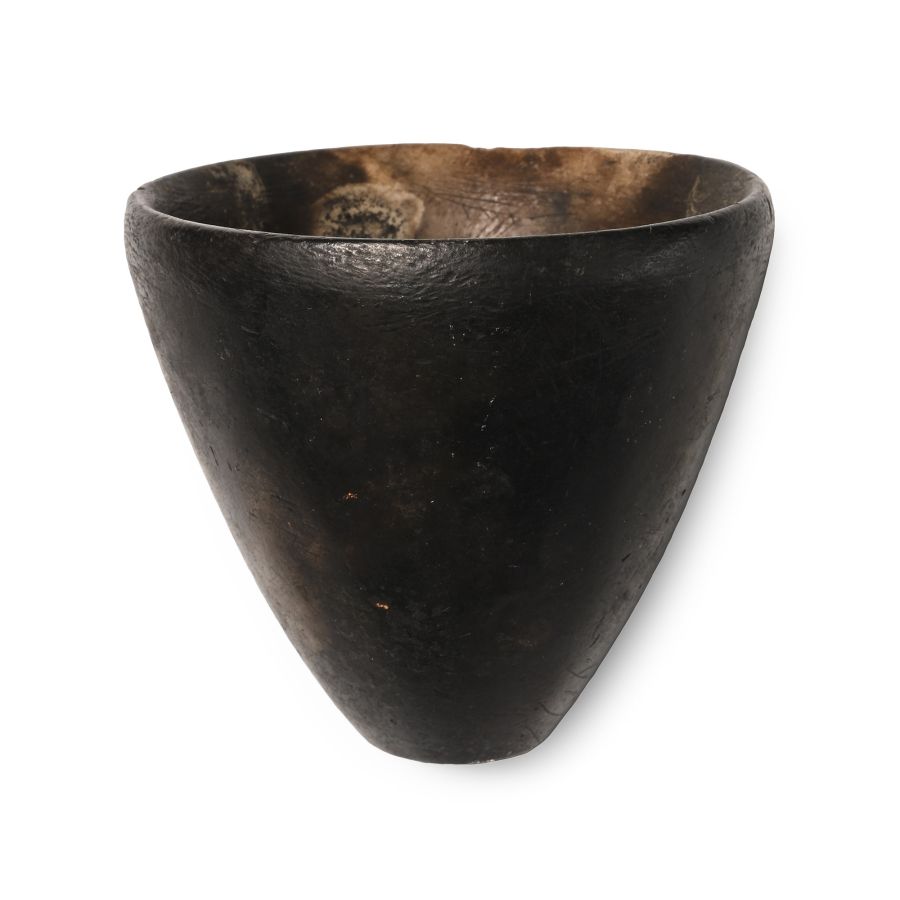
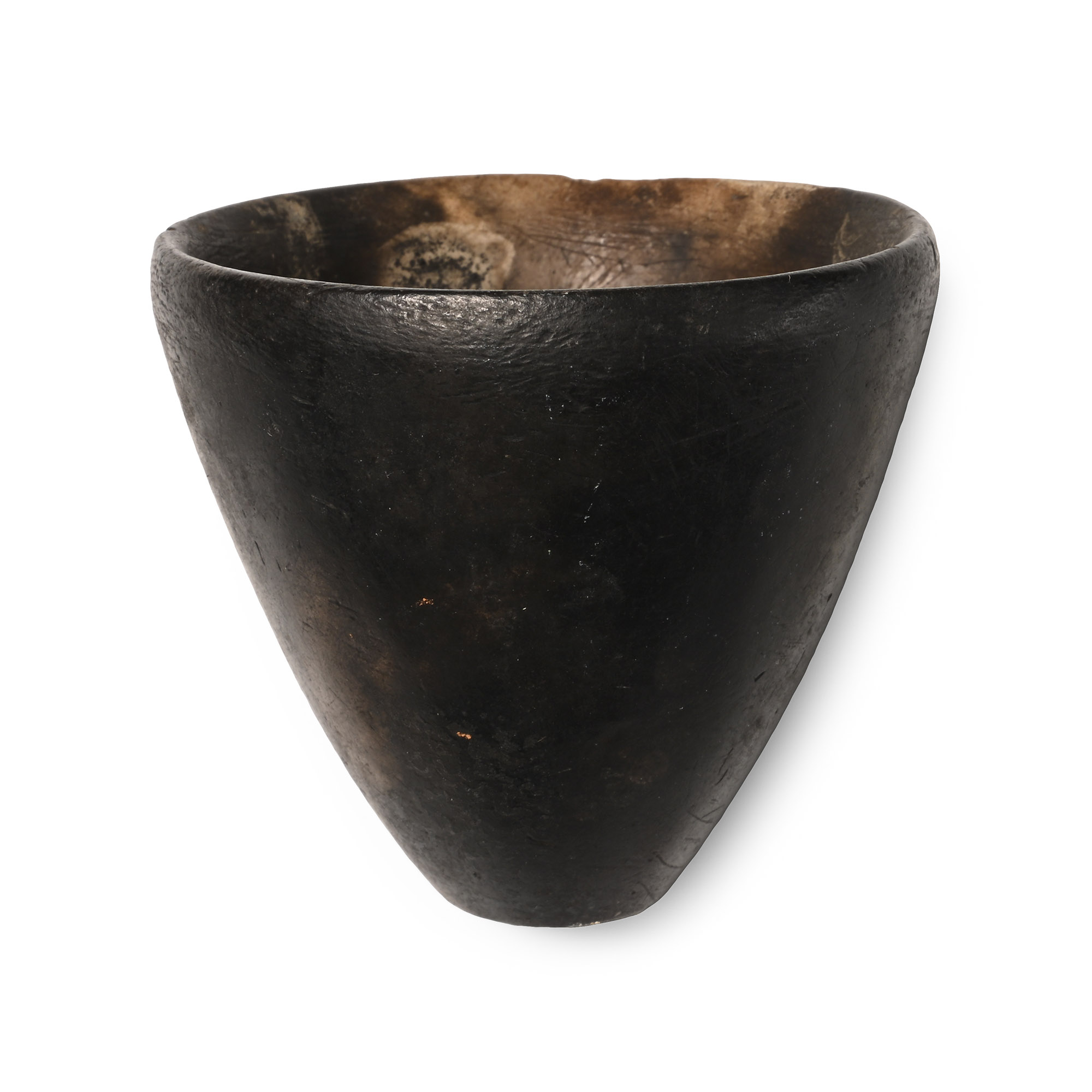
Western Asiatic Stone Beaker
WARKA CULTURE, 4000-3100 B.C.
2 1/2 in. (132 grams, 66 mm wide).
With narrow base, conical body and rounded rim.
ProvenancePrivate collection, assembled in the 1950s-1970s, thence by descent.
LiteratureCf. Perkins, A.L., The Comparative Archaeology of Early Mesopotamia, Chicago, 1957 (1964), fig.18, no.1, for a similar beaker in stone.
CONDITIONTimeLine Auctions follows a vetting process to ensure the authenticity and legality of all items, reinforcing our commitment to integrity and responsible trading. Each antiquity, antique, and coin lot undergoes thorough examination by a vetting committee of at least ten external specialists, professional trade association members, scientists, and archaeologists: Our Vetting Process
AUCTIONS:
TimeLine is a leading auction house specialising in antiquities, ancient art, collectables, natural history, coins, medals, and books. Our auctions offer museums, collectors, historians, and enthusiasts the opportunity to acquire unique and historically significant pieces.
-
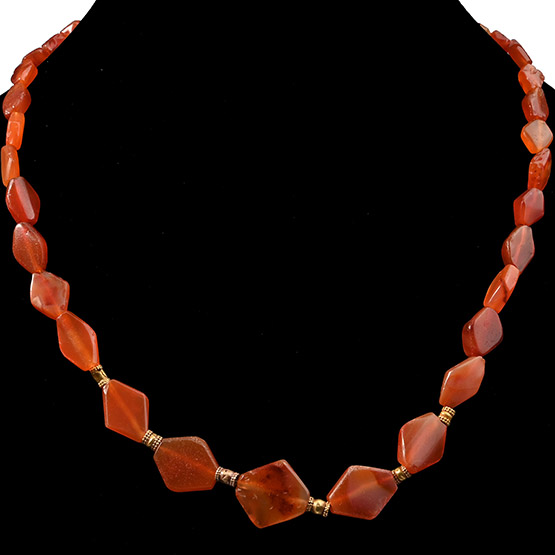
Western Asiatic Carnelian and Gold Bead Necklace
Late 1st millennium B.C. and laterEstimate: £500 - 700 (+bp*)
Current Winning Bid: £355
Restrung group of tabular, fusiform and other carnelian beads, including some glass beads, with granulated tubular gold collar spacers between. 45.5 grams, 55 cm
From the collection of a late Japanese gentleman, 1970s onwards. -
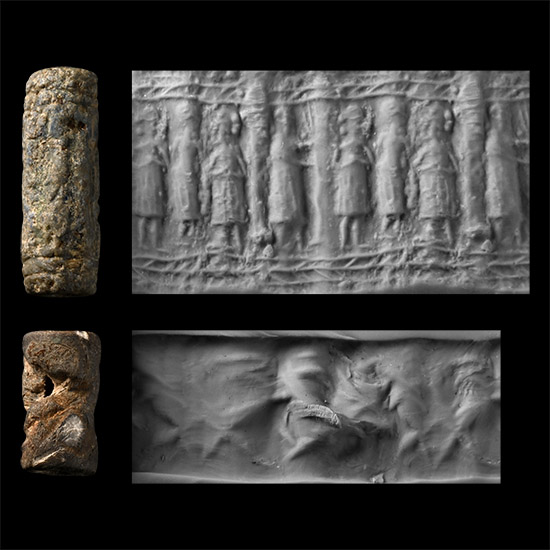
Western Asiatic Cylinder Seal Group
2nd-1st millennium B.C.Sold for (Inc. bp): £111
Comprising: one slender with frieze of incuse facing and profile figures; one squat with winged figure. 6.38 grams total, 16-27 mm
From the collection of David Donlan (1947-2025), a dedicated and lifelong collector with a passion for the ancient world and the natural sciences, forming his collection from 1960s onwards, using many reputable dealers across the United Kingdom, including the well-regarded Coincraft and The Parthenon Gallery. -
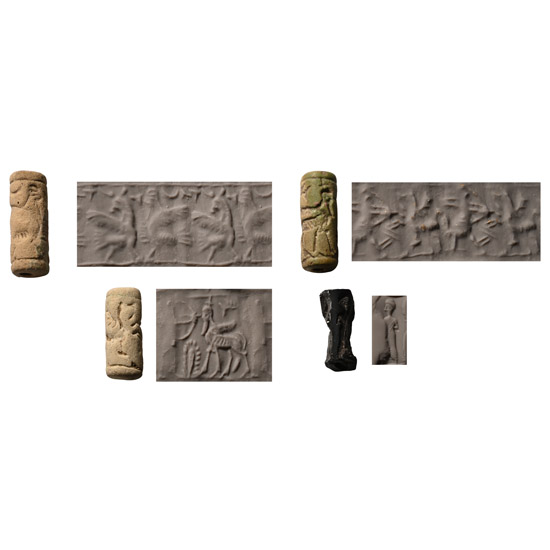
Western Asiatic Faience and Stone Cylinder Seal Group
2nd-1st millennium B.C.Sold for (Inc. bp): £195
Comprising: a cylinder seal showing an advancing Lamassu facing a robed figure with a drawn bow; a cylinder seal with winged beasts; a cylinder seal showing a winged beast facing back and Lamassu; a fragment of a stone cylinder seal showing a standing figure; supplied with museum-quality impressions. 11.94 grams total, 20-27 mm
From the private collection of a European gentleman (1942-2024), formed since the 1970s.
