
Loading, please wait...
_900x900.jpg "Western Asiatic Stone Bead Necklace")
_200x200.jpg "Western Asiatic Stone Bead Necklace")
.jpg "Western Asiatic Stone Bead Necklace")
LOT 0264
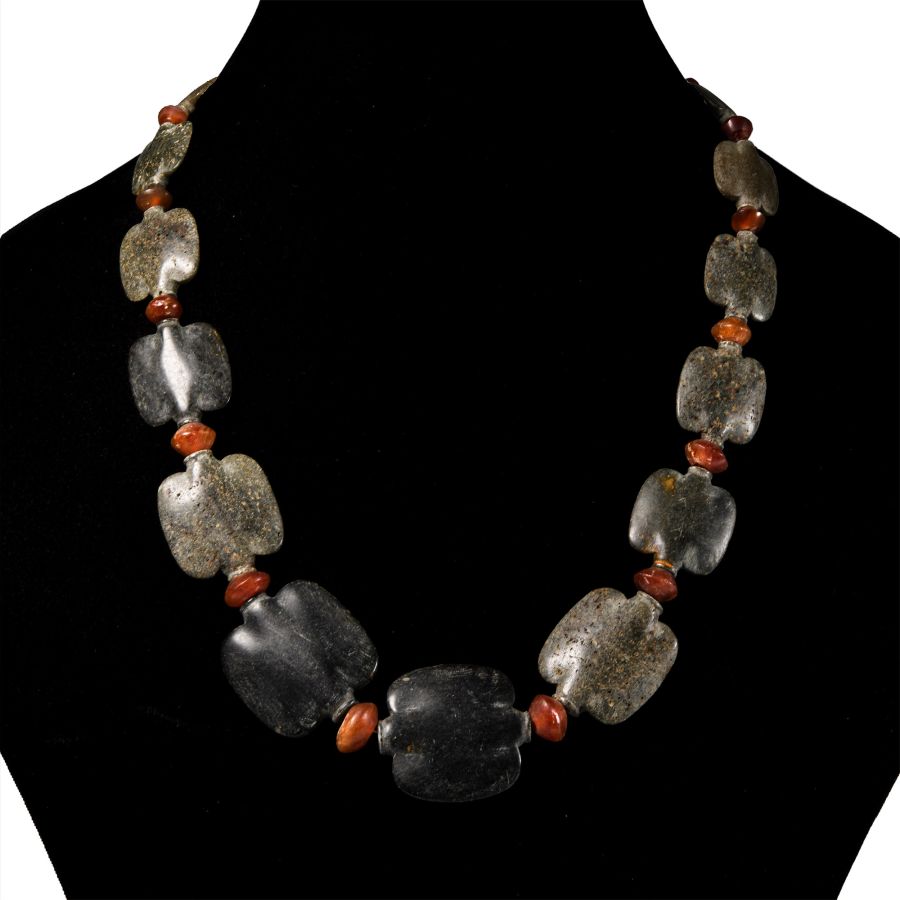
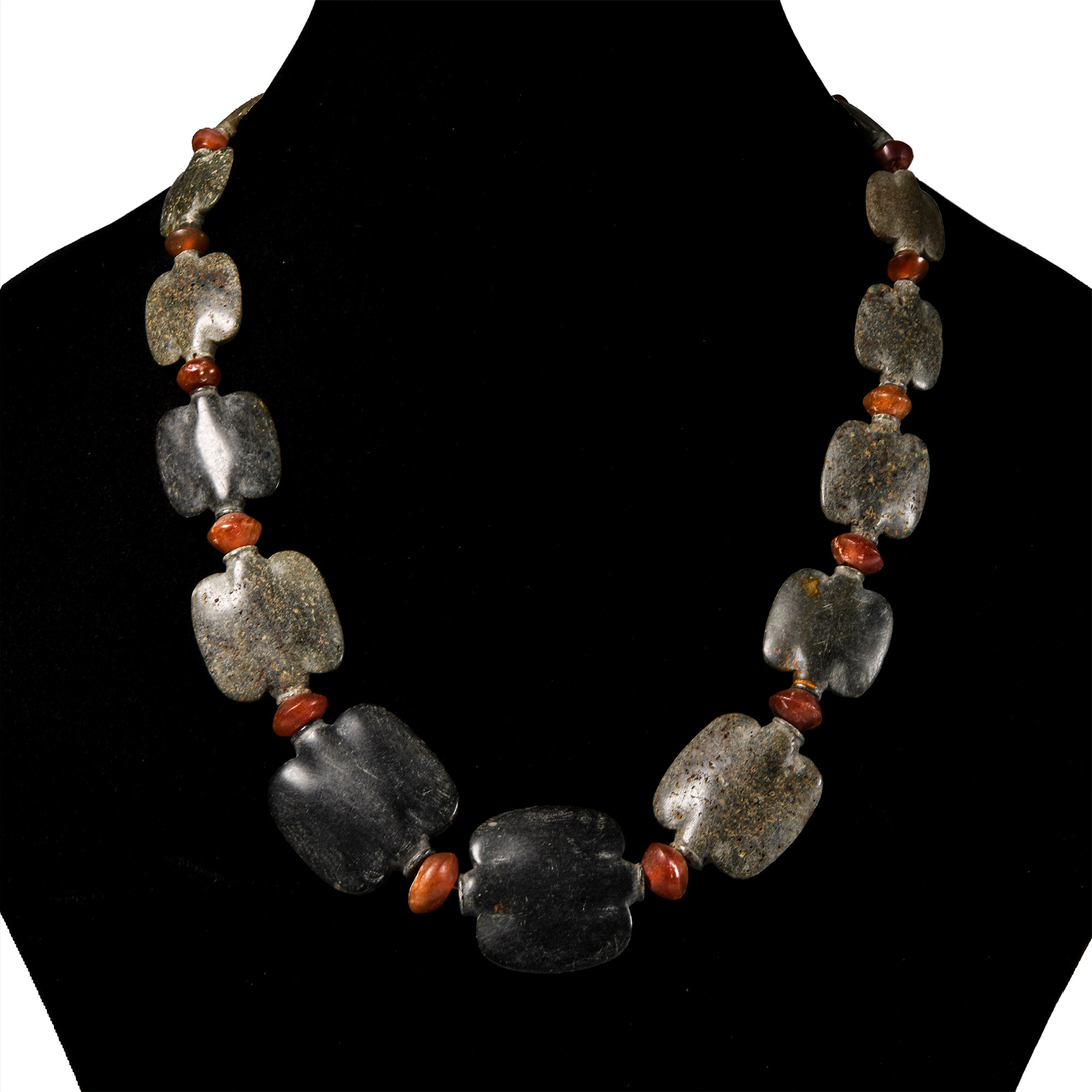
Western Asiatic Stone Bead Necklace
CIRCA 3RD MILLENNIUM B.C.
20 1/2 in. (107 grams, 52 cm long).
Restrung group of graduated size square cushion-shaped beads with small squat carnelian biconical bead spacers.
ProvenanceAnonymous sale; Francois de Ricqles, Hotel Drouot, Paris, 25-26 September 1998, lot 74.
with Christie's London, 2 May 2013, lot 129.
Important North West London collection.
This lot has been checked against the Interpol Database of stolen works of art and is accompanied by search certificate no.11967-210481.
TimeLine Auctions follows a vetting process to ensure the authenticity and legality of all items, reinforcing our commitment to integrity and responsible trading. Each antiquity, antique, and coin lot undergoes thorough examination by a vetting committee of at least ten external specialists, professional trade association members, scientists, and archaeologists: Our Vetting Process
AUCTIONS:
TimeLine is a leading auction house specialising in antiquities, ancient art, collectables, natural history, coins, medals, and books. Our auctions offer museums, collectors, historians, and enthusiasts the opportunity to acquire unique and historically significant pieces.
LOT 0264
Western Asiatic Stone Bead Necklace
Estimate £5,000 - 7,000€5,800 - 8,120 (for guidance only)$6,750 - 9,450 (for guidance only)
-
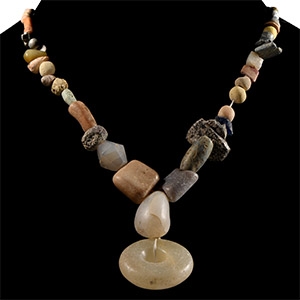
Western Asiatic Stone Bead Necklace String
2nd-1st millennium B.C.Sold for (Inc. bp): £20
Graduated designer group of agate, crystal, glass and other beads, biconvex, tubular, drop-shaped and other types, the centrepiece a large annular bead. 95 grams, 56 cm long
Acquired 1980-2015. Ex Abelita family collection. -
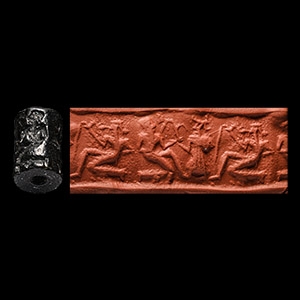
Western Asiatic Black Stone Cylinder Seal with Presentation Scene
2nd-1st millennium B.C.Estimate: £200 - 300 (+bp*)
Opening Bid: £100
Small cylinder with carved frieze of two kneeling warriors flanking a standing robed figure with headdress; supplied with a museum-quality impression. 2.69 grams, 15 mm
From a Cotswold, UK, collection, item no.121; as seen and catalogued by the late Professor Wilfrid George Lambert pre 1990.
The late W.G. Lambert was Professor of Assyriology at the University of Birmingham in the period 1970-1993. -
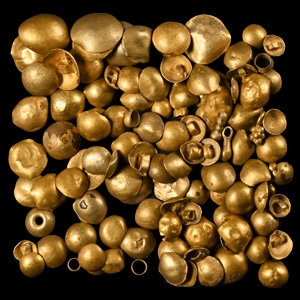
Western Asiatic Gold Boss Group
1st millennium B.C.Sold for (Inc. bp): £624
Mixed group of domed sheet gold appliqués, each with a flat attachment loop to verso. 6.97 grams total, 1-6 mm
From a late Japanese specialist collector, 1970-2000s.
