
Loading, please wait...
LOT 0238
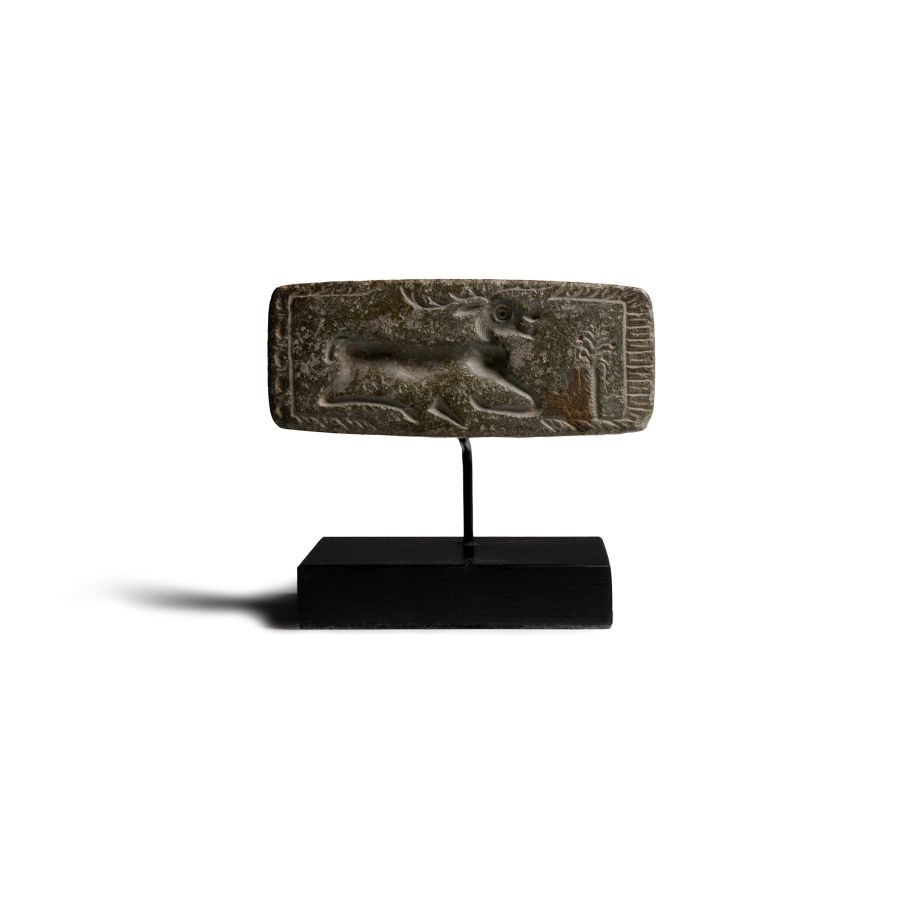
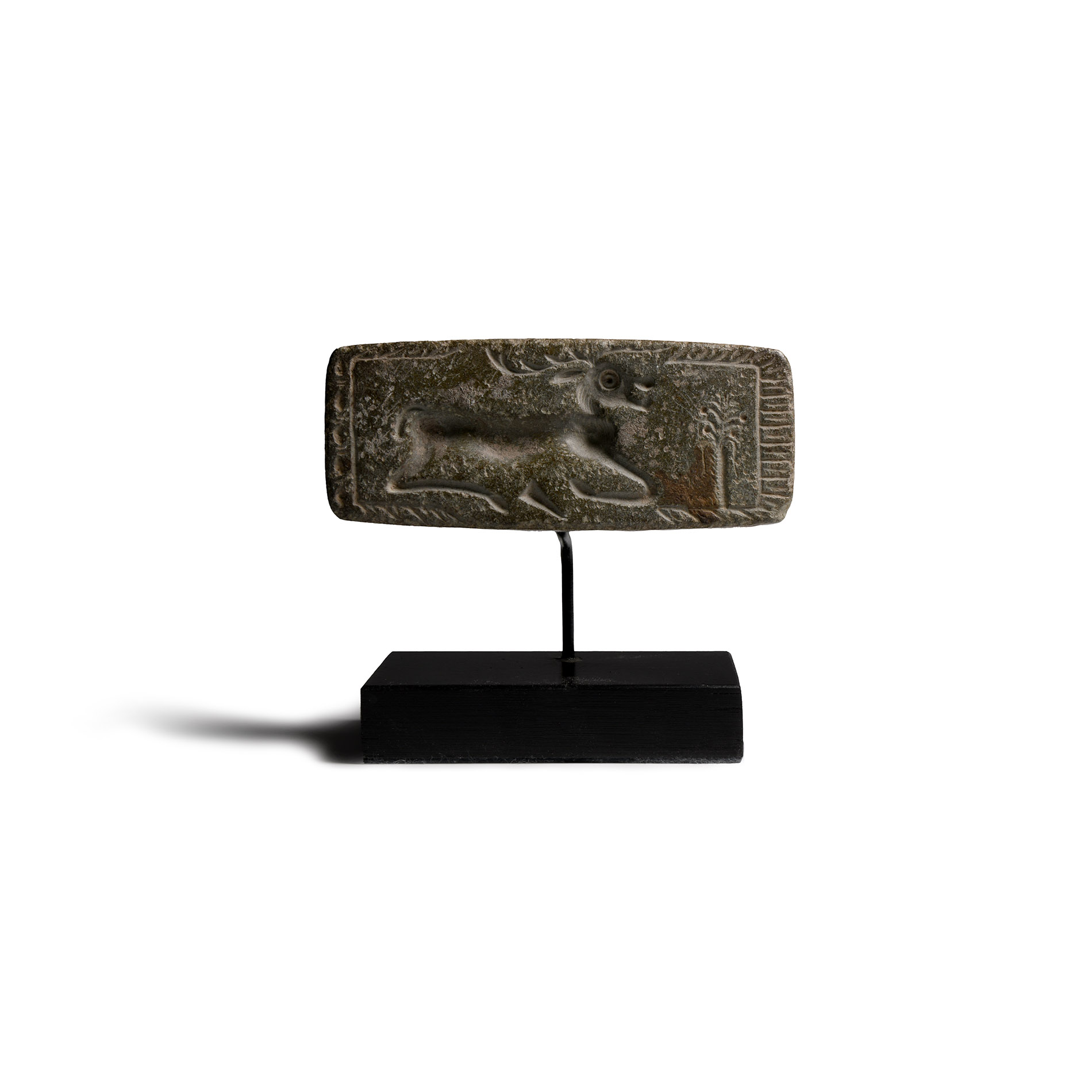
Western Asiatic Stone Animal Seal
CIRCA 2ND MILLENNIUM B.C.
4 in. (308 grams total, 10.2 cm wide including stand).
Triangular in profile with suspension hole at the apex, underside with ropework border interrupted by a recumbent stag with large antlers facing a palm tree.
ProvenanceFrom the private collection of the late Mr S.M., London, UK, 1969-1999; thence by descent.
LiteratureCf. similar in the collection of the Brooklyn Museum under accession no.75.55.11.
CONDITIONTimeLine Auctions follows a vetting process to ensure the authenticity and legality of all items, reinforcing our commitment to integrity and responsible trading. Each antiquity, antique, and coin lot undergoes thorough examination by a vetting committee of at least ten external specialists, professional trade association members, scientists, and archaeologists: Our Vetting Process
AUCTIONS:
TimeLine is a leading auction house specialising in antiquities, ancient art, collectables, natural history, coins, medals, and books. Our auctions offer museums, collectors, historians, and enthusiasts the opportunity to acquire unique and historically significant pieces.
-
.jpg)
Bactrian Manuscript Fragment of a Letter Written to Bunakan
5th-8th century A.D.Estimate: £500 - 700 (+bp*)
Opening Bid: £250
Recto bearing ten incomplete lines of cursive script on leather; verso blank; accompanied by notes detailing the history and significance of such texts. 1.56 grams, 11.2 cm
Fair condition.
David Lindahl, Sweden, 2001. Collection of Bruce Ferrini, USA. Central London gallery. Property of a UK collector. For UK buyers only, this item is not exportable from the UK.
The Bactrian kingdom of southern Transoxiana was only known from a handful of inscriptions, seals and coins until circa 1991, when a cache of around 150 documents was discovered in an archive belonging to the ruler of the city of Rob, dating between the 4th-8th century AD, leading to major developments in the understanding of the Bactrian language. Many of these documents were sold on the art market and collected by Dr. David Naser Khalili for his Nour Foundation. -
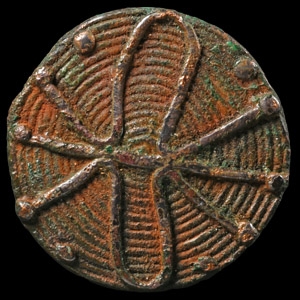
Amlash Bronze Ring
1st millennium B.C.Sold for (Inc. bp): £72
With four-banded hoop and large circular bezel also made from coiled wire, insect(?) motif applied to the surface. 17.62 grams, 32.83 mm overall, 17.95 mm internal diameter (approximate size British P 1/2, USA 7 3/4, Europe 16.86, Japan 16)
Ex old English collection. London art market, 1980s. -
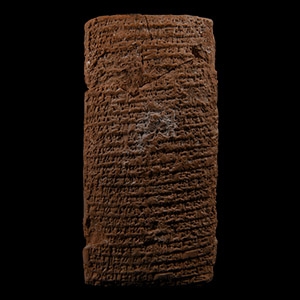
Old Babylonian Clay Cuneiform Tablet Bearing a Royal Letter From Iluni King of Esnunna to Warassa King of Der
Circa late 18th century B.C.Sold for (Inc. bp): £3,640
Written in dense cuneiform over two principal faces and two side edges of the pillow-shaped tablet. 219 grams, 11.3 cm
Specialised collection of cuneiform texts, the property of a London gentleman and housed in London before 1992. Thence by descent to family members. Examined by Professor Wilfrid George Lambert FBA (1926-2011), historian, archaeologist, and specialist in Assyriology and Near Eastern archaeology, in the late 1980s and early 1990s. The collection is exceptional for the variety of types, including some very rare and well preserved examples.
