
Loading, please wait...
LOT 1235
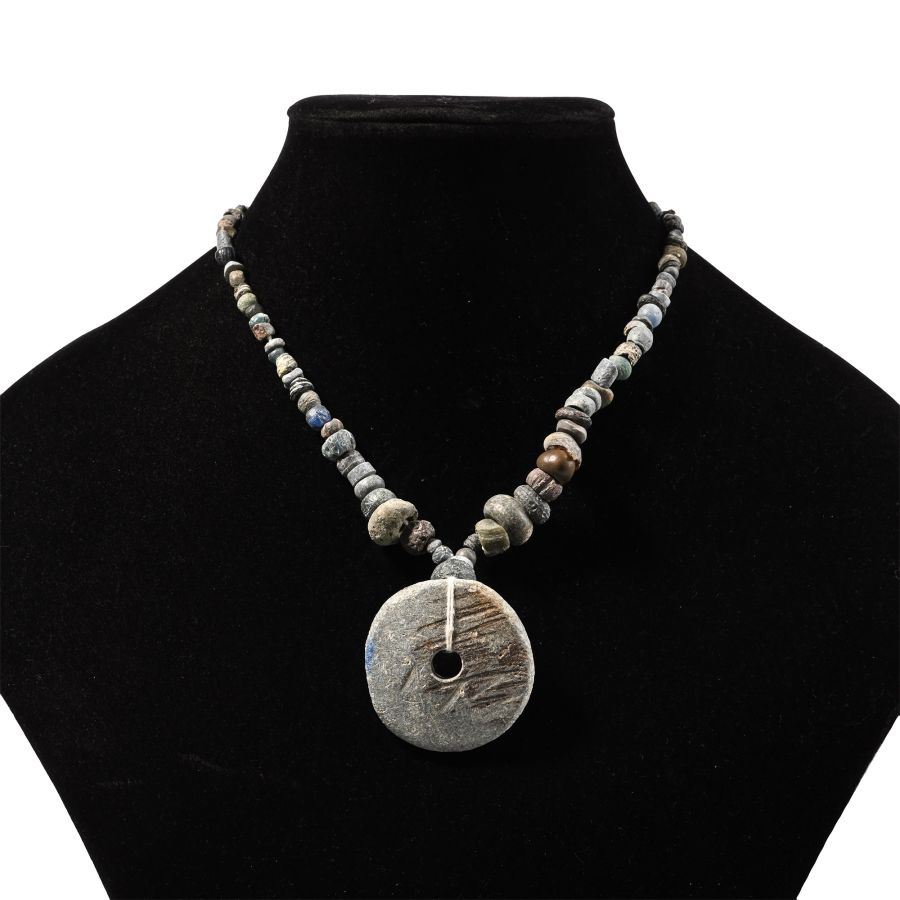
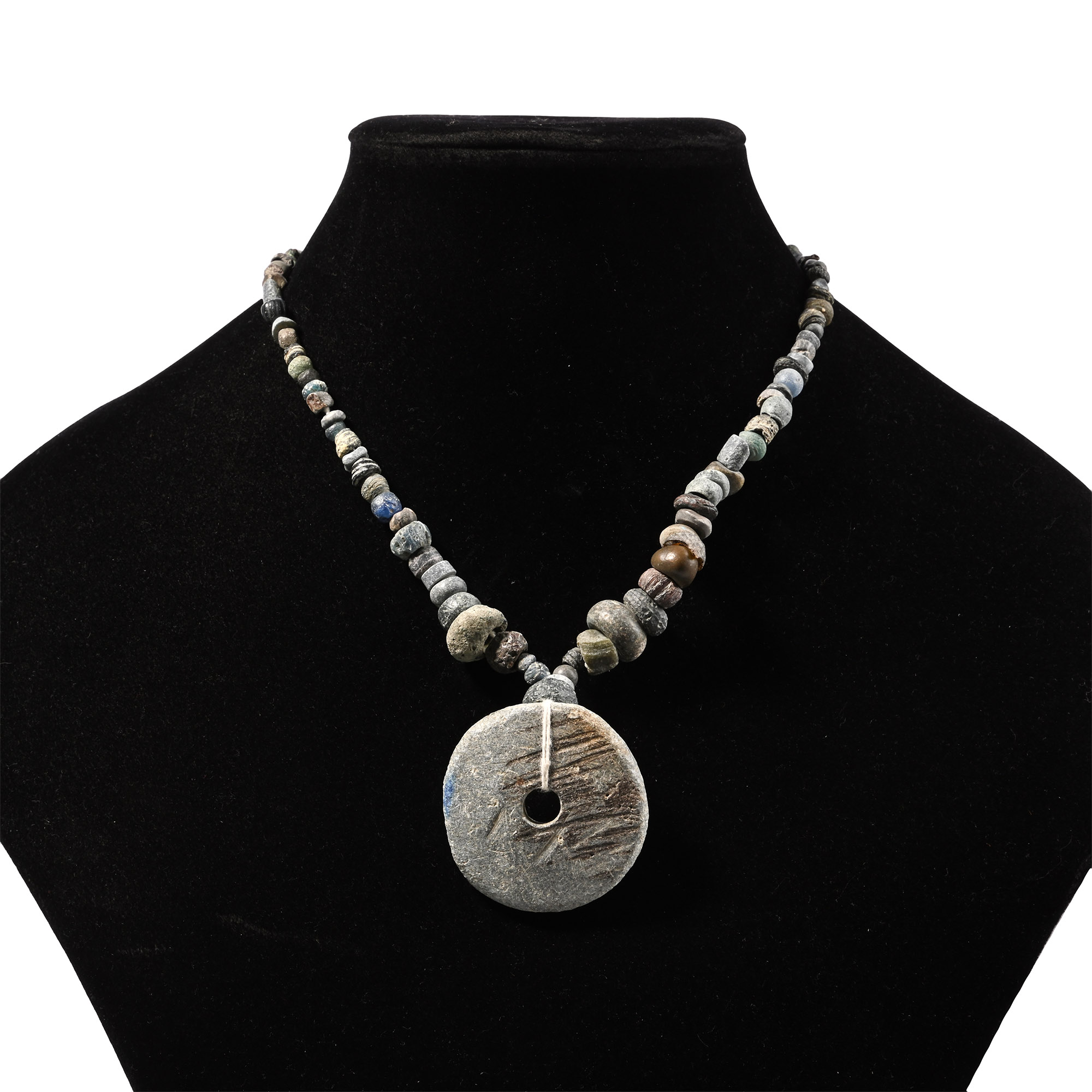
Western Asiatic Stone and Other Bead and Pendant Necklace String
1ST MILLENNIUM B.C. AND LATER
13 5/8 in. (57 grams, 34.5 cm).
Composed of graduated mixed beads with a large discoid pendant, restrung. [No Reserve]
ProvenanceEx Ancient Art Shop, Windsor, UK, 1990s.
Ex private West County, UK, collection.
TimeLine Auctions follows a vetting process to ensure the authenticity and legality of all items, reinforcing our commitment to integrity and responsible trading. Each antiquity, antique, and coin lot undergoes thorough examination by a vetting committee of at least ten external specialists, professional trade association members, scientists, and archaeologists: Our Vetting Process
AUCTIONS:
TimeLine is a leading auction house specialising in antiquities, ancient art, collectables, natural history, coins, medals, and books. Our auctions offer museums, collectors, historians, and enthusiasts the opportunity to acquire unique and historically significant pieces.
LOT 1235
Western Asiatic Stone and Other Bead and Pendant Necklace String
Sold for (Inc. bp): £39
-
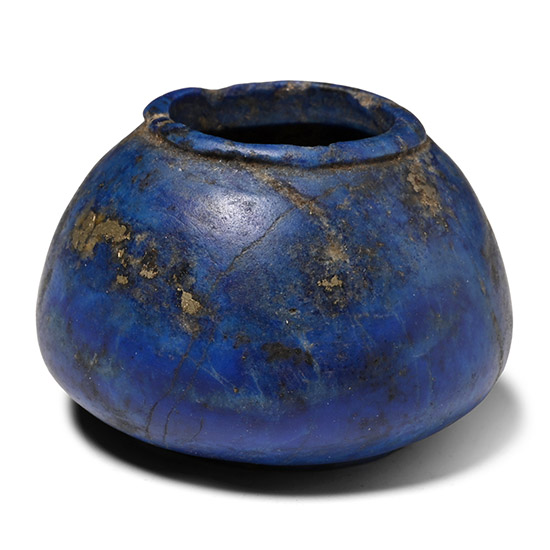
Western Asiatic Lapis Lazuli Cosmetic Vessel
2nd millennium B.C.Sold for (Inc. bp): £1,430
Conical body tapering towards a narrow mouth with a raised rim, low foot. 37.1 grams, 37 mm
UK private collection, acquired on the UK art market. -
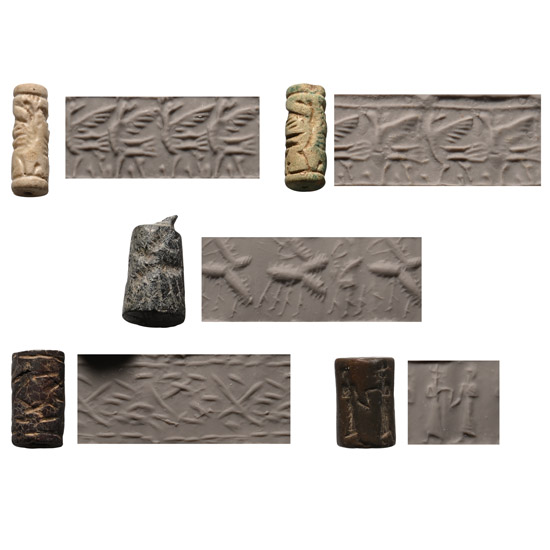
Western Asiatic Stone Cylinder Seal Group
3rd-1st millennium B.C.Sold for (Inc. bp): £208
Comprising: band of geometric figures (birds?) within borders of broken lines; frieze of standing birds each with head turned on a long neck and one wing extended; frieze of zoomorphs one with four thin legs and Y-shaped body, the other smaller with horns; frieze of perching birds each with one wing extended, the first with head turned towards the second, within ruled borders; fragment with robed figure extending one arm towards a second figure in mantle and ankle-length robe; each supplied with a museum-quality impression. 26.3 grams total, 20-26 mm
From the private collection of a European gentleman (1942-2024), formed since the 1970s. -
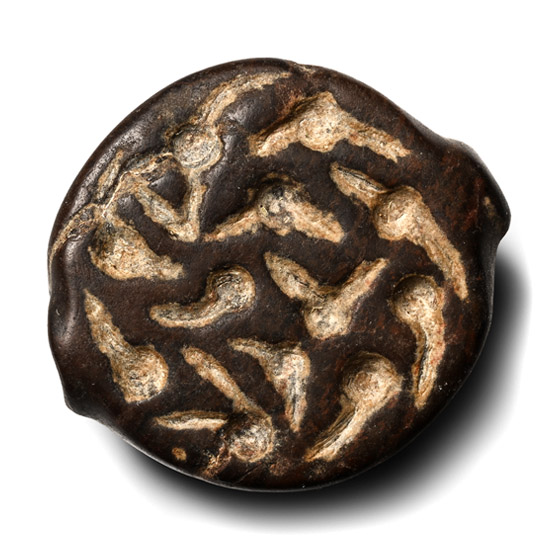
Large Bactrian Pierced Stone Seal
2700-1400 B.C.Sold for (Inc. bp): £39
Domed body with deeply engraved underside with abstract motifs, drilled for suspension. 22.1 grams, 37 mm
From the private collection of a European gentleman (1942-2024), formed since the 1970s.
