
Loading, please wait...
LOT 1420
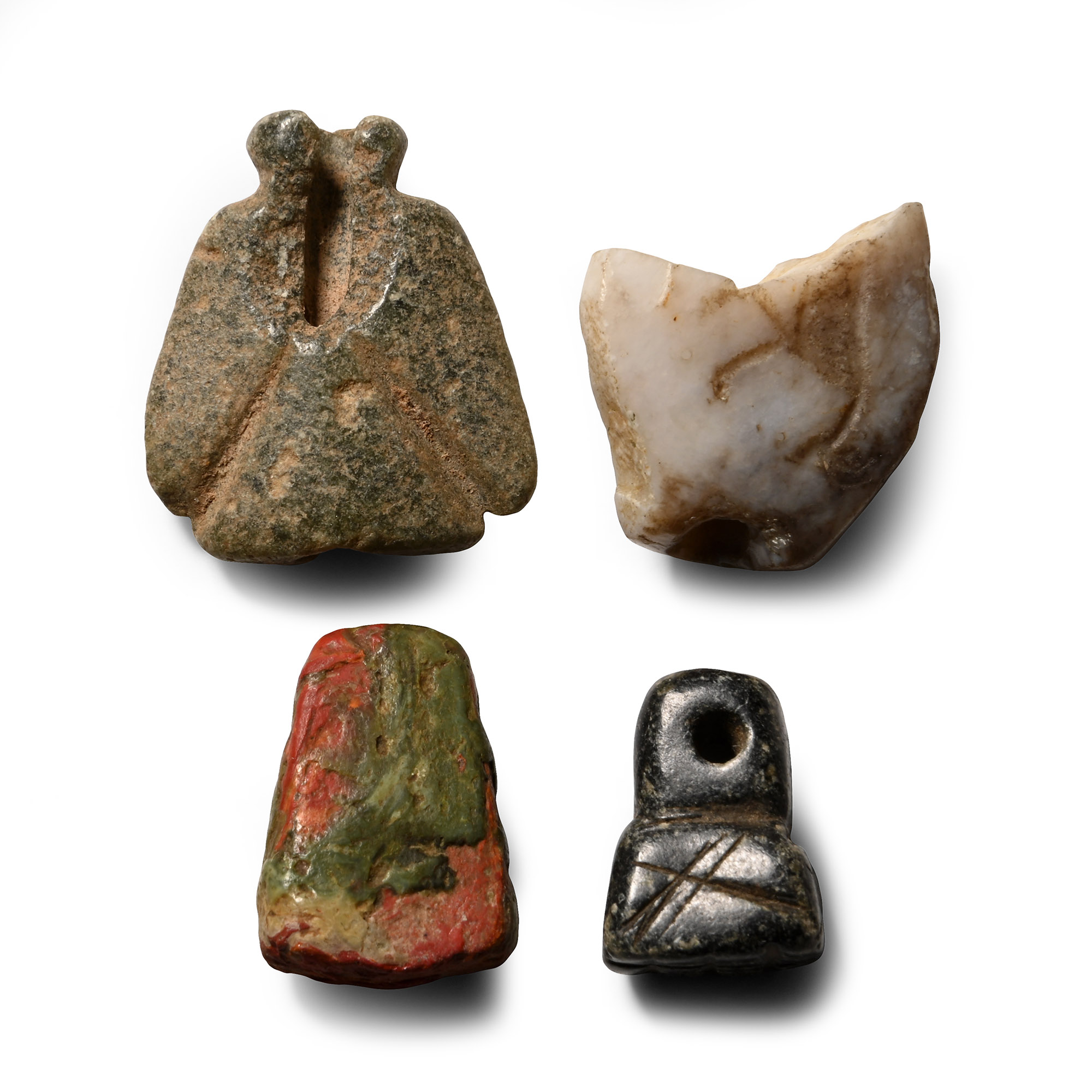
Western Asiatic Stone Amulet Group
1ST MILLENNIUM B.C.-1ST MILLENNIUM A.D.
5/8 - 7/8 in. (11.98 grams total, 15-23 mm).
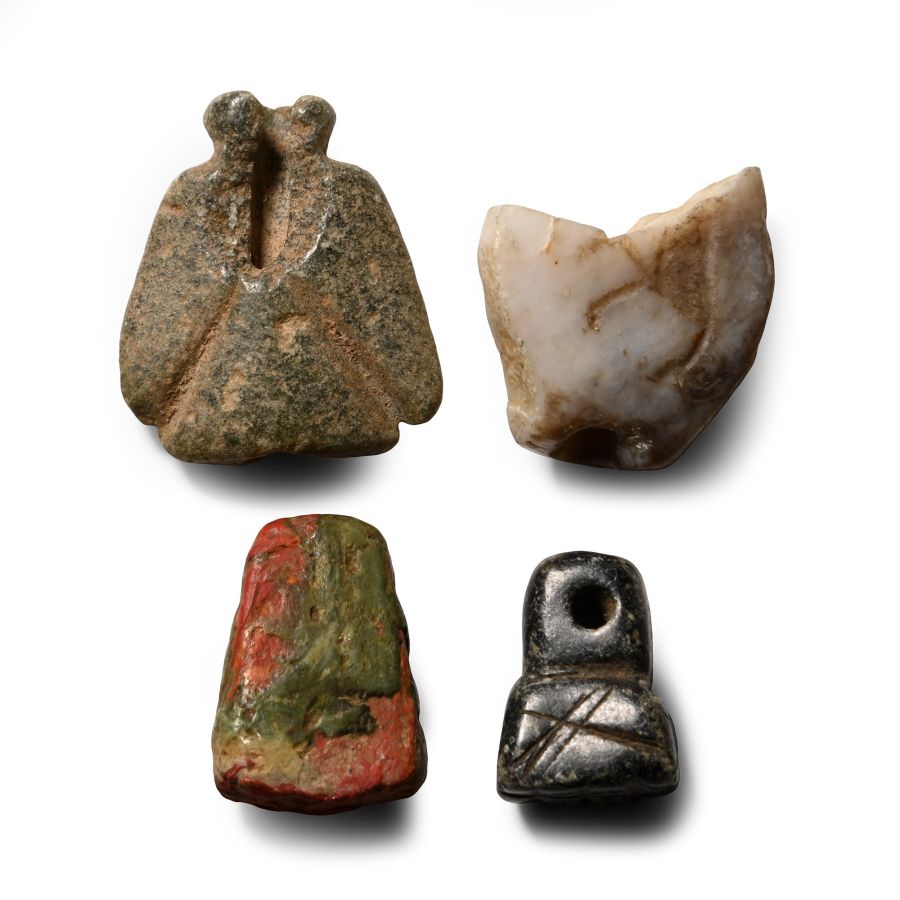
Comprising: a black stone stamp seal with integral loop and hatched decoration on the underside; a fragment of a white stone seal showing the frontal part of an advancing ibex; a grey stone bead formed as a stylised bird; a red and light-green rectangular amulet pierced through the upper edge. [4, No Reserve]
ProvenanceFrom the private collection of a European gentleman (1942-2024), formed since the 1970s.
LiteratureCf. for Assyrian, Neo-Babylonian and Sassanian amulets in similar style Wallis Budge, A., Amulets and Talismans, Chicago, New York, 1961, pl. X, and p.126, no.119983.
CONDITIONTimeLine Auctions follows a vetting process to ensure the authenticity and legality of all items, reinforcing our commitment to integrity and responsible trading. Each antiquity, antique, and coin lot undergoes thorough examination by a vetting committee of at least ten external specialists, professional trade association members, scientists, and archaeologists: Our Vetting Process
AUCTIONS:
TimeLine is a leading auction house specialising in antiquities, ancient art, collectables, natural history, coins, medals, and books. Our auctions offer museums, collectors, historians, and enthusiasts the opportunity to acquire unique and historically significant pieces.
-
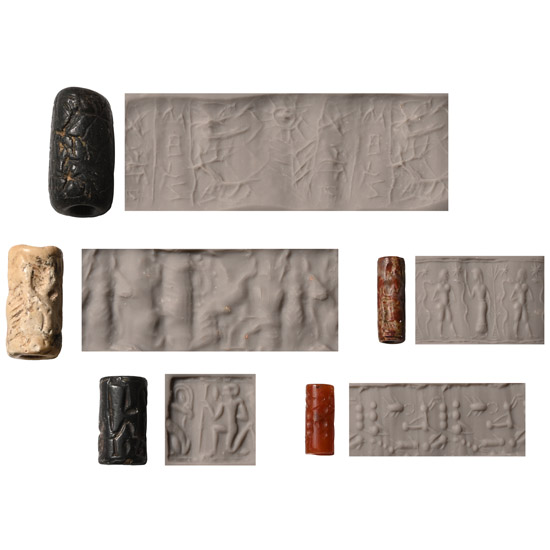
Western Asiatic Stone Cylinder Seal Group
2nd-1st millennium B.C.Sold for (Inc. bp): £221
Comprising: frieze with linear geometric figures, two columns of cuneiform text; drilled images of scorpions and other zoomorphs; leaping ibexes in profile and vertical fish; nude figure with arms behind his back standing between serpents, confronting a robed figure with knife beneath a star; fragment with kneeling figure in profile holding a spear; each supplied with a museum-quality impression. 8.13 grams total, 11-20 mm
From the private collection of a European gentleman (1942-2024), formed since the 1970s. -
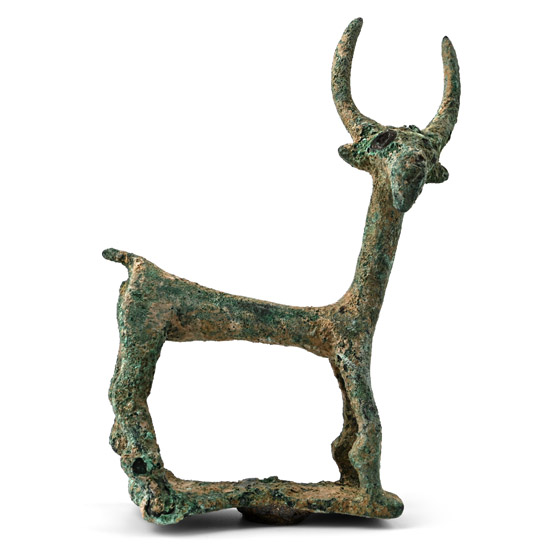
Luristan Stag Statuette
2nd-1st millennium B.C.Sold for (Inc. bp): £364
Modelled in the round on a waisted rectangular base, head turned. 91.31 grams, 10.56 mm
Ex Abelita family collection, 1980s-2000s. -
.jpg)
Large Amlash Bronze Spouted Libation Vessel
Circa 1200-1000 B.C.Estimate: £3,000 - 4,000 (+bp*)
Current Winning Bid: £2,200
One of the largest known examples, comprising a thin-walled body and flaring foot, a separately made long spout rivetted to the body; the U-shaped spout resembling the beak of a bird with stylised linear feather detailing to the gracefully curving neck, eleven domed rivets to the edges; the base of the foot with concentric circle decoration. 735 grams, 46 cm
Believed to have been acquired in the 1960s-1970s. From the collection of Mr Jay Gluck (1927–2000) and Mrs Sumi Hiramoto Gluck. Malter Galleries Inc., Auction 80, The Gluck Collection of Ancient Art, 7 April 2002, no.54. Alexander Ancient Art, Netherlands. Private collection, London, UK. This lot has been checked against the Interpol Database of stolen works of art and is accompanied by search certificate number no.13314-257665.
Jay Gluck (1927–2000) was an American author, art historian, and orientalist who spent much of his life in Japan and the wider Asia-Pacific region. A passionate collector and scholar of Asian art and culture, he is perhaps best known for his landmark publication Japan Inside Out (1964), and later A Survey of Persian Handicrafts (1977), co-authored with his wife Sumi Hiramoto Gluck, a Japanese-born artist and cultural collaborator who shared his deep engagement with Eastern art traditions. Together, the Glucks assembled a distinguished collection reflecting their combined expertise and decades of firsthand engagement with the arts of Asia and the ancient world. Items from their collection are held with great regard for the couple's scholarly rigour and the depth of provenance they represent.
