
Loading, please wait...
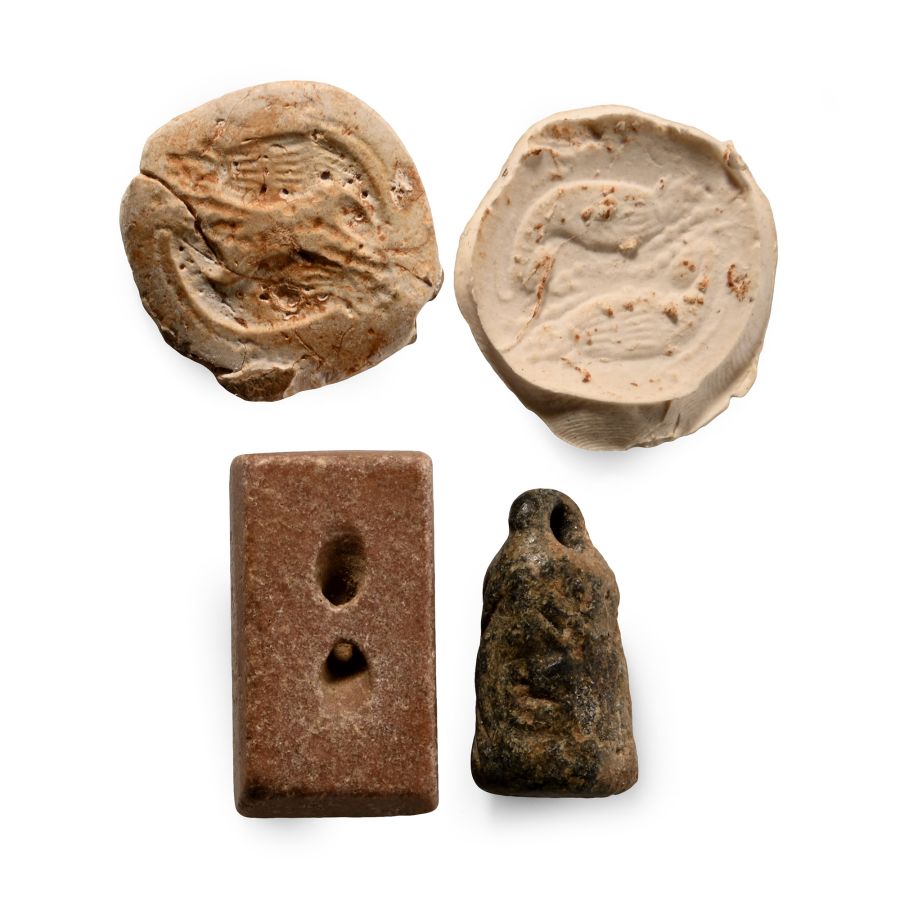
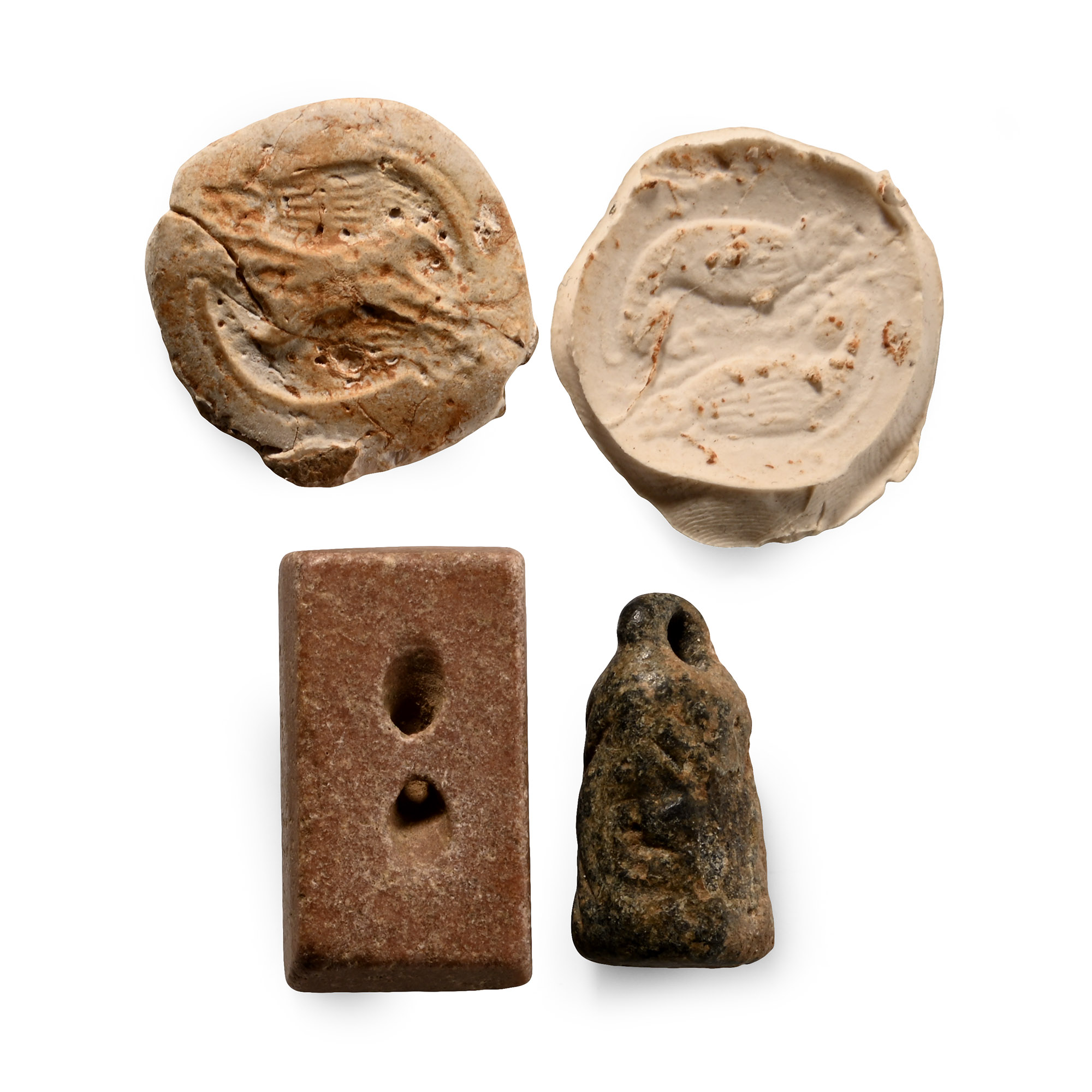
LOT 1639
Western Asiatic Stone Amulet and Stamp Seal Collection
2ND-1ST MILLENNIUM B.C.
1 1/8 - 1 3/8 in. (33.3 grams total, 29-35 mm).
Including plano-convex type with incuse design of two fish, rectangular block with suspension holes, and columnar type with integral loop. [3, No Reserve]
ProvenanceFrom the private collection of a European gentleman (1942-2024), formed since the 1970s.
CONDITIONTimeLine Auctions follows a vetting process to ensure the authenticity and legality of all items, reinforcing our commitment to integrity and responsible trading. Each antiquity, antique, and coin lot undergoes thorough examination by a vetting committee of at least ten external specialists, professional trade association members, scientists, and archaeologists: Our Vetting Process
AUCTIONS:
TimeLine is a leading auction house specialising in antiquities, ancient art, collectables, natural history, coins, medals, and books. Our auctions offer museums, collectors, historians, and enthusiasts the opportunity to acquire unique and historically significant pieces.
LOT 1639
Western Asiatic Stone Amulet and Stamp Seal Collection
Estimate £60 - 80€70 - 93 (for guidance only)$81 - 108 (for guidance only)
Opening Bid
£5 (EUR 6; USD 7) +BP*
-
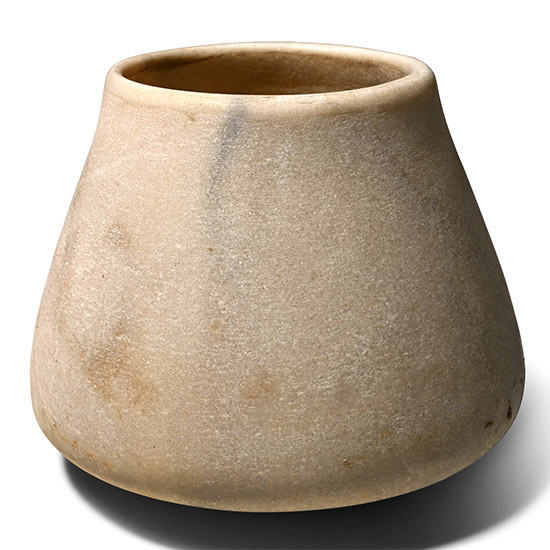
Western Asiatic Alabaster Jar
Circa 2nd-1st millennium B.C.Estimate: £350 - 450 (+bp*)
Opening Bid: £75
Conical in profile with rounded rim to the mouth, discoid foot. 835 grams, 13 cm wide
Ex London, UK, collection, 1990s. -
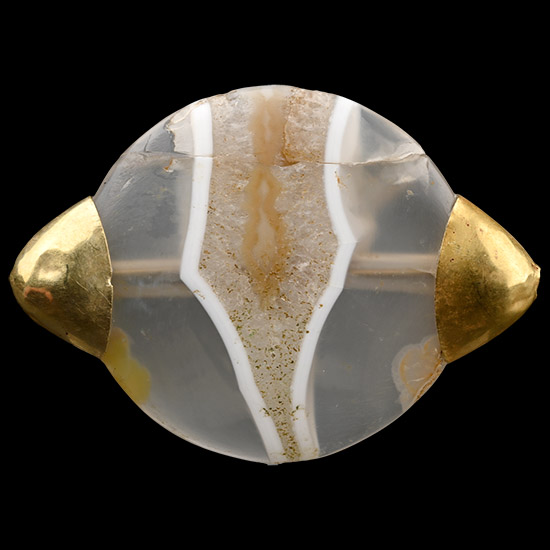
Exceptional Western Asiatic Banded Agate Bead with Gold Caps
2nd-1st millennium B.C.Estimate: £1,800 - 2,400 (‡+bp*)
Opening Bid: £1,000
Discoid in plan and pierced transversely with D-shaped gold caps at each end; mounted on a custom-made stand. 88 grams total, 84 mm wide including stand
Private collection, acquired on the UK art market, 2000. Private collection, Switzerland. This lot has been checked against the Interpol Database of stolen works of art and is accompanied by a search certificate number no.12877-241681.
The Sumerians used agate for beads and even for making ceremonial axe-heads. The engraving of agate, especially to produce cameos and intaglios, is an art which was principally cultivated by the Greeks and the Romans. In addition to the artistic excellence of the engravings, many of the early works show great skill in using the different colourings of the agate for decorating the figures. -
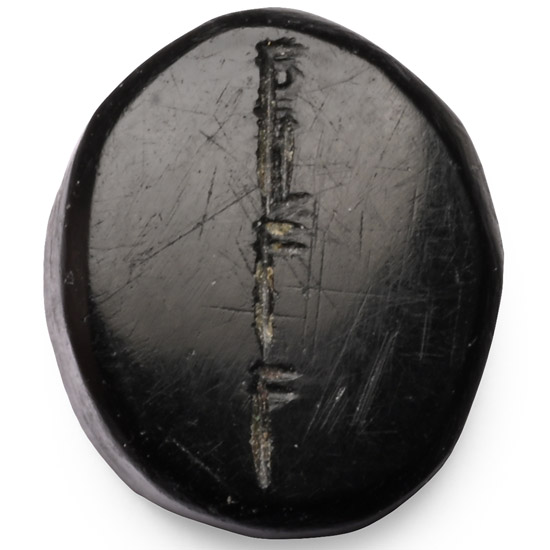
Western Asiatic Black Calligraphic Gemstone
12th-14th century A.D.Estimate: £100 - 140 (+bp*)
Opening Bid: £5
Discoid in plan with median line of Kufic script. 0.4 grams, 9 mm
From the private collection of a European gentleman (1942-2024), formed since the 1970s.
