
Loading, please wait...
LOT 0222
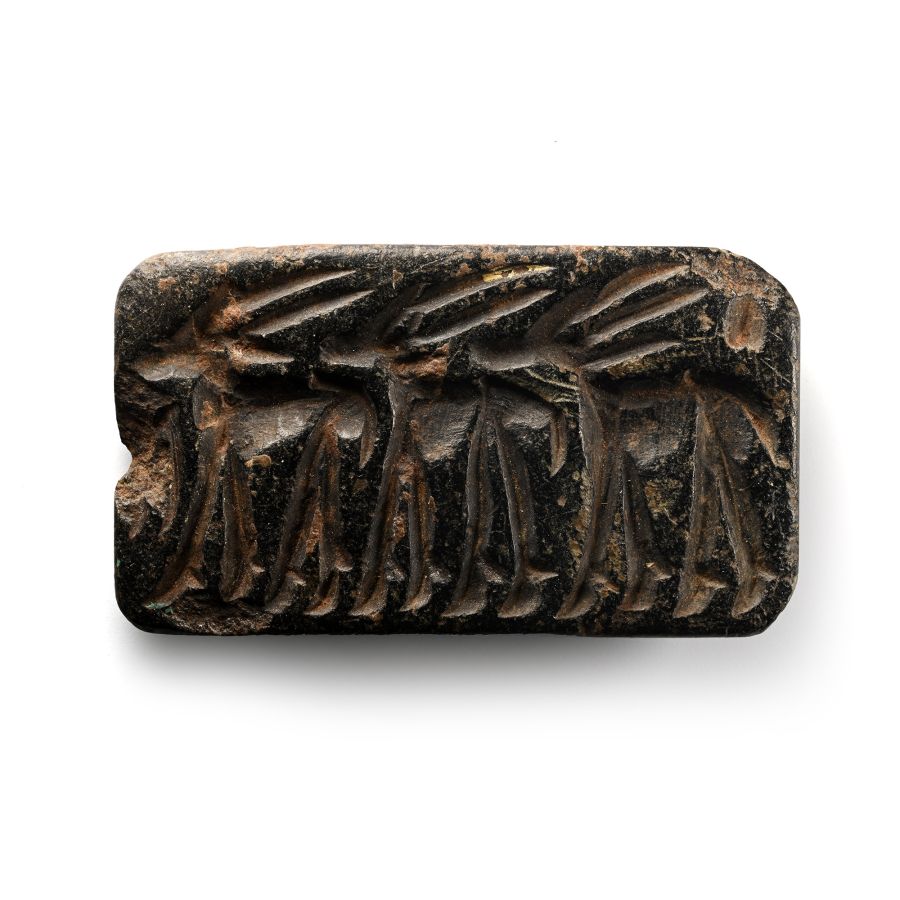
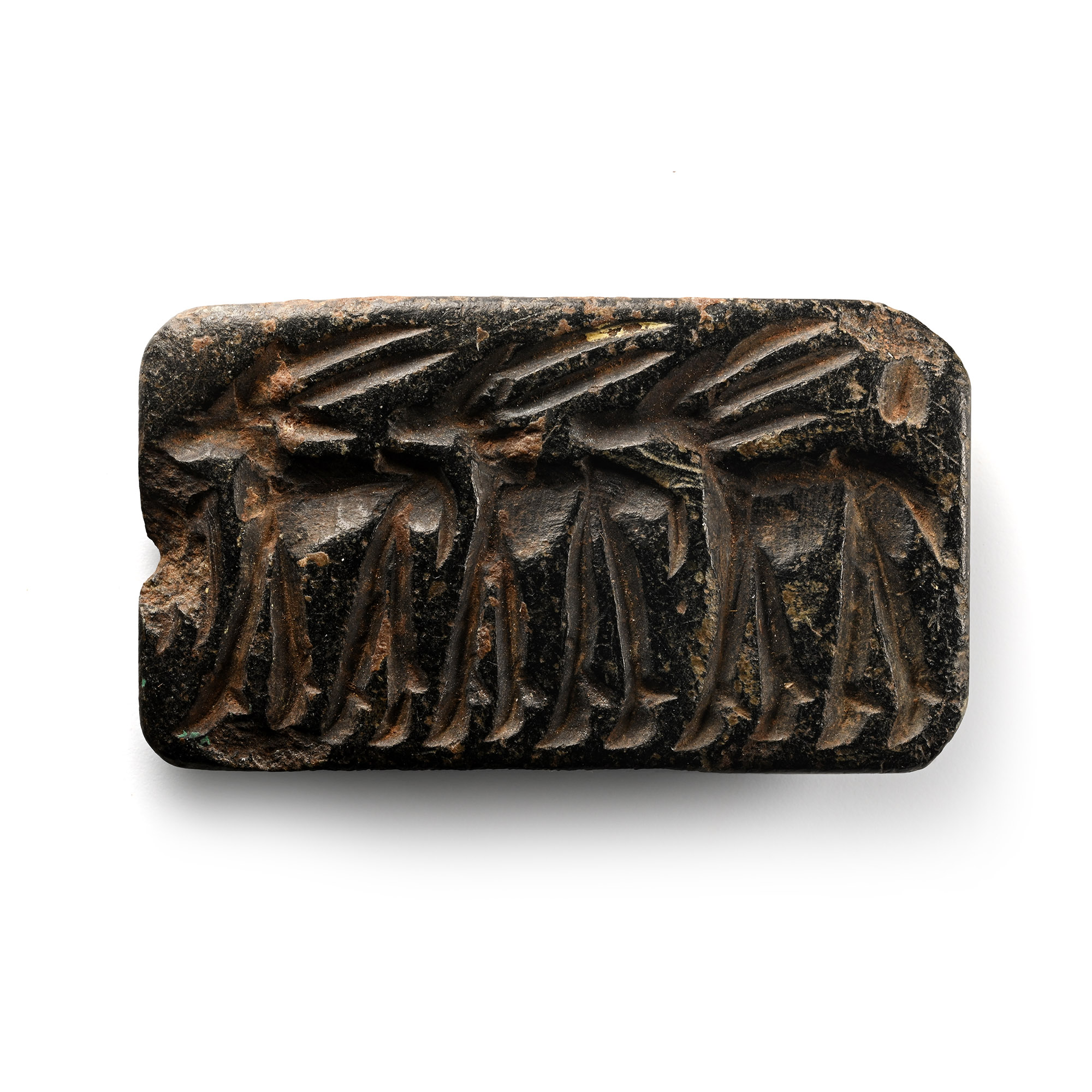
Western Asiatic Steatite Seal with Animals
3300-2900 B.C.
2 3/8 in. (38.9 grams, 61 mm).
Rectangular in plan and triangular in section with a median hole, flat face with incuse frieze of ibexes.
ProvenanceAcquired in the mid 1980s-1990s.
Private collection, Switzerland, thence by descent.
Private collection, since the late 1990s.
Cf. a similar procession of Ibexes on a seal from Kish, in Wilson, J.A., Allen, T.G., Ancient Oriental Cylinder and Other Seals, with a description of the collection of Mrs William H. Moore, Chicago, 1940, fig.15.
FootnotesSome stamp seals from the period of transition between Jemdat Nasr and the Early Dynastic Period of Ur represent animals, and some scholars suggest that they were probably used as pendants or amulets. The animals are somewhat simplified and often reduced to mere lines: a file of animals usually forms the basis of such a pattern.
CONDITIONTimeLine Auctions follows a vetting process to ensure the authenticity and legality of all items, reinforcing our commitment to integrity and responsible trading. Each antiquity, antique, and coin lot undergoes thorough examination by a vetting committee of at least ten external specialists, professional trade association members, scientists, and archaeologists: Our Vetting Process
AUCTIONS:
TimeLine is a leading auction house specialising in antiquities, ancient art, collectables, natural history, coins, medals, and books. Our auctions offer museums, collectors, historians, and enthusiasts the opportunity to acquire unique and historically significant pieces.
-
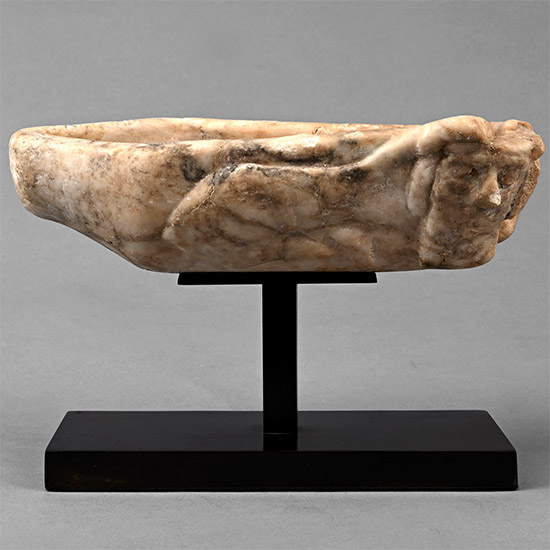
Old Babylonian Alabaster Vessel with Recumbent Lamassu
Early 2nd millennium B.C.Estimate: £3,000 - 4,000 (+bp*)
Current Winning Bid: £2,250
Deep elongated vessel, carved with an image of a reclining Lamassu on one side, the hind legs and the right front leg tucked beneath the body, the left front leg raised on the side of the head, the head modelled in the half-round with a characteristic long beard and hair framing the face; accompanied by a display stand. 781 grams, 19.5 cm (1.12 kg total including stand)
From an important London-Geneva collection, formed before 1988, by family descent. This lot has been checked against the Interpol Database of stolen works of art and is accompanied by search certificate number no.13371-258817.
The Lamassu was a protective deity related to several Mesopotamian civilisations (Assyrian in particular, where it was represented as a winged bull-man). They were considered beneficial and protective spirits, guardians of the doors with an apotropaic function, destined to ward off dark or hostile forces. -

Western Asiatic Basalt Tablet with Cuneiform Inscription
2nd-1st millennium B.C.Estimate: £2,000 - 3,000 (‡+bp*)
Opening Bid: £1,000
Architectural fragment with rectangular band to one edge, carved decorative detailing with inscription. 7.85 kg, 32.6 cm
Private collection, Europe, thence by descent. Private collection, since the late 1980s. This lot has been checked against the Interpol Database of stolen works of art and is accompanied by a search certificate number no.12521-231989.
Amid the many architectural, sculptural, and textual riches of Assyria and Mesopotamia, the broken pieces of basalt bearing fragmentary cuneiform inscriptions have received little attention, but are of fundamental importance. Despite being quite fragmentary, these broken pieces of basalt are the remains of an important witness to the Assyrian imperial presence in the Near East. -
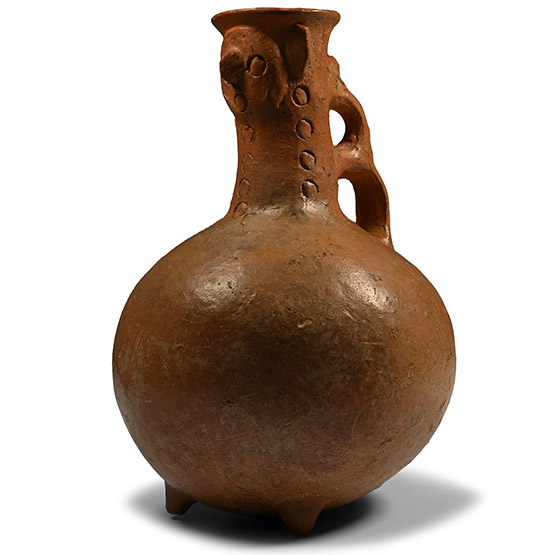
Amlash Terracotta Single-Handled Jug with Head Attachment
Circa 1000-800 B.C.Sold for (Inc. bp): £975
Comprising a rounded body resting on three stub legs; funicular mouth and short neck; beneath the rim a mask with pinched nose and two pointed ears, impressed circular eyes and mouth; three vertical decorative strips impressed with the same tool as formed the eyes and mouth; tiered strap handle with two finger-grips to the outer face and impressed detailing running from the neck to the shoulder; rim and one foot partly restored. 723 grams, 20.6 cm
Ex Zackary, Los Angeles, 1960s. Thereafter London art market, 1992. Accompanied by a copy of an Art Loss Register certificate no.S00079639.
Several tripod vessels were found at Marlik and Amlash. Examples of tripod vessels from other sites include a comparable example with a tripod stand from Agha Evlar. Jars with tripod knob stands and long necks, particularly similar to the Marlik specimen from Zeinab Bejar, were found in the upper level of Tombs C L and B III of Ghalekuti in the Dailaman region of Gilan. Vessels with tripod legs from Kalardasht are dated by Vanden Berghe to 1000-800 B.C.
