
Loading, please wait...
_900x900.jpg "Western Asiatic Stamp Seal with Winged God")
_200x200.jpg "Western Asiatic Stamp Seal with Winged God")
.jpg "Western Asiatic Stamp Seal with Winged God")
LOT 1194
Western Asiatic Stamp Seal with Winged God
CIRCA 800 B.C.
5/8 in. (6.8 grams, 16 mm).
Conical body with ribbed collar and loop, raised plaque to the underside with incuse image of winged figure; supplied with a museum-quality impression.
ProvenanceFrom the collection of a gentleman, acquired on the London art market in the 1990s.
CONDITIONTimeLine Auctions follows a vetting process to ensure the authenticity and legality of all items, reinforcing our commitment to integrity and responsible trading. Each antiquity, antique, and coin lot undergoes thorough examination by a vetting committee of at least ten external specialists, professional trade association members, scientists, and archaeologists: Our Vetting Process
AUCTIONS:
TimeLine is a leading auction house specialising in antiquities, ancient art, collectables, natural history, coins, medals, and books. Our auctions offer museums, collectors, historians, and enthusiasts the opportunity to acquire unique and historically significant pieces.
LOT 1194
Western Asiatic Stamp Seal with Winged God
Estimate £180 - 240€210 - 280 (for guidance only)$240 - 320 (for guidance only)
-
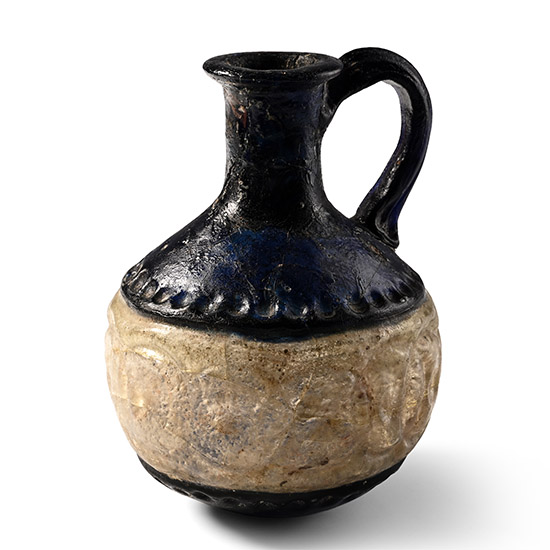
Fatimid Opaque and Clear Glass Juglet
Circa 10th-12th century A.D.Sold for (Inc. bp): £169
Mould glass, comprising a clear glass equator with incuse guilloche design; domed blue glass base with impressed pellets; similar shoulder and neck with trumpet-shaped mouth and strap handle. 92 grams, 98 mm
Private collection, UK. -
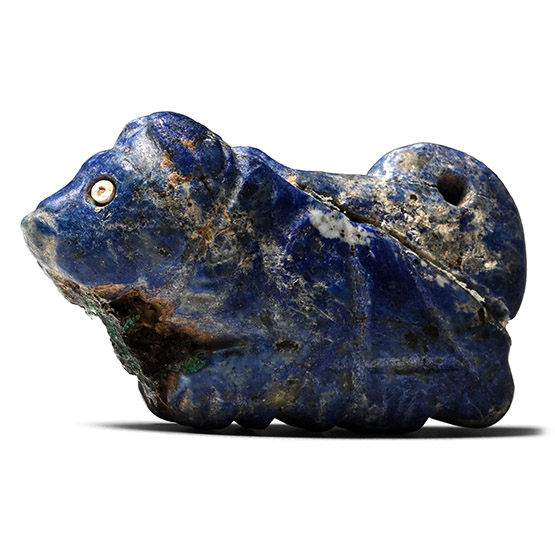
Bactrian Lapis Lazuli Recumbent Bull with Inlaid Eyes
3rd millennium B.C.Estimate: £800 - 1,000 (+bp*)
Opening Bid: £270
Modelled in the round with the legs folded beneath the body, pierced at the rump through the curved tail; sockets at the eyes, each with inlay; bronze mounting rod set into the lower body. 27.1 grams, 45 mm
with Gallery Rosen Ancient Art, Tel Aviv, 1968. with a London, UK gallery, 1971-early 2000s. Accompanied by a copy of the original 1968 invoice. -
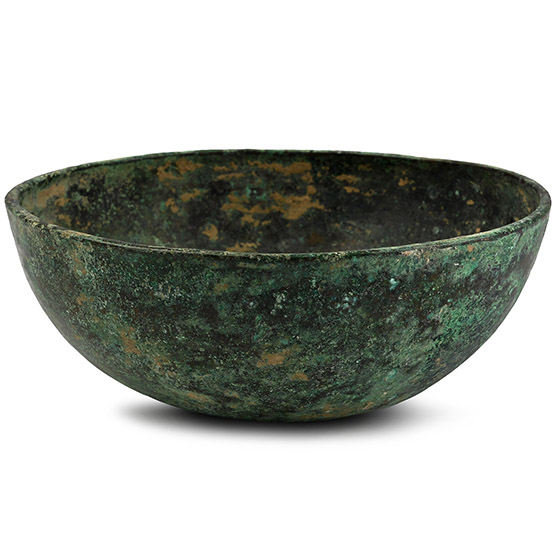
Western Asiatic Bronze Bowl
Late 1st millennium B.C.Sold for (Inc. bp): £72
Hemispherical in profile with lip to inner edge of mouth. 142 grams, 12.4 cm wide
Ex 1990s collection and with a central London gallery.
