
Loading, please wait...
_900x900.jpg "Western Asiatic Stamp Seal with Winged God")
_200x200.jpg "Western Asiatic Stamp Seal with Winged God")
.jpg "Western Asiatic Stamp Seal with Winged God")
LOT 1295
Western Asiatic Stamp Seal with Winged God
CIRCA 800 B.C.
5/8 in. (6.8 grams, 16 mm).
Conical body with ribbed collar and loop, raised plaque to the underside with incuse image of winged figure; supplied with a museum-quality impression.
ProvenanceFrom the collection of a gentleman, acquired on the London art market in the 1990s.
This lot has been cleared against the Art Loss Register database, and is accompanied by an illustrated lot declaration signed by the Head of the Antiquities Department, Dr Raffaele D'Amato.
TimeLine Auctions follows a vetting process to ensure the authenticity and legality of all items, reinforcing our commitment to integrity and responsible trading. Each antiquity, antique, and coin lot undergoes thorough examination by a vetting committee of at least ten external specialists, professional trade association members, scientists, and archaeologists: Our Vetting Process
AUCTIONS:
TimeLine is a leading auction house specialising in antiquities, ancient art, collectables, natural history, coins, medals, and books. Our auctions offer museums, collectors, historians, and enthusiasts the opportunity to acquire unique and historically significant pieces.
LOT 1295
Western Asiatic Stamp Seal with Winged God
Estimate £200 - 300€230 - 350 (for guidance only)$270 - 410 (for guidance only)
-
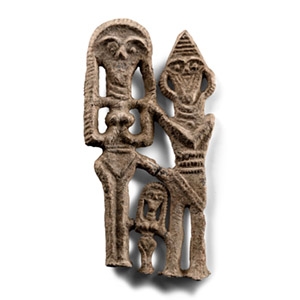
Syro-Hittite Lead Fertility Idol
2nd millennium B.C.Sold for (Inc. bp): £780
A plaque depicting a stylised man and woman conjoined at hips, flanking a small child holding their legs, the woman with large head and long hair, holding her breasts, the man wearing a loin cloth and conical headdress, holding the woman by the arm. 30 grams, 70 mm
Fine condition.
Ex property of a Dutch gentleman; formerly in an old Dutch collection formed in the 1970s. From the private collection of John Meredith, acquired since the 1990s; thence by descent. This lot has been cleared against the Art Loss Register database, and is accompanied by an illustrated lot declaration signed by the Head of the Antiquities Department, Dr Raffaele D'Amato. -
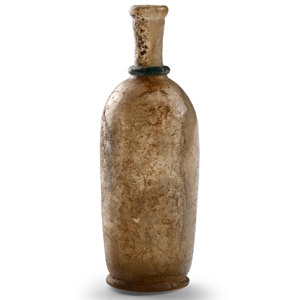
Western Asiatic Glass Perfume Bottle
11th-14th century A.D.Sold for (Inc. bp): £111
Slender jar with applied disc base and gently flared neck with rolled rim, applied collar in bottle-green glass. 27.2 grams, 93 mm.
with a London, UK gallery 1971-early 2000s. This lot has been cleared against the Art Loss Register database, and is accompanied by an illustrated lot declaration signed by the Head of the Antiquities Department, Dr Raffaele D'Amato. -
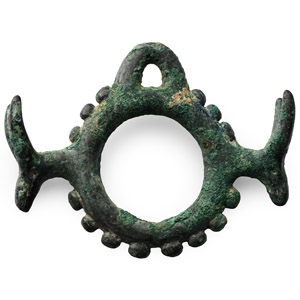
Luristan Bronze Pendant with Animal Heads
2nd-1st millennium B.C.Sold for (Inc. bp): £234
Round-section discoid body with applied pellets and a pair of horned animal heads to the rim; attachment loop to the top. 32.4 grams, 59 mm
UK private collection before 2000. Acquired on the UK art market. Private collection, London, UK. This lot has been cleared against the Art Loss Register database, and is accompanied by an illustrated lot declaration signed by the Head of the Antiquities Department, Dr Raffaele D'Amato.
