
Loading, please wait...
LOT 0928
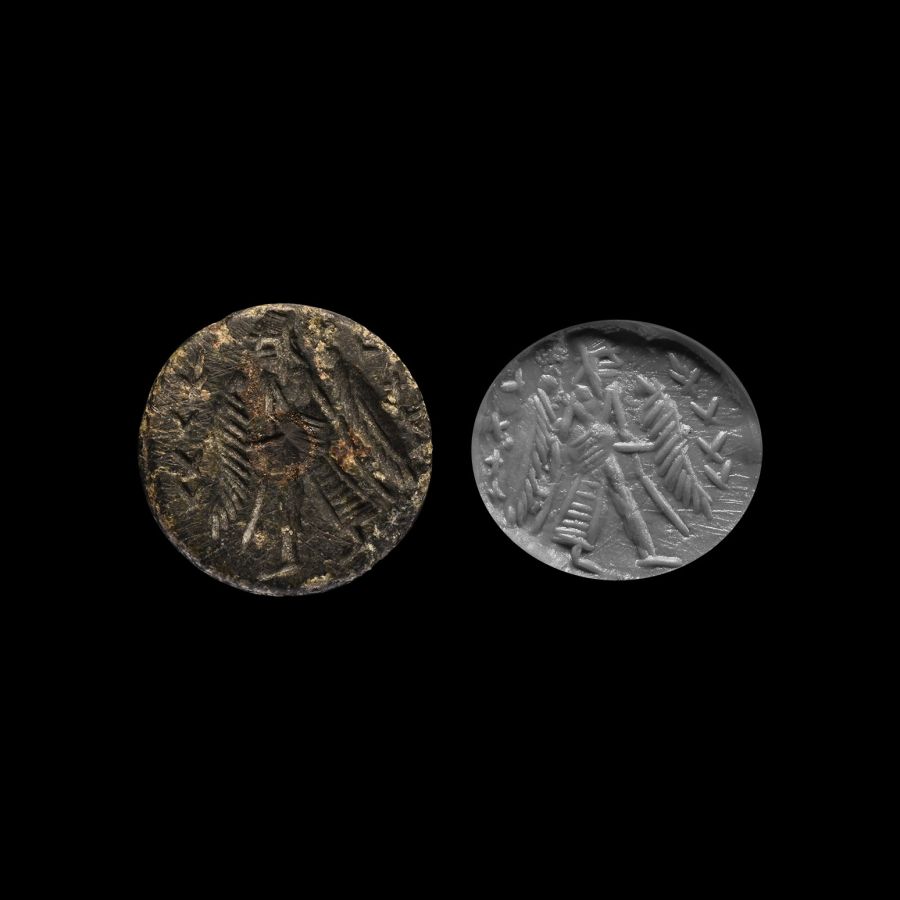
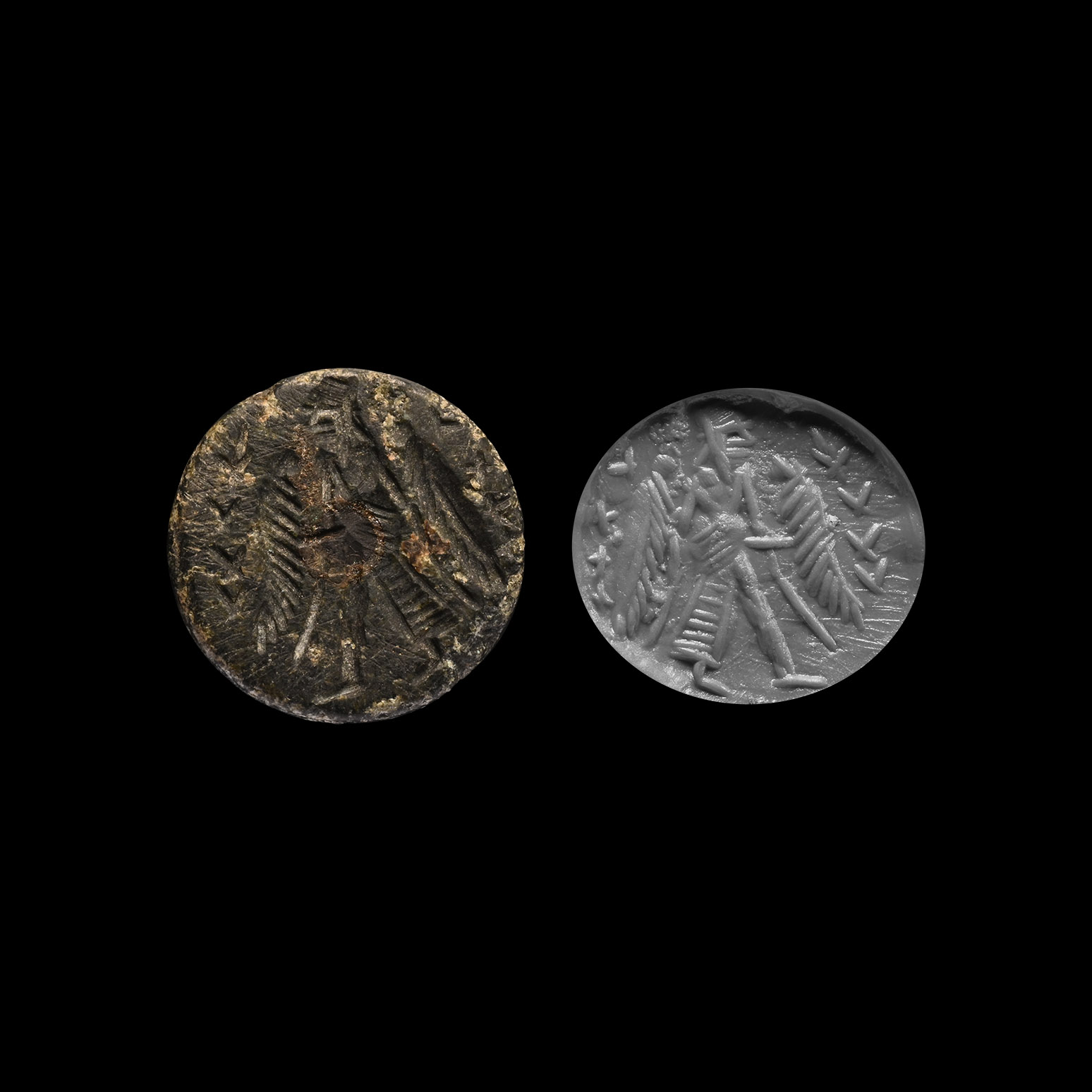
Western Asiatic Stamp Seal with Lamashtu
LATE 2ND-EARLY 1ST MILLENNIUM B.C.
7/8 in. (8.4 grams, 22 mm).
A stone stamp seal of truncated conical form, possibly chlorite or serpentine, with incise standing human-headed eagle to base, incused hatched lines in four directions to the top face; drilled for suspension.
ProvenanceAcquired 1969-1999.
London collection of the late S.M., thence by descent.
TimeLine Auctions follows a vetting process to ensure the authenticity and legality of all items, reinforcing our commitment to integrity and responsible trading. Each antiquity, antique, and coin lot undergoes thorough examination by a vetting committee of at least ten external specialists, professional trade association members, scientists, and archaeologists: Our Vetting Process
AUCTIONS:
TimeLine is a leading auction house specialising in antiquities, ancient art, collectables, natural history, coins, medals, and books. Our auctions offer museums, collectors, historians, and enthusiasts the opportunity to acquire unique and historically significant pieces.
-
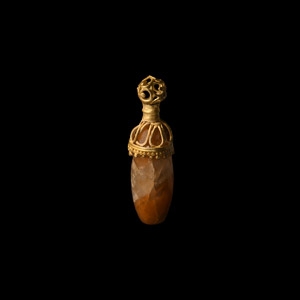
Western Asiatic Gold Pendant with Carnelian
1st-2nd century A.D.Estimate: £100 - 140 (+bp*)
Opening Bid: £56
A gold pendant with openwork domed filigree cell set with a capsule-shaped banded carnelian stone bead, ribbed collar and openwork bulb above for suspension. 1.42 grams, 23 mm
Fine condition.
Acquired 1970-2010. Collection of a late Japanese gentleman. -
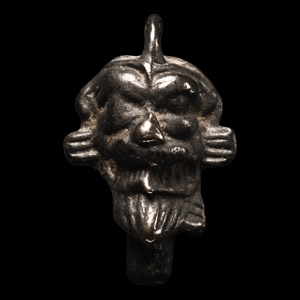
Western Asiatic Silver Pazuzu Head Amulet
Circa 8th-6th century B.C.Sold for (Inc. bp): £364
A silver Pazuzu head amulet with grotesque facial features and integral suspension loop. 4.33 grams, 20 mm
Acquired before the early 1970s. Ex London, UK, gallery. Property of a London gentleman. -
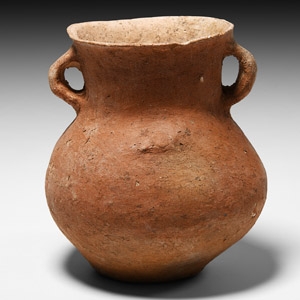
Trans Jordan Redware Burnished Jar
Circa 3000 B.C.Estimate: £100 - 140 (+bp*)
Opening Bid: £50
A ceramic jar of globular form with flat base and funicular neck; two lug handles to the shoulder. 260 grams, 12.5 cm high
Fine condition.
Ex Hands of the Potter exhibition. Faustus Gallery, Jermyn Street, 1990s. London, UK, collection.
