
Loading, please wait...
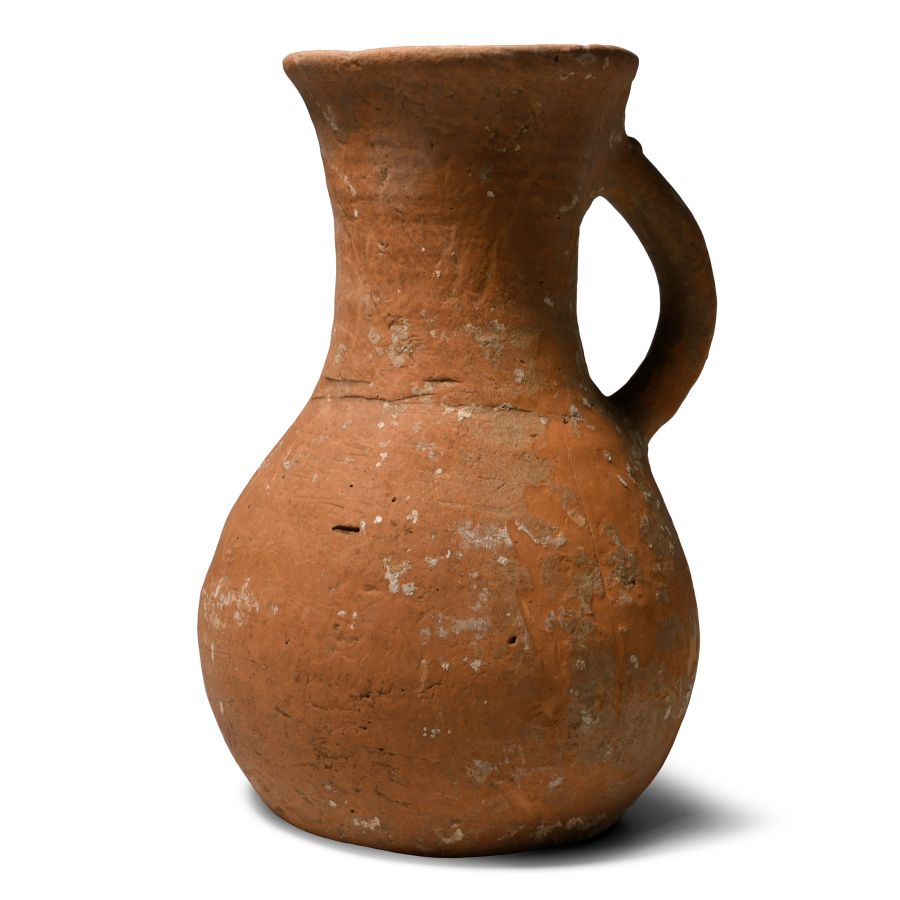
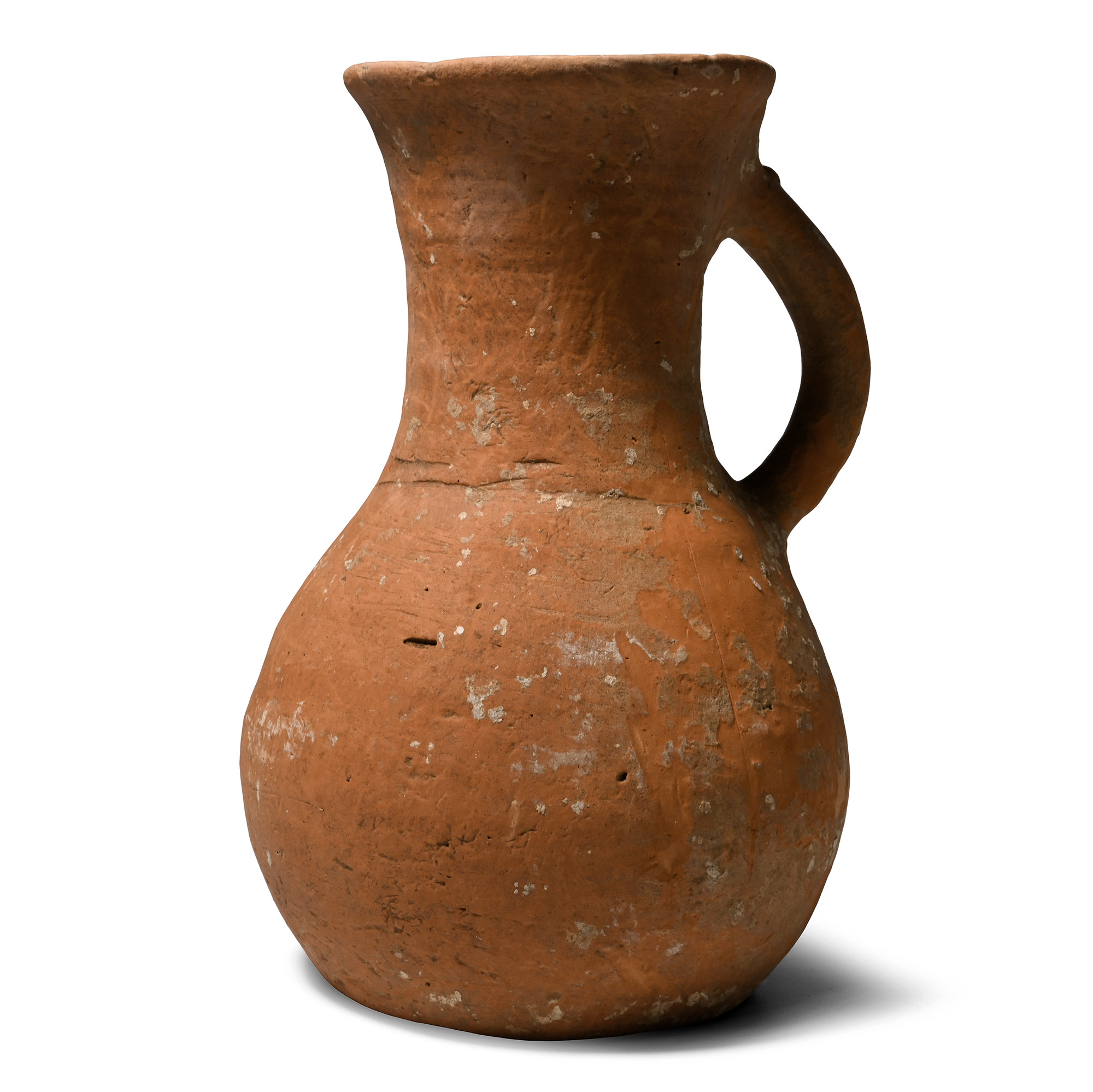
LOT 1236
Western Asiatic Single-Handled Pottery Vessel
1ST MILLENNIUM B.C.
7 3/8 in. (588 grams, 18.7 cm).
Comprising a bulbous body with a flattened base, a wide funicular neck and a handle to the rear.
ProvenanceFrom an important specialist collection, London, UK, 1990s.
CONDITIONTimeLine Auctions follows a vetting process to ensure the authenticity and legality of all items, reinforcing our commitment to integrity and responsible trading. Each antiquity, antique, and coin lot undergoes thorough examination by a vetting committee of at least ten external specialists, professional trade association members, scientists, and archaeologists: Our Vetting Process
AUCTIONS:
TimeLine is a leading auction house specialising in antiquities, ancient art, collectables, natural history, coins, medals, and books. Our auctions offer museums, collectors, historians, and enthusiasts the opportunity to acquire unique and historically significant pieces.
-
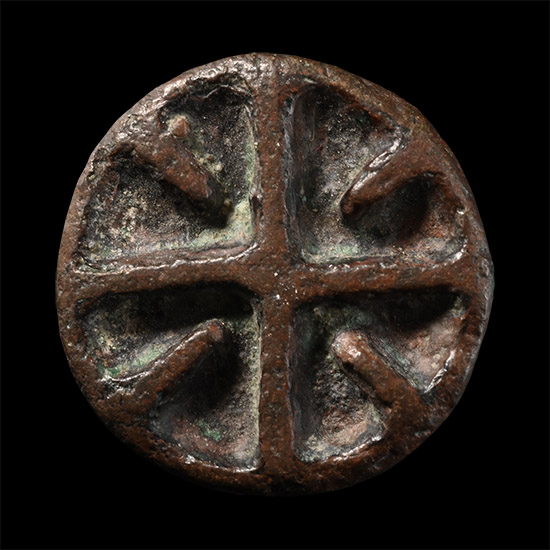
West Central Asian Bronze Chess Piece Type Seal Matrix with 'Union' Cross
Circa 2000-1500 B.C.Sold for (Inc. bp): £33
Discoid stamp seal with segmented face; accompanied by an old scholarly note, typed and signed by W.G. Lambert, late Professor of Assyriology, University of Birmingham, 1970-1993, which states: 'Stamp Seal of Bronze, 19.5 x 19 x 22 mm. The round flat face is compartmented, and the solid back rises to a pierced knob handle. The design divided the circle into four parts with two crossing lines, and within each quarter there is a short line starting from the rim but not reaching the centre. This is a seal from west the Bronze Age of west central Asia, probably dates to c. 2000-1500 B.C. There is some incrustation on the surface, which could be removed, and the metal is in very good condition.' 14.2 grams, 22 mm
Acquired in the late 1980s-early 1990s. Ex property of a West London businessman. Academically researched and catalogued by the late Professor Lambert in the early 1990s. Accompanied by a copy of a scholarly report, numbered B-34, typed and signed by Professor Wilfrid George Lambert. -
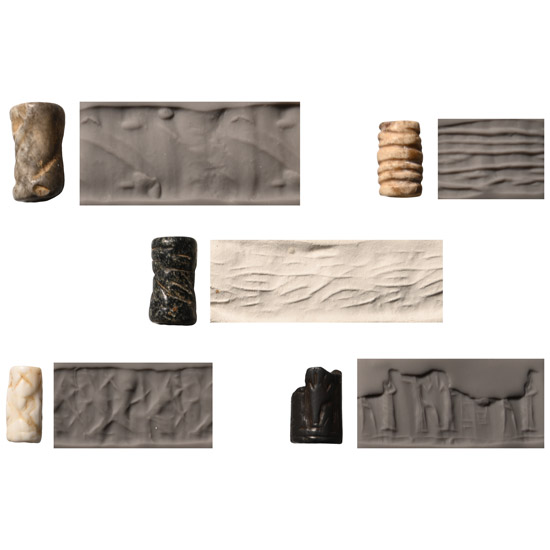
Western Asiatic Stone Cylinder Seal Group
3rd-1st millennium B.C.Sold for (Inc. bp): £104
Comprising: a dark brown steatite seal with linear motifs; a white limestone seal with a wave motif; a black steatite seal with a diabolo-shaped striped pattern; a hematite seal with two worship scenes, four figures and a small offering table; a white limestone seal with linear motifs and figures; supplied with museum-quality impressions. 14.4 grams total, 15-19 mm
From the private collection of a European gentleman (1942-2024), formed since the 1970s. Accompanied by previous typed catalogue slips with collection nos.8, 20, 21, 37, and one handwritten. -
.jpg)
Western Asiatic Banded Agate Cylinder Seal with Winged Figure
2nd-1st millennium B.C.Sold for (Inc. bp): £286
Frieze depicting a standing winged figure in profile facing a column with disc above and radiating beams; supplied with a museum-quality impression. 8.37 grams, 30 mm
From the private collection of a European gentleman (1942-2024), formed since the 1970s.
