
Loading, please wait...
LOT 1231
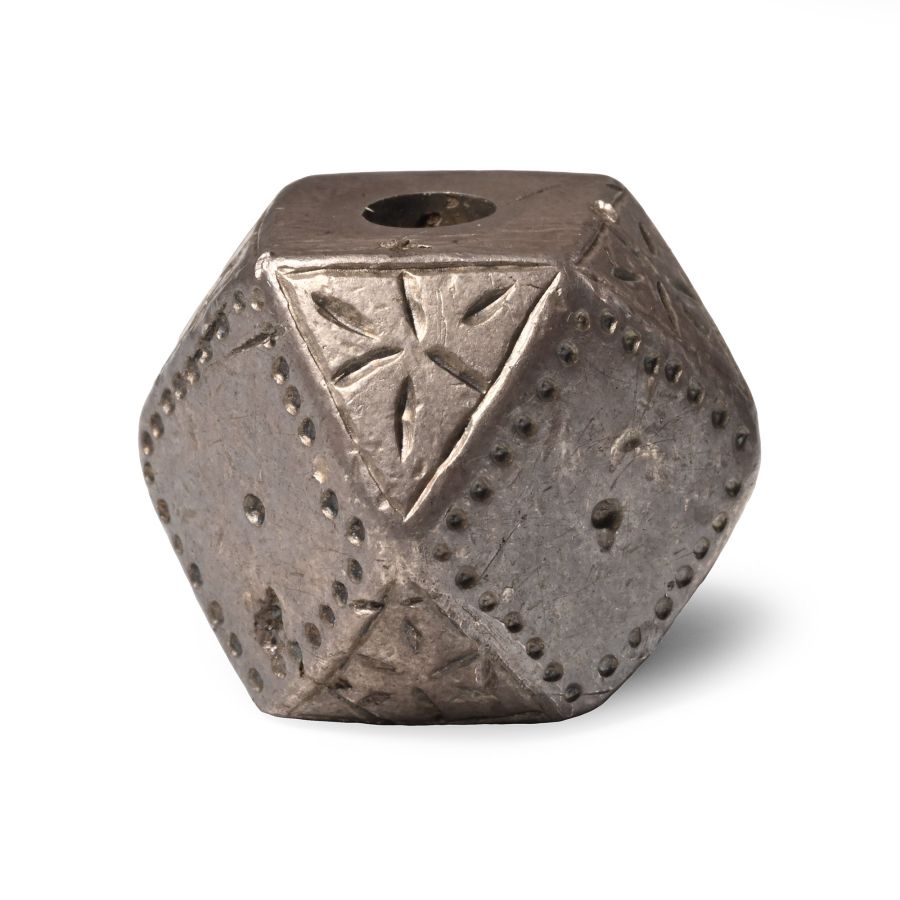
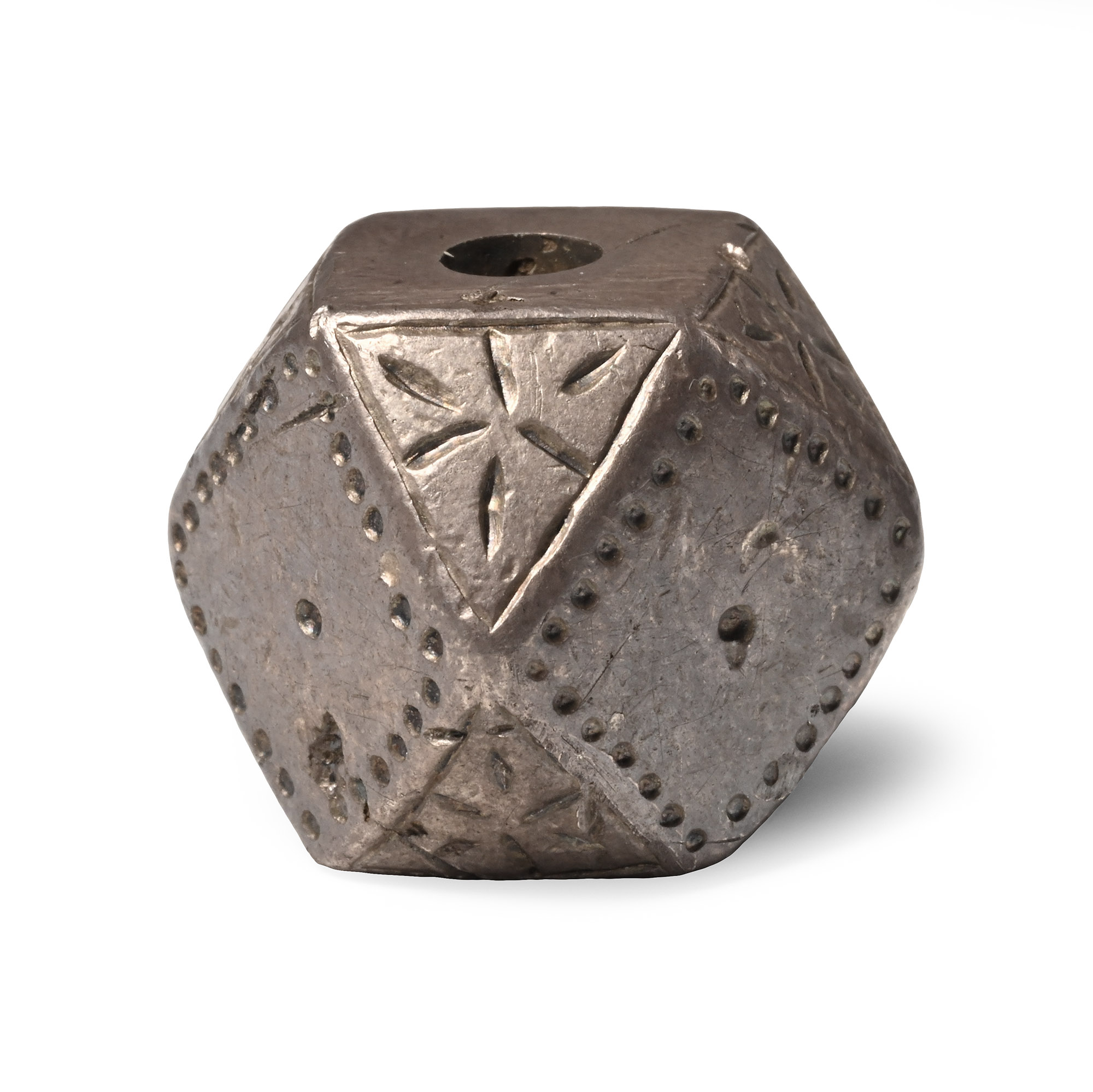
Western Asiatic Silver Polyhedral Amulet
13TH-14TH CENTURY A.D.
1 in. (46.5 grams, 24 mm).
A cornerless cube decorated to diamond-shaped faces with punched dots to the edge; triangular faces with star motif; usage wear.
ProvenanceAcquired on the German art market, before 1980.
Private collection, England.
TimeLine Auctions follows a vetting process to ensure the authenticity and legality of all items, reinforcing our commitment to integrity and responsible trading. Each antiquity, antique, and coin lot undergoes thorough examination by a vetting committee of at least ten external specialists, professional trade association members, scientists, and archaeologists: Our Vetting Process
AUCTIONS:
TimeLine is a leading auction house specialising in antiquities, ancient art, collectables, natural history, coins, medals, and books. Our auctions offer museums, collectors, historians, and enthusiasts the opportunity to acquire unique and historically significant pieces.
LOT 1231
Western Asiatic Silver Polyhedral Amulet
Estimate £200 - 300€230 - 350 (for guidance only)$270 - 410 (for guidance only)
-
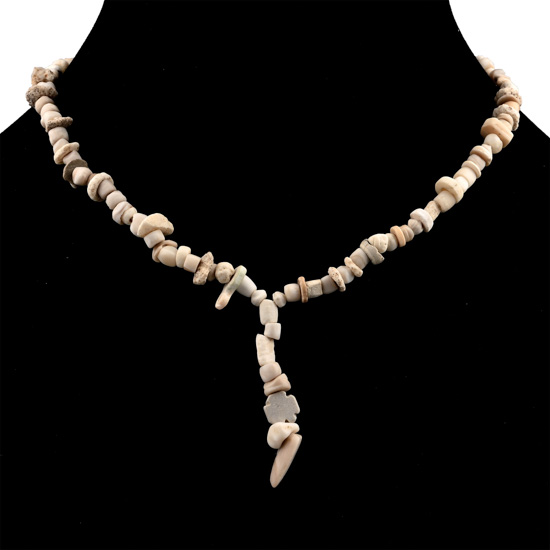
Western Asiatic Pale Stone Bead Necklace String
1st millennium B.C. and laterSold for (Inc. bp): £46
Mixed group of beads restrung to a Y-shape with some feature beads. 16.41 grams, 31 cm
From London, UK, gallery collection, 1990s. -

Large Amlash Terracotta Idol
1st millennium B.C.Sold for (Inc. bp): £2,340
Comprising a thin, extended neck developing into a largely unmarked face, represented only as a low-relief oval across its width; small arms folded into the chest emerging just beside two raised breasts; body curving inwards to suggest a feminine waist, before widening dramatically at the hips and buttocks; legs tapering gradually towards the base, with small marks delineating toes; mounted on a custom-made stand. 386 grams total, 23 cm including stand
Dr Werner Alder, Carona, Switzerland, acquired in the 1960s. Private collection M.R., Lugano, Switzerland. Accompanied by an academic report by Dr Raffaele D’Amato. Accompanied by a thermoluminescence analysis report no.N126a11 from Oxford Authentication. This lot has been checked against the Interpol Database of stolen works of art and is accompanied by search certificate number no.13015-246792.
The Amlash ceramics of Iron-Age Iran are named after a small modern town in the northern province of Gilan, just south of the Caspian Sea. Although the town is in close vicinity to Mesopotamia, the objects found there have a distinct local style, perhaps due to the natural boundaries of the Elburz and Zagros mountain ranges. The ceramic vessels and statuettes of both humans and animals from this region are by far the most important source we have on the Amlash culture of this period. Much of what has survived seems to have held spiritual or ritual functions, for example, votive idols and libation vessels. Human representations are generally found in burial sites and may therefore represent deities or specific individuals. These terracotta figurines, distinguished by their exaggerated, rounded hips and thighs, are believed to date from the late 2nd to early 1st millennium B.C. and are widely interpreted as fertility symbols or representations of a mother goddess. -
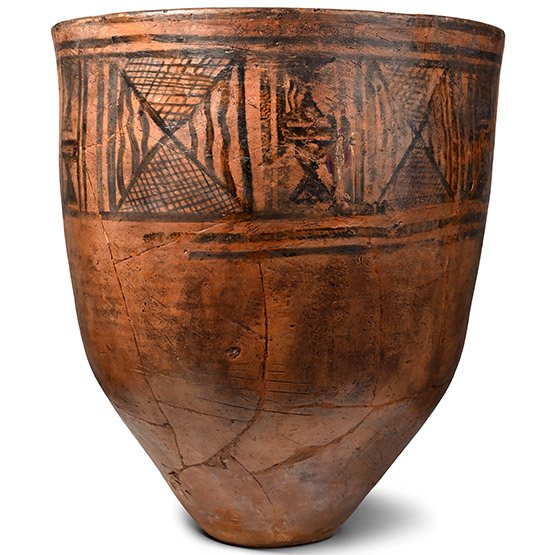
Monumental Western Asiatic Pottery Jar
Circa 3000 B.C.Estimate: £1,500 - 2,000 (+bp*)
Opening Bid: £600
Comprising a sharply tapering lower body, parallel-sided upper body and rounded rim; decorated in dark brown with thirteen square panels with central saltire on a hatched field; repaired. 17 kg, 64 cm high
with Mahboubian Gallery, London, UK, 1974. Private collection, London, UK. This lot has been checked against the Interpol Database of stolen works of art and is accompanied by search certificate number no.12972-245238.
