
Loading, please wait...
LOT 1262
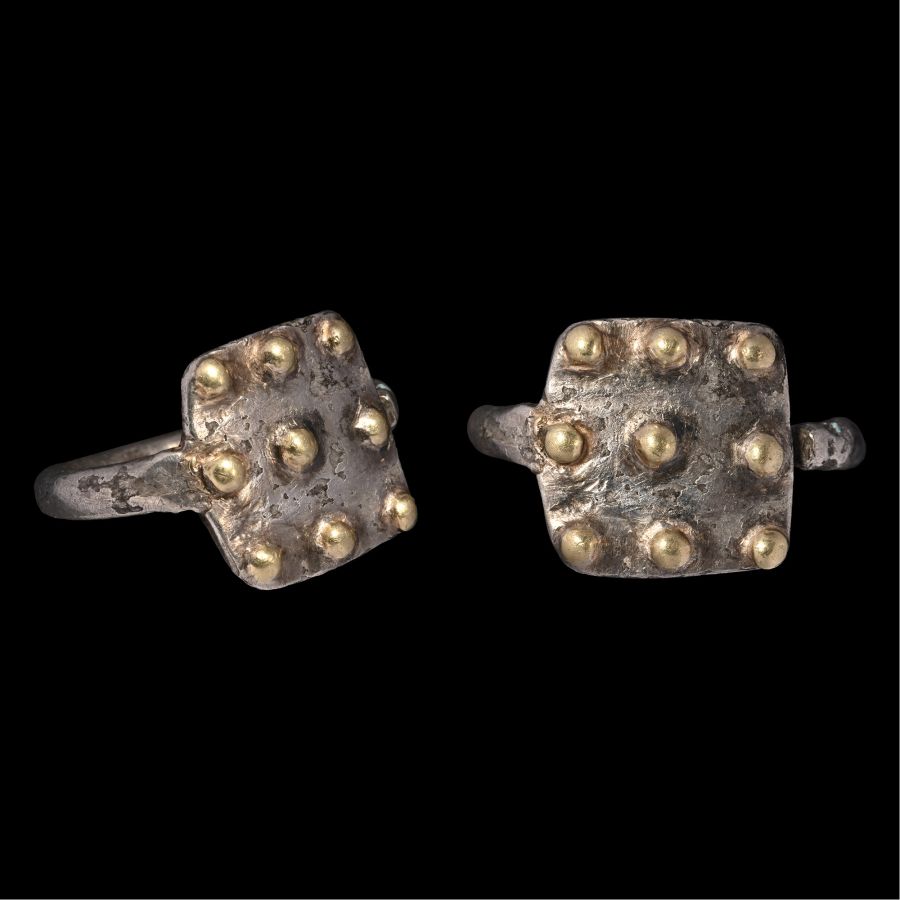
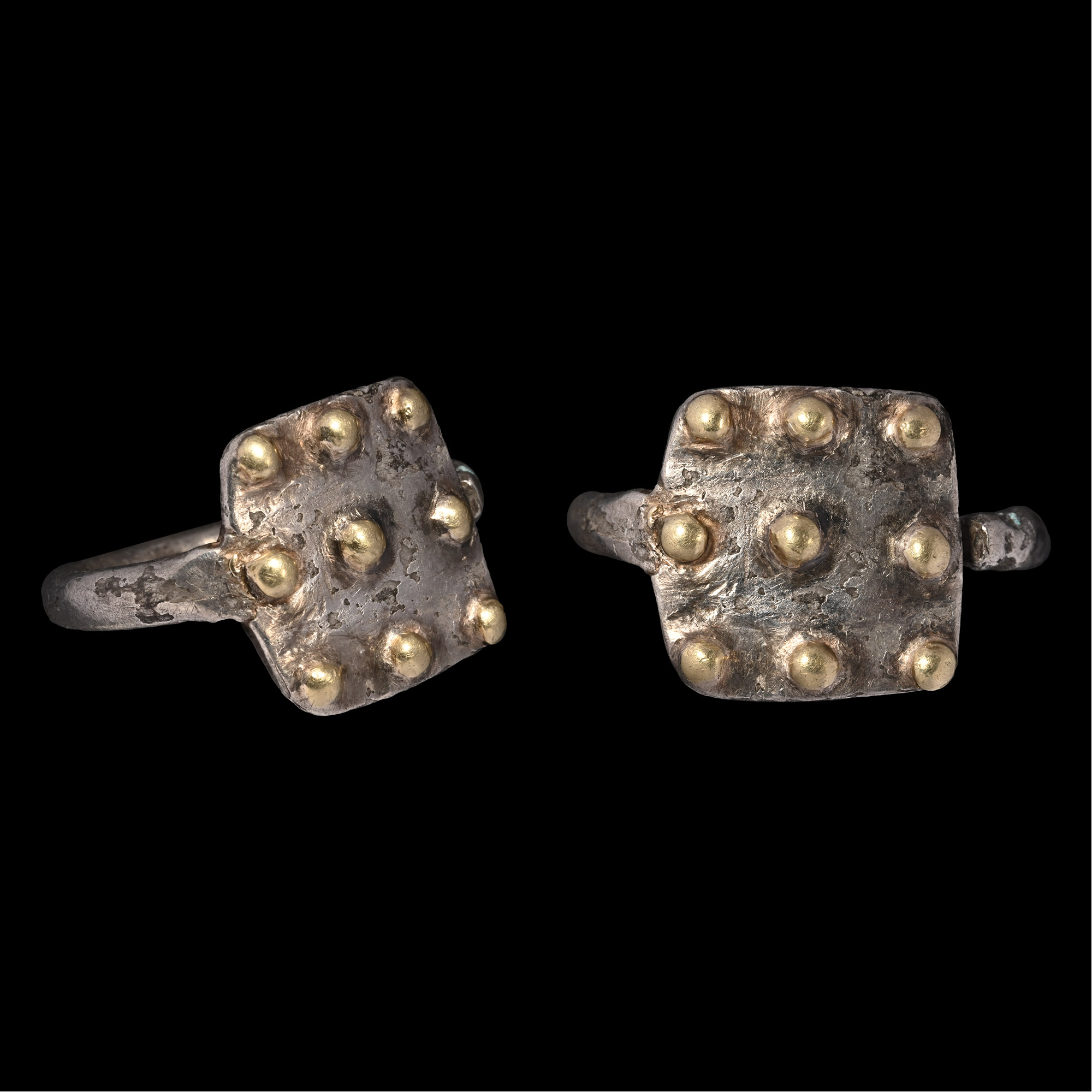
Western Asiatic Silver-Gilt Ring with Bosses
EASTERN ROMAN PERIOD, CIRCA 3RD-5TH CENTURY A.D.
1 in. (4.58 grams, 23.23 mm overall, 18.16 mm internal diameter (approximate size British N 1/2, USA 6 3/4, Europe 14.35, Japan 13)).
Penannular in form with square bezel, nine gilt bosses. [No Reserve]
ProvenanceEx German art market, 2000s.
Acquired from an EU collector living in London.
From the collection of Surrey, UK, gentleman.
This lot has been cleared against the Art Loss Register database, and is accompanied by an illustrated lot declaration signed by the Head of the Antiquities Department, Dr Raffaele D'Amato.
TimeLine Auctions follows a vetting process to ensure the authenticity and legality of all items, reinforcing our commitment to integrity and responsible trading. Each antiquity, antique, and coin lot undergoes thorough examination by a vetting committee of at least ten external specialists, professional trade association members, scientists, and archaeologists: Our Vetting Process
AUCTIONS:
TimeLine is a leading auction house specialising in antiquities, ancient art, collectables, natural history, coins, medals, and books. Our auctions offer museums, collectors, historians, and enthusiasts the opportunity to acquire unique and historically significant pieces.
-
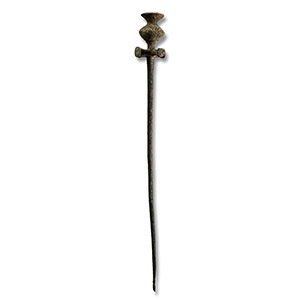
Luristan Bronze Pin with Decorative Head
13th-6th century B.C.Sold for (Inc. bp): £98
Comprising a substantial round-sectioned pin with bulbous poppy-shaped head with four radiating conical arms below. 70 grams, 23.5 cm
Acquired 1980-2015. Ex Abelita family collection. This lot has been cleared against the Art Loss Register database, and is accompanied by an illustrated lot declaration signed by the Head of the Antiquities Department, Dr Raffaele D'Amato. -
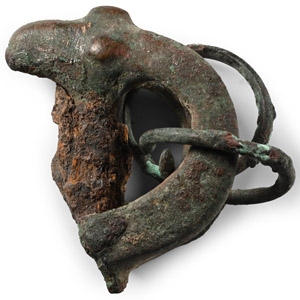
Luristan Bronze Mouflon Head with Rings
13th-7th century B.C.Sold for (Inc. bp): £59
Formed with curved horns meeting the shoulder, two bronze rings attached. 35.6 grams, 40 mm
Acquired 1980-2015. Ex Abelita family collection. This lot has been cleared against the Art Loss Register database, and is accompanied by an illustrated lot declaration signed by the Head of the Antiquities Department, Dr Raffaele D'Amato. -
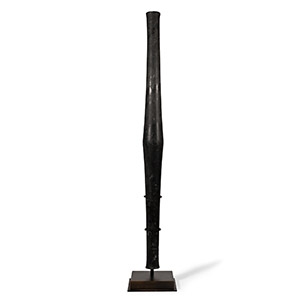
Bactrian Black Stone Ritual Object
Circa 3rd-early 2nd millennium B.C.Estimate: £4,000 - 6,000 (+bp*)
Opening Bid: £2,000
Carved in the round with a slender, biconical form; polished; mounted on a custom-made display stand. 12.4 kg, 97.5 cm including stand
with Gallery Rosen Ancient Art, Tel Aviv, 1969. Ex London, UK, gallery, 1971-early 2000s. London, UK, collection. This lot has been checked against the Interpol Database of stolen works of art and is accompanied by a search certificate number no.12404-225388. This lot has been cleared against the Art Loss Register database, and is accompanied by an illustrated lot declaration signed by the Head of the Antiquities Department, Dr Raffaele D'Amato.
