
Loading, please wait...
LOT 0878
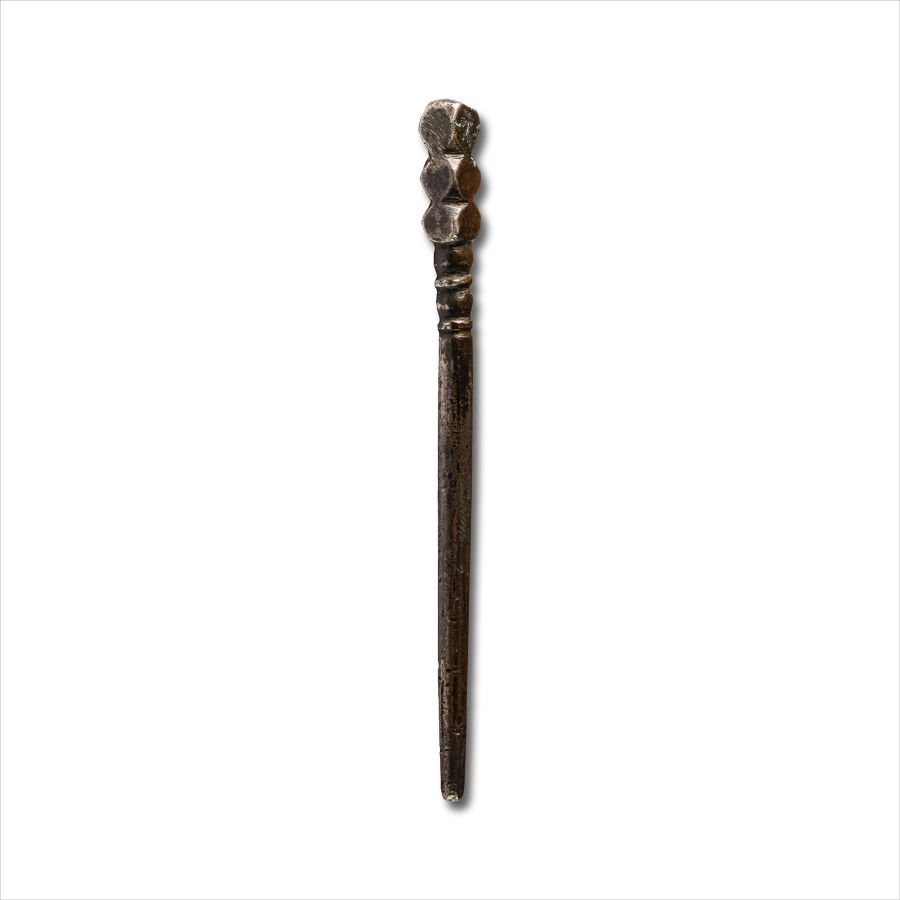
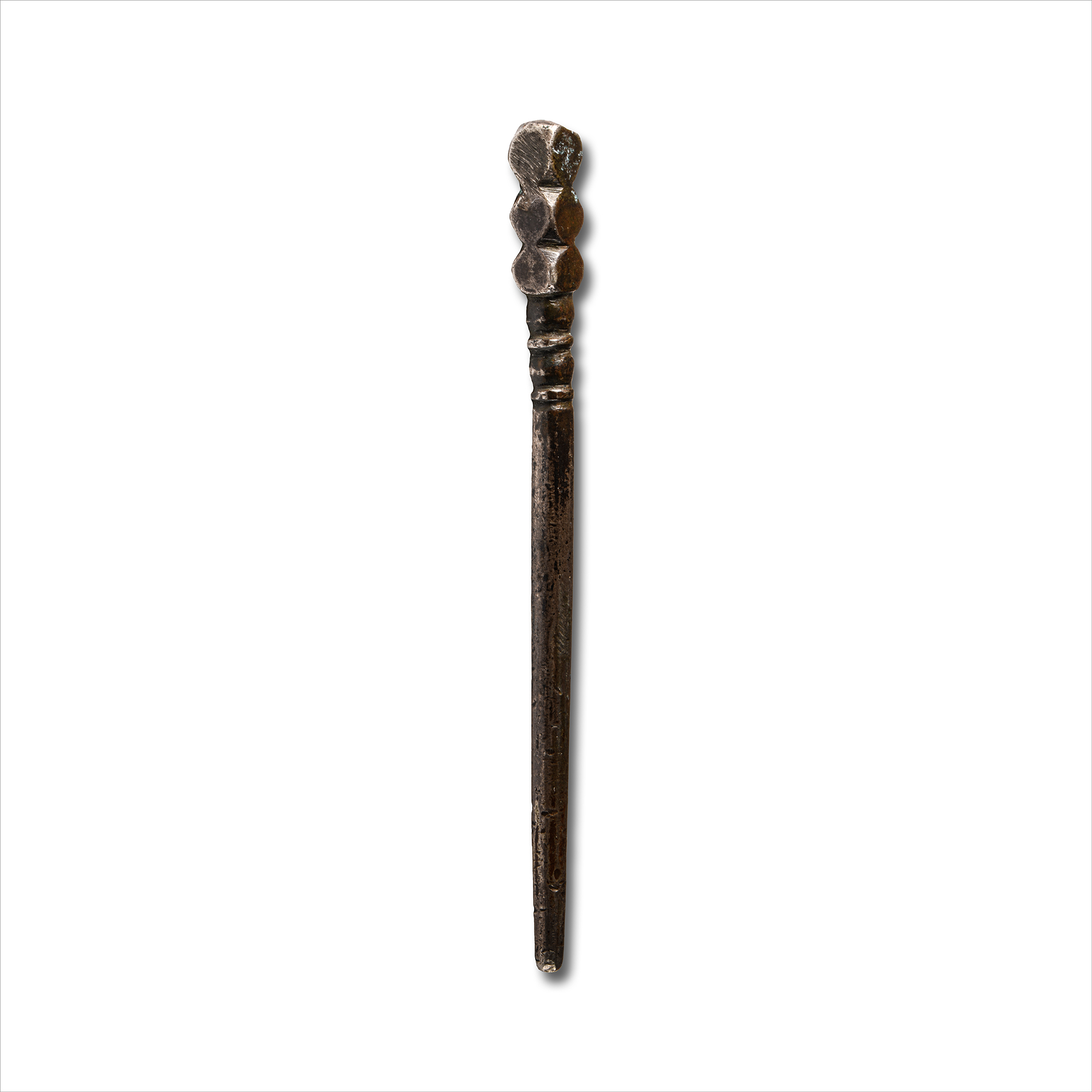
Western Asiatic Silver Dress Pin
1ST MILLENNIUM B.C.
3 3/8 in. (13.1 grams, 85 mm).
With a short tapering body, balustered finial topped with three rounded cuboids. [No Reserve]
ProvenanceFrom a family collection formed in the 1970s-1980s.
From the Inglismaldie Castle estate, Angus, Scotland, by descent to the current owner.
TimeLine Auctions follows a vetting process to ensure the authenticity and legality of all items, reinforcing our commitment to integrity and responsible trading. Each antiquity, antique, and coin lot undergoes thorough examination by a vetting committee of at least ten external specialists, professional trade association members, scientists, and archaeologists: Our Vetting Process
AUCTIONS:
TimeLine is a leading auction house specialising in antiquities, ancient art, collectables, natural history, coins, medals, and books. Our auctions offer museums, collectors, historians, and enthusiasts the opportunity to acquire unique and historically significant pieces.
-
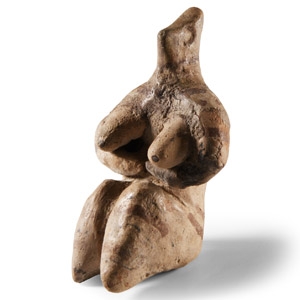
Tel Halaf Terracotta Fertility Figure
6th-5th millennium B.C. and laterSold for (Inc. bp): £494
With pinched facial features, applied breasts, horizontal bands of pigment; restored from old and new pieces. 119 grams, 94 mm
Acquired 1980-1990s. From the private collection of H.N., Milton Keynes, Bedfordshire, UK. -
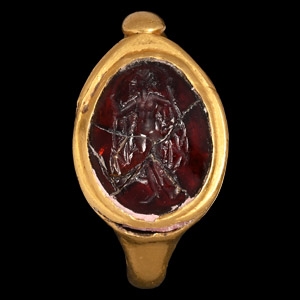
Sassanian Gold Ring with Garnet Intaglio
Circa 3rd century A.D.Estimate: £1,500 - 2,000 (‡+bp*)
Opening Bid: £750
Hollow-formed with ellipsoid stepped bezel, granule to one edge for alignment, inset cabochon intaglio of a nude male gripping the edges of an arch. 7.52 grams, 24.20 mm overall, 18.16 mm internal diameter (approximate size British K, USA 5 1/4, Europe 9.95, Japan 9)
Private Swiss collection, acquired 1999. Ex Surena collection, London, UK. Private European collection. -
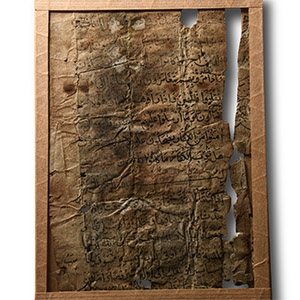
Western Asiatic Manuscript Fragment
14th-16th century A.D.Sold for (Inc. bp): £234
Rectangular paper leaf with a block of text to each side in nastaliq script, black ink with red ink captions and diacritics; mounted in a bifacial glazed panel. 213 grams, 18 cm
Acquired in the late 1980s-early 1990s. Important North West London collection.
