
Loading, please wait...
LOT 1427
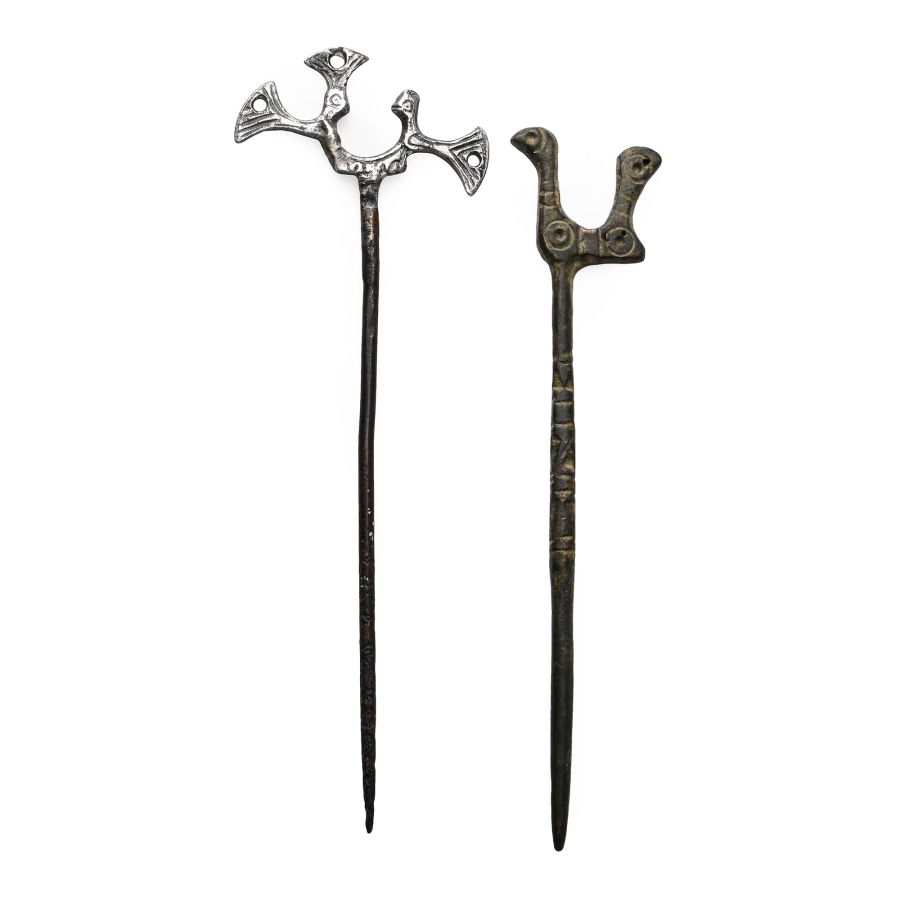
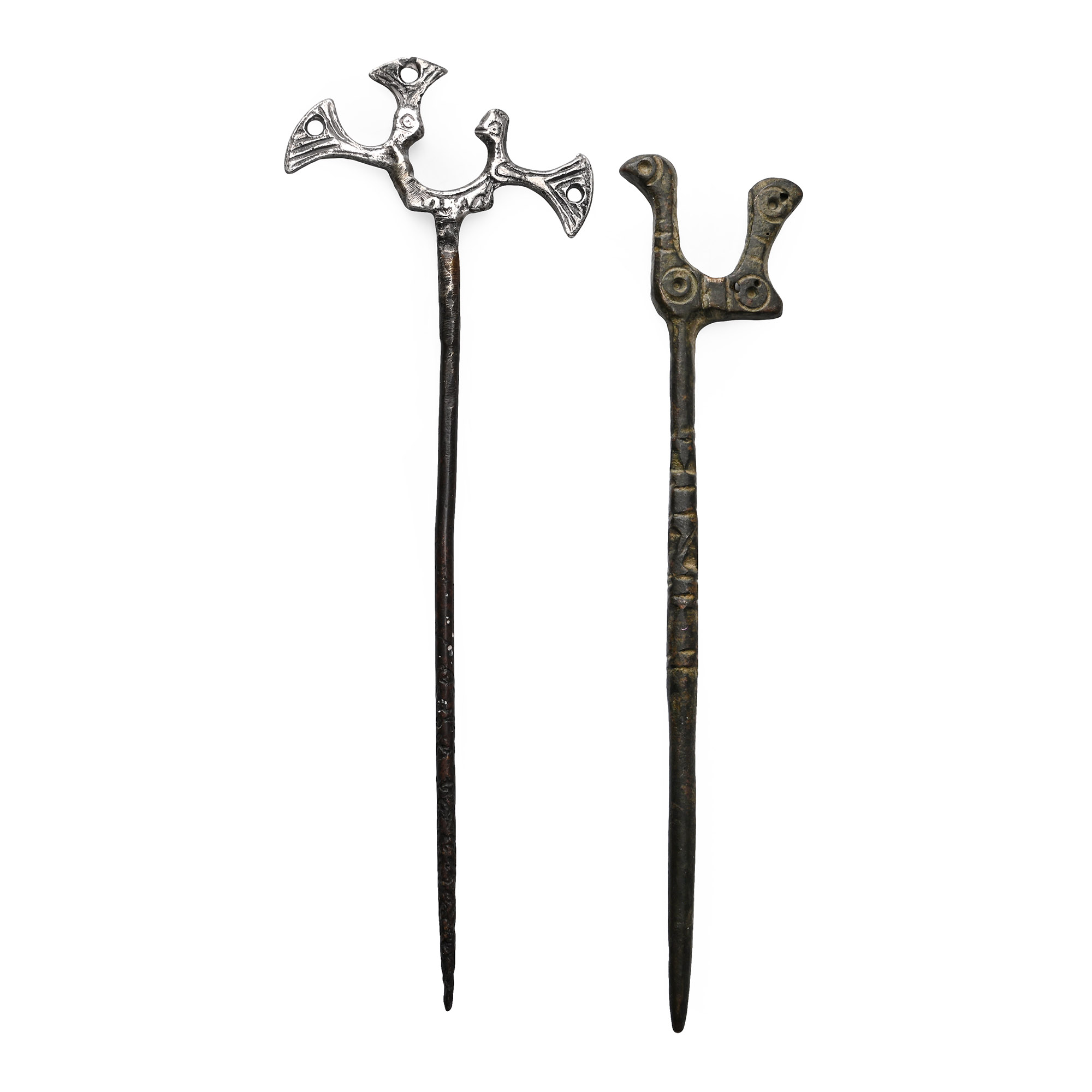
Western Asiatic Silver and Bronze Dress Pin with Birds Group
1ST-4TH CENTURY A.D.
4 5/8 in. (6.08 grams, 11.7 cm).
Comprising a silver round-section tapering shank, head formed as a pair of birds with three pierced ribbed triangular sections; bronze with round-section tapering shank, head formed as a pair of opposite facing birds with incised decoration. [2, No Reserve]
ProvenanceEx property of an Essex, UK, gentleman collector.
From the private collection of a Colchester, UK, gentleman.
See The British Museum, registration number 1880.3681.e., 1880.3711.b.
CONDITIONTimeLine Auctions follows a vetting process to ensure the authenticity and legality of all items, reinforcing our commitment to integrity and responsible trading. Each antiquity, antique, and coin lot undergoes thorough examination by a vetting committee of at least ten external specialists, professional trade association members, scientists, and archaeologists: Our Vetting Process
AUCTIONS:
TimeLine is a leading auction house specialising in antiquities, ancient art, collectables, natural history, coins, medals, and books. Our auctions offer museums, collectors, historians, and enthusiasts the opportunity to acquire unique and historically significant pieces.
LOT 1427
Western Asiatic Silver and Bronze Dress Pin with Birds Group
Sold for (Inc. bp): £85
-
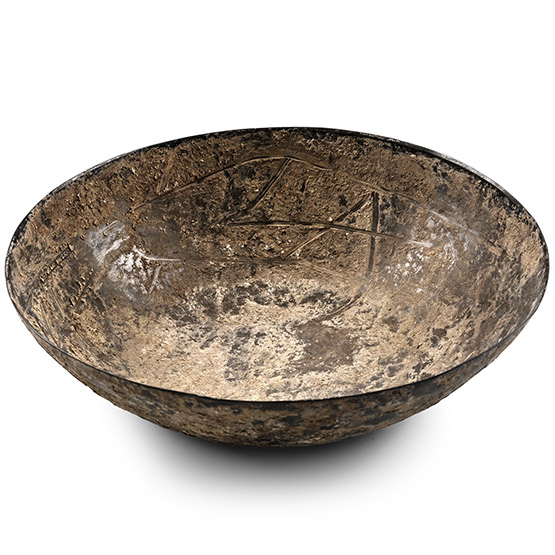
Sasanian Bronze Bowl
3rd-7th century A.D.Sold for (Inc. bp): £59
Broad and convex in profile with flat base. 158 grams, 16.5 cm
From the collection of North West London, UK, gentleman, 1990-2000s. -
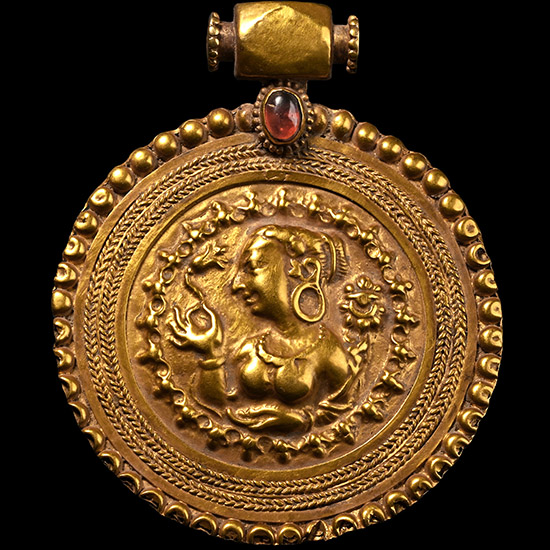
Large Kushan Gold Pendant with Bust of a Goddess
Circa 4th century A.D.Estimate: £12,000 - 17,000 (‡+bp*)
Opening Bid: £6,000
A late Kushan or Hephthalites Dynasty discoid pendant with a female deity, possibly Nana, at the centre holding a lotus flower in her right hand, hair elaborately dressed and wearing large earrings, necklace and bracelets; enclosed by a border of stylised bull heads and a double-plaited border, the outer edge with raised bosses; later applied polygonal suspension loop with granulated collars and an oval garnet cabochon. 22.11 grams, 71 mm
Acquired by a Swiss family in the mid-1980s to late 1990s, thence by descent. Private collection, Switzerland, since the late 1990s. Accompanied by an academic report by Dr Raffaele D’Amato. This lot has been checked against the Interpol Database of stolen works of art and is accompanied by search certificate number no.13021-246776.
Nana (Kushan Greek: Νανα, Ναναια, Ναναϸαο, Sogdian Nni) was a Bactrian female deity, a variation of the pan-Asian Nana, a fusion of the Sumero-Babylonian Inanna-Ishtar with a local deity, in her Kušan form with the local (Zoroastrian) Harakhvati Aredvi Sura Anahita. Such syncretism was common among Kušan deities. She was an important patron deity in the Kušan Empire and the most important deity worshipped by Emperor Kaniška (c. 127-150 A.D.). -
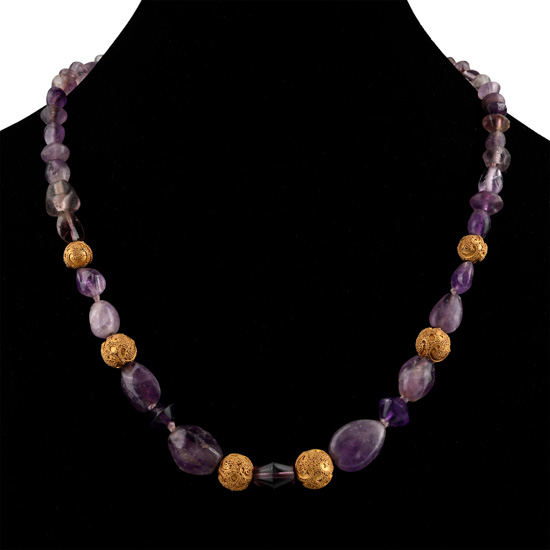
Western Asiatic Amethyst Bead Necklace with Gold Beads
Circa 4th-2nd century B.C.Estimate: £2,500 - 3,500 (+bp*)
Opening Bid: £1,250
A designer necklace composed of forty amethyst beads of various shapes and six gold spheres, decorated with granulation and spirals, forming opposed pelta patterns; with later openwork clasp. 69.6 grams, 52.5 cm
Acquired on European art market, 1990s. Private collection of Mr K.A., France. with Kallos Gallery, London. This lot has been checked against the Interpol Database of stolen works of art and is accompanied by a search certificate number no.13012-246749.
Amethyst was widely used in Graeco-Roman Egypt. We know that the amethyst mines of Abu Diyeiba, near Semna, were in use from the time of Ptolemy VI through to the Roman era. Pliny says that Indian amethysts were the best, but he also refers to amethysts from Egypt. The Egyptian amethysts are typically flawed and of a pale, almost pink, hue. They were seldom set in gold and were most usually made into beads. Ptolemaic and Roman inscriptions and artefacts have been found at amethyst mines in Egypt’s eastern deserts.
