
Loading, please wait...
LOT 1338
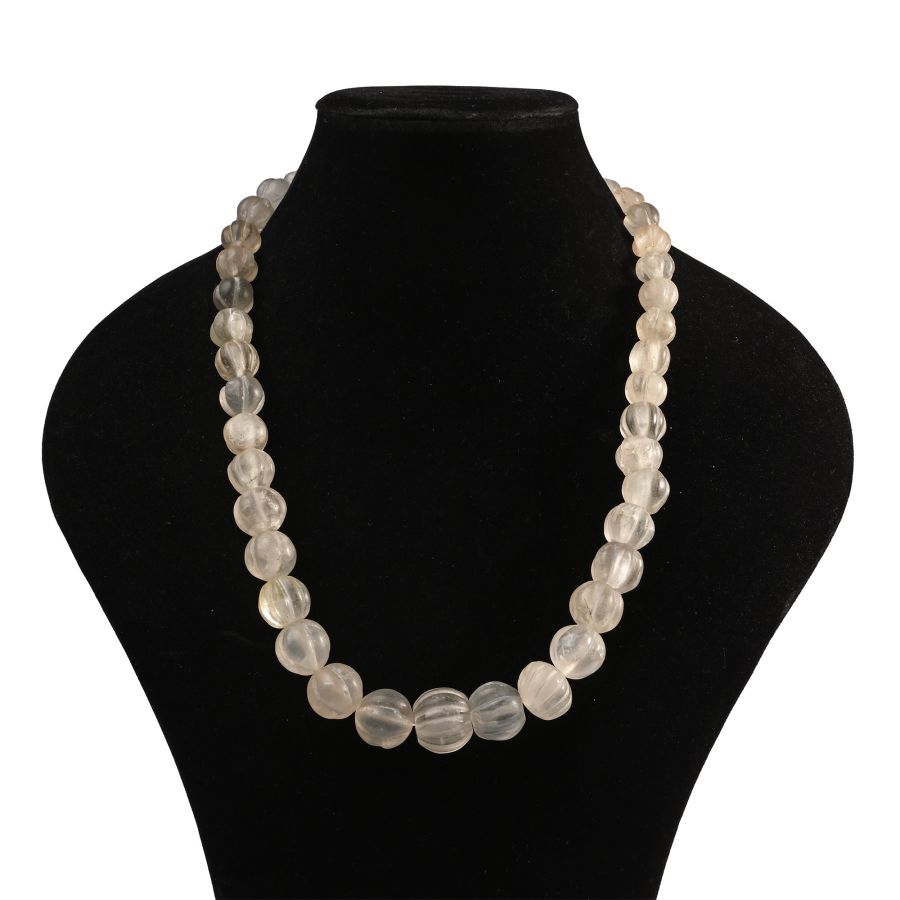
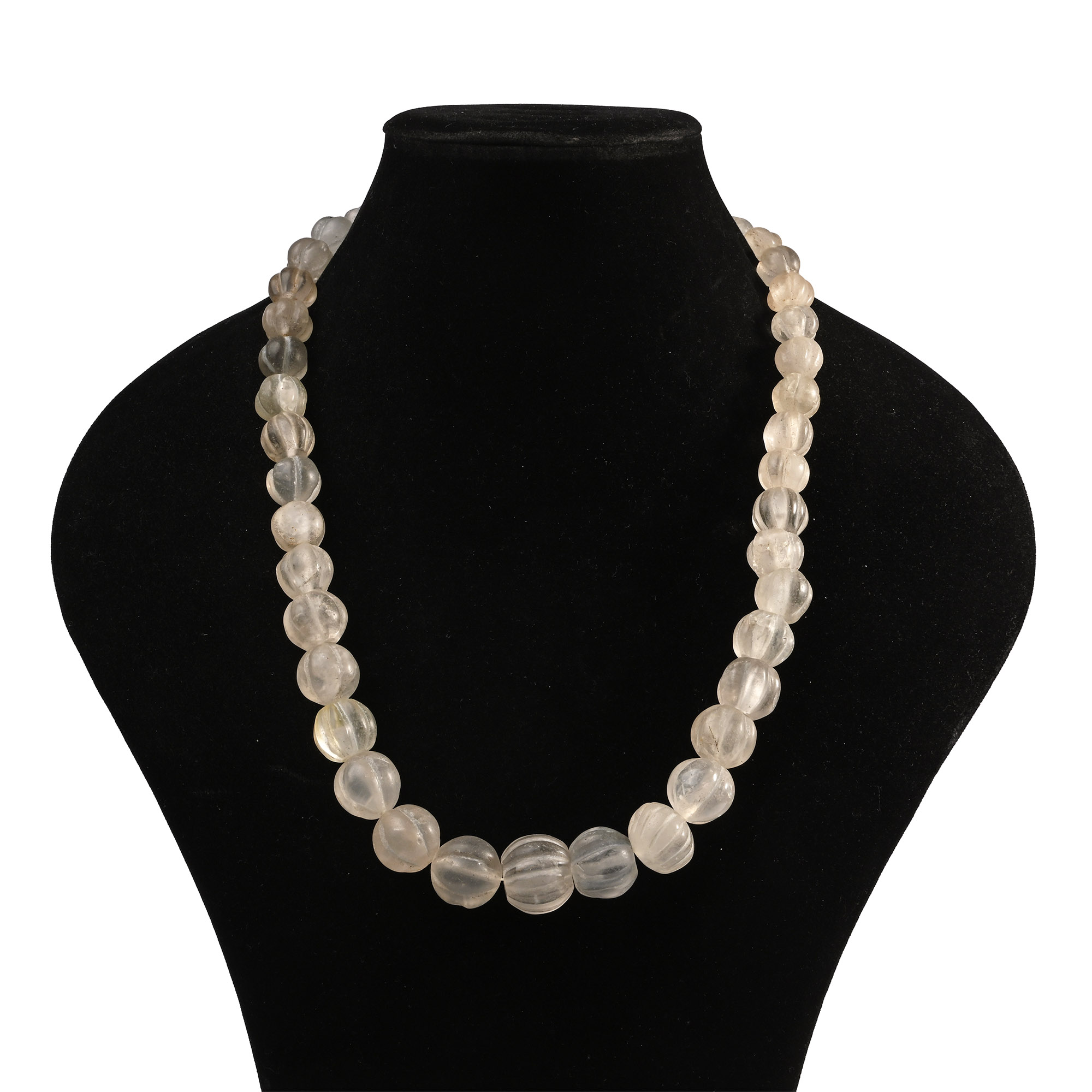
Western Asiatic Rock Crystal Bead Necklace String
20TH CENTURY A.D.
20 7/8 in. (190 grams, 53 cm).
Composed of graduated melon beads; restrung. [No Reserve]
ProvenanceFrom the London, UK, art market in the 1990s.
This lot has been cleared against the Art Loss Register database, and is accompanied by an illustrated lot declaration signed by the Head of the Antiquities Department, Dr Raffaele D'Amato.
TimeLine Auctions follows a vetting process to ensure the authenticity and legality of all items, reinforcing our commitment to integrity and responsible trading. Each antiquity, antique, and coin lot undergoes thorough examination by a vetting committee of at least ten external specialists, professional trade association members, scientists, and archaeologists: Our Vetting Process
AUCTIONS:
TimeLine is a leading auction house specialising in antiquities, ancient art, collectables, natural history, coins, medals, and books. Our auctions offer museums, collectors, historians, and enthusiasts the opportunity to acquire unique and historically significant pieces.
-
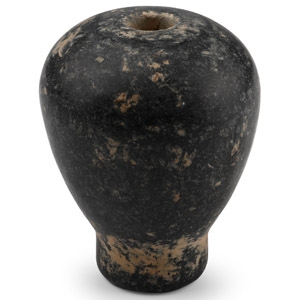
Western Asiatic Stone Macehead
3rd millennium B.C.Estimate: £100 - 140 (+bp*)
Opening Bid: £50
Piriform in profile with extended tubular socket. 494 grams, 82 mm
From a London, UK, collection, 2000s. This lot has been cleared against the Art Loss Register database, and is accompanied by an illustrated lot declaration signed by the Head of the Antiquities Department, Dr Raffaele D'Amato. -
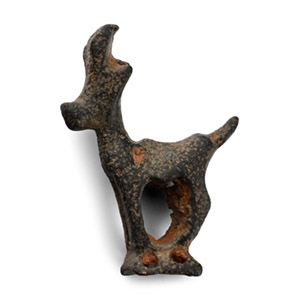
Luristan Bronze Antelope Statuette
1st millennium B.C.Sold for (Inc. bp): £33
A model antelope or stag with ring-and-dot motif to the shoulders, standing on a narrow square base. 11 grams, 37mm
Fine condition.
Property of a Dutch gentleman; formerly in an old collection formed in the 1970s. From the private collection of John Meredith, acquired since the 1990s; thence by descent. This lot has been cleared against the Art Loss Register database, and is accompanied by an illustrated lot declaration signed by the Head of the Antiquities Department, Dr Raffaele D'Amato. -
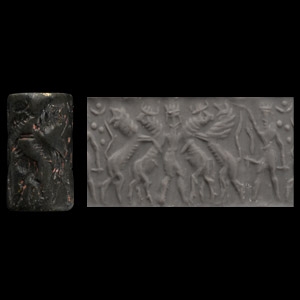
Akkadian Stone Cylinder Seal with Divine Hero
2nd-1st millennium B.C.Estimate: £500 - 700 (+bp*)
Opening Bid: £250
With front-facing standing male figure between a bull and a lion on each side, a standing male holding an axe(?), moon crescent and three dots ;accompanied by a museum-quality impression. 11.6 grams, 27 mm
From the collection of the late S, London, UK, 1970-2000. Examined by Professor Wilfrid George Lambert FBA (1926-2011), historian, archaeologist, and specialist in Assyriology and Near Eastern archaeology, in the 1990s. This lot has been cleared against the Art Loss Register database, and is accompanied by an illustrated lot declaration signed by the Head of the Antiquities Department, Dr Raffaele D'Amato.
