
Loading, please wait...


LOT 1456
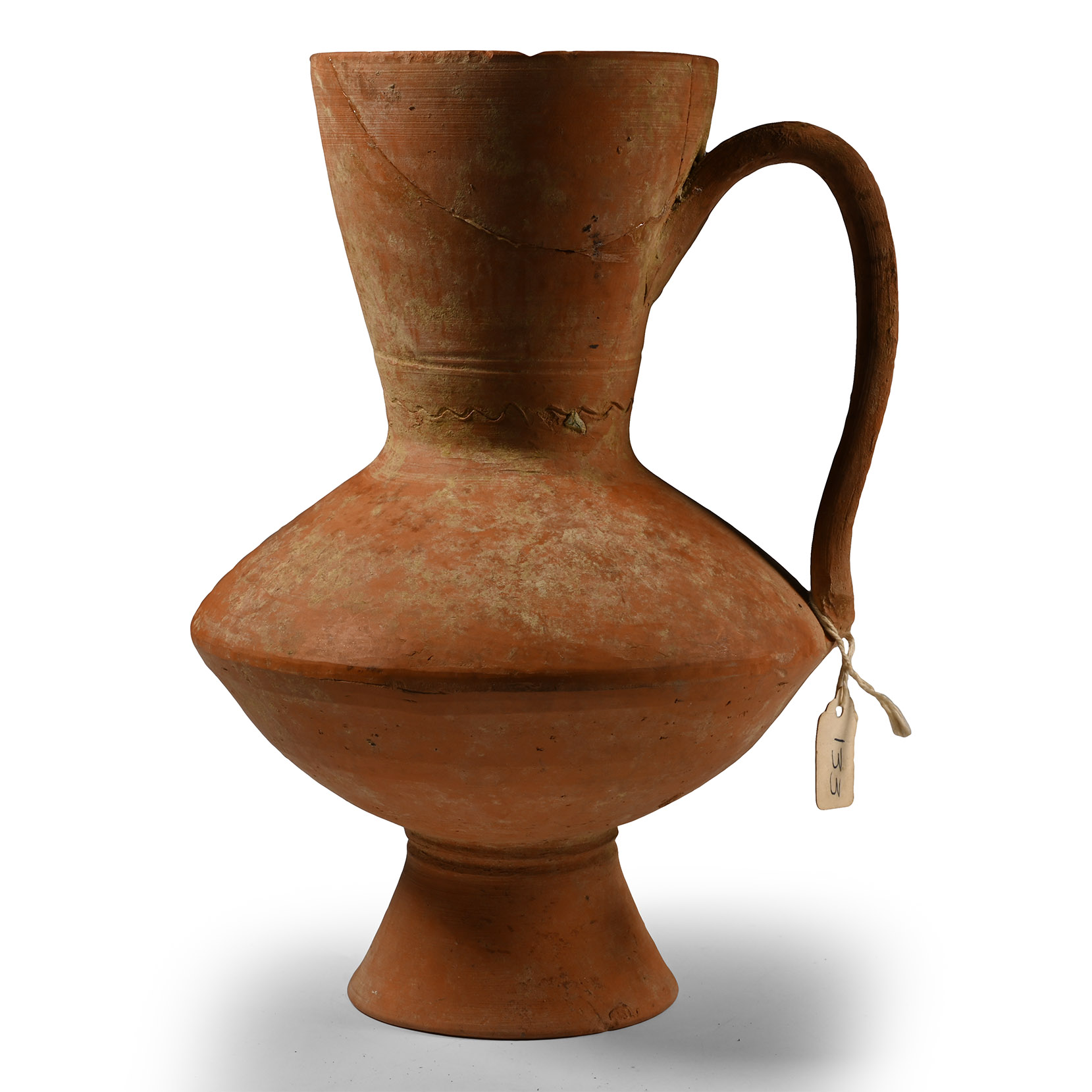
Western Asiatic Red Terracotta Juglet
4TH CENTURY A.D.
8 1/4 in. (547 grams, 21 cm).
With narrow flared base and broad biconical body, funicular neck, strap handle to the shoulder.
ProvenanceEx London, UK, gallery, 1971-early 2000s.
London, UK, collection.
This lot has been cleared against the Art Loss Register database, and is accompanied by an illustrated lot declaration signed by the Head of the Antiquities Department, Dr Raffaele D'Amato.
TimeLine Auctions follows a vetting process to ensure the authenticity and legality of all items, reinforcing our commitment to integrity and responsible trading. Each antiquity, antique, and coin lot undergoes thorough examination by a vetting committee of at least ten external specialists, professional trade association members, scientists, and archaeologists: Our Vetting Process
AUCTIONS:
TimeLine is a leading auction house specialising in antiquities, ancient art, collectables, natural history, coins, medals, and books. Our auctions offer museums, collectors, historians, and enthusiasts the opportunity to acquire unique and historically significant pieces.
LOT 1456
Western Asiatic Red Terracotta Juglet
Estimate £120 - 179€140 - 210 (for guidance only)$160 - 240 (for guidance only)
-
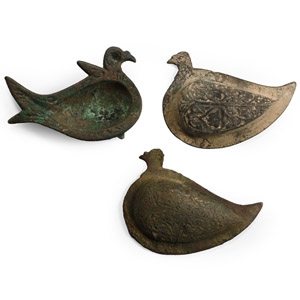
Western Asiatic Bronze Cosmetic Dish Group
12th-13th century A.D.Estimate: £150 - 200 (+bp*)
Opening Bid: £75
Comprising three shallow dishes, each comma-shaped with incised hatching to the narrow rim, bird-head detailing to the spur; one with three stub feet. 114 grams total, 74-78 mm
Ex London, UK, gallery, 1971-early 2000s. London, UK, collection. This lot has been cleared against the Art Loss Register database, and is accompanied by an illustrated lot declaration signed by the Head of the Antiquities Department, Dr Raffaele D'Amato. -
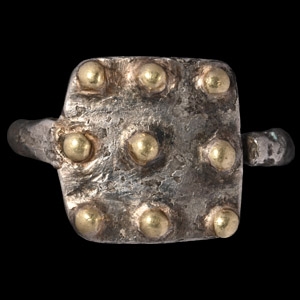
Western Asiatic Silver-Gilt Ring with Bosses
Eastern Roman Period, circa 3rd-5th century A.D.Sold for (Inc. bp): £169
Penannular in form with square bezel, nine gilt bosses. 4.58 grams, 23.23 mm overall, 18.16 mm internal diameter (approximate size British N 1/2, USA 6 3/4, Europe 14.35, Japan 13)
Ex German art market, 2000s. Acquired from an EU collector living in London. From the collection of Surrey, UK, gentleman. This lot has been cleared against the Art Loss Register database, and is accompanied by an illustrated lot declaration signed by the Head of the Antiquities Department, Dr Raffaele D'Amato. -
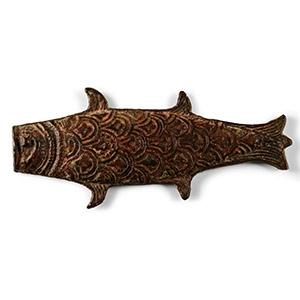
Western Asiatic Bronze Cosmetic Fish Palette
12th century A.D.Estimate: £150 - 200 (+bp*)
Opening Bid: £75
Formed as a shallow fish-shaped dish with scale and gill detailing to the underside; remains of pigment to upper face. 20.7 grams, 86 mm
Ex London, UK, gallery, 1971-early 2000s. London, UK, collection. This lot has been cleared against the Art Loss Register database, and is accompanied by an illustrated lot declaration signed by the Head of the Antiquities Department, Dr Raffaele D'Amato.
