
Loading, please wait...
LOT 1094
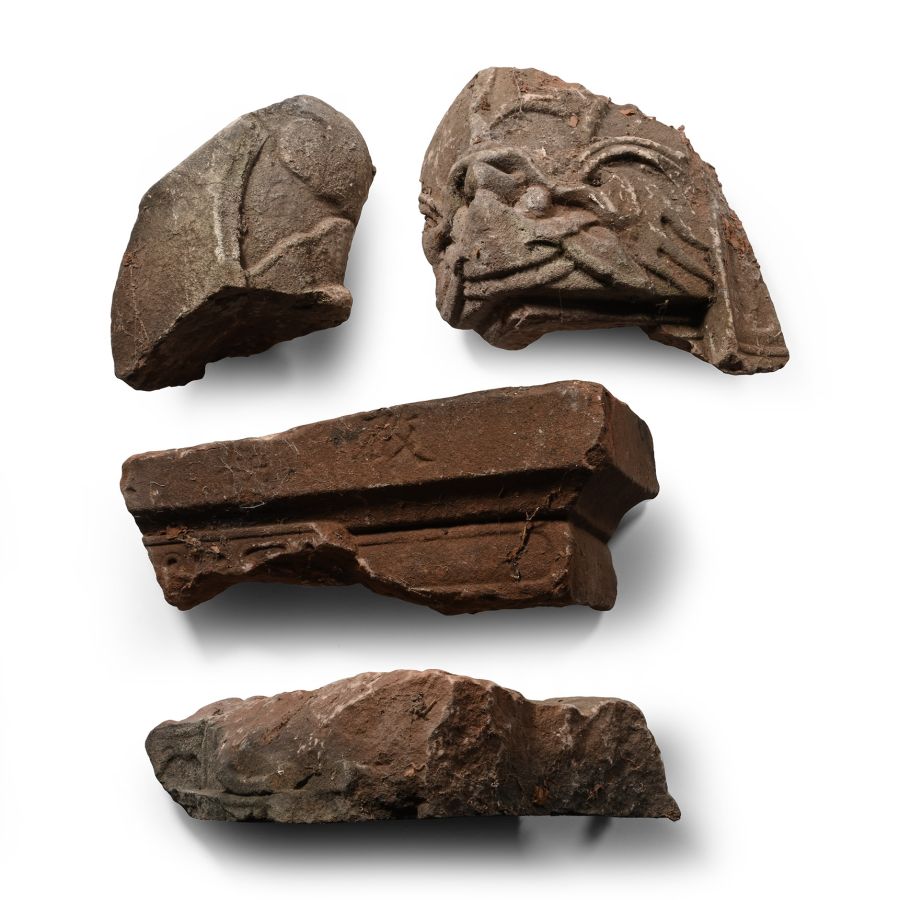
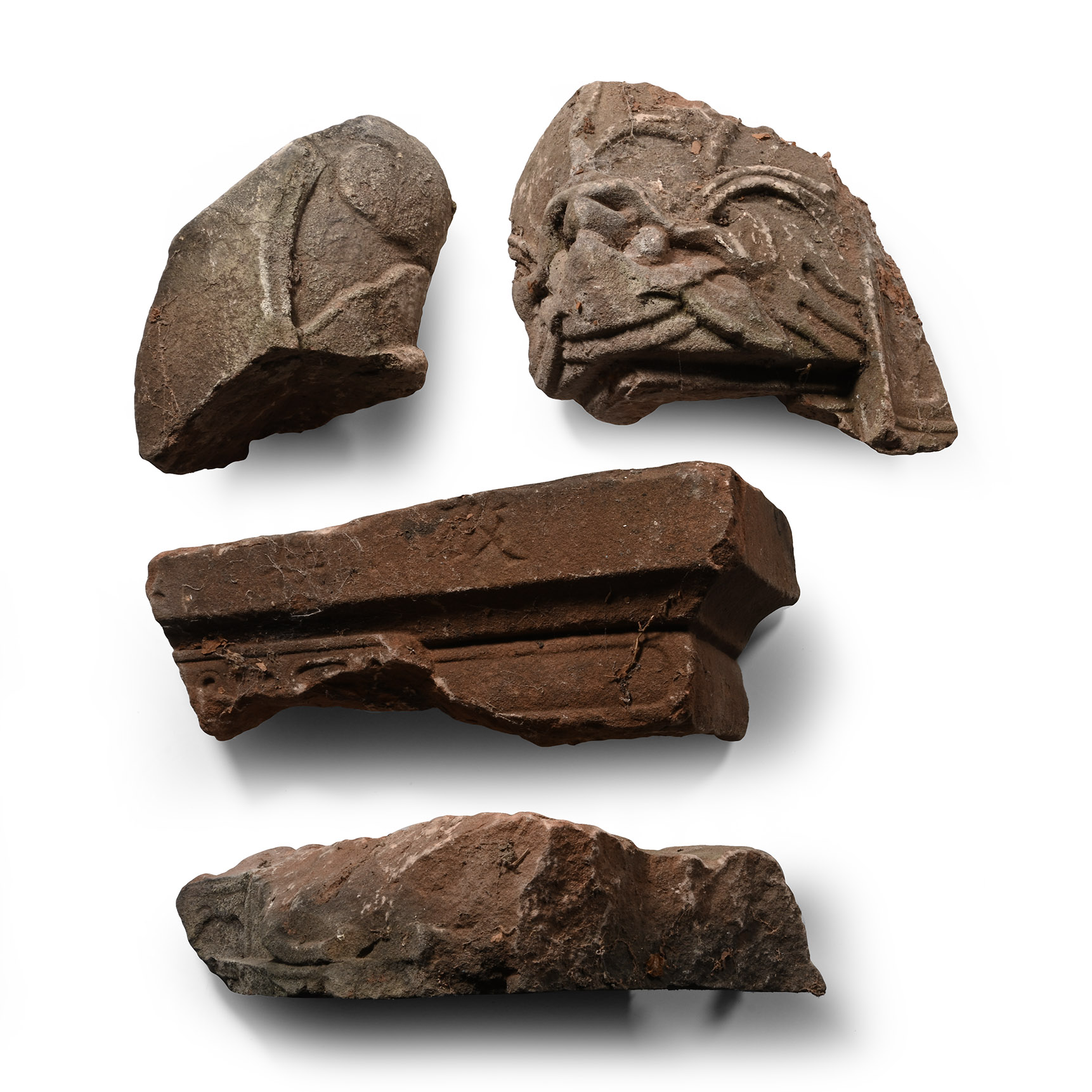
Western Asiatic Red Sandstone Fragment Group
CIRCA 10TH CENTURY A.D.
5 7/8 - 9 in. (5.45 kg total, 15-23 cm).
Including a frieze corner fragment with high-relief mask, and other items. [4, No Reserve]
ProvenanceFrom a collection acquired on the UK art market from various auction houses and collections mostly before 2000.
From an important Cambridgeshire estate; thence by descent.
TimeLine Auctions follows a vetting process to ensure the authenticity and legality of all items, reinforcing our commitment to integrity and responsible trading. Each antiquity, antique, and coin lot undergoes thorough examination by a vetting committee of at least ten external specialists, professional trade association members, scientists, and archaeologists: Our Vetting Process
AUCTIONS:
TimeLine is a leading auction house specialising in antiquities, ancient art, collectables, natural history, coins, medals, and books. Our auctions offer museums, collectors, historians, and enthusiasts the opportunity to acquire unique and historically significant pieces.
-
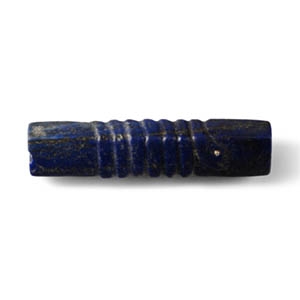
Bactrian Lapis Lazuli Tubular Bead with Snake
3rd millennium B.C.Estimate: £700 - 900 (+bp*)
Opening Bid: £280
Square in section, tubular bead with reserved coiled serpent, head at each end. 3.32 grams, 36 mm
with Gallery Rosen Ancient Art, Tel Aviv, 1968. with a London, UK gallery, 1971-early 2000s. Includes a copy of the original 1968 invoice. -
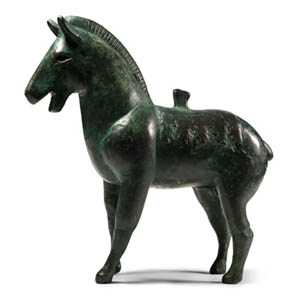
Large South Arabian Bronze Horse
4th-3rd century B.C.Sold for (Inc. bp): £18,200
Modelled in the round as a figure of a horse standing in static pose with ears pricked, stiff mane, open mouth; the eyes hollow to form sockets for inlay; to the spine, an integral saddlecloth with crenellated lower edges and triangular stud for attachment of a rider figure; one rear leg repaired. 1.1 kg, 19.5 cm
Previously in the private collection of Mr François Antonovich (1934-2023). Accompanied by a copy of a previous catalogue page and details and photographs of François Antonovich. This lot has been checked against the Interpol Database of stolen works of art and is accompanied by a search certificate number no.12417-225442.
The stiff mane and stocky stature of the model recall the type of animal found on the steppe, known as 'Przewalski's horse'. -
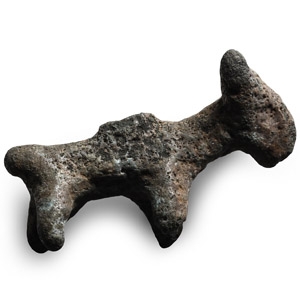
Luristan Bronze Animal
13th-7th century B.C.Sold for (Inc. bp): £46
Cast bronze model of a calf with splayed horns. 11 grams, 33 mm wide
Acquired 1980-2015. Ex Abelita family collection.
