
Loading, please wait...
LOT 1477
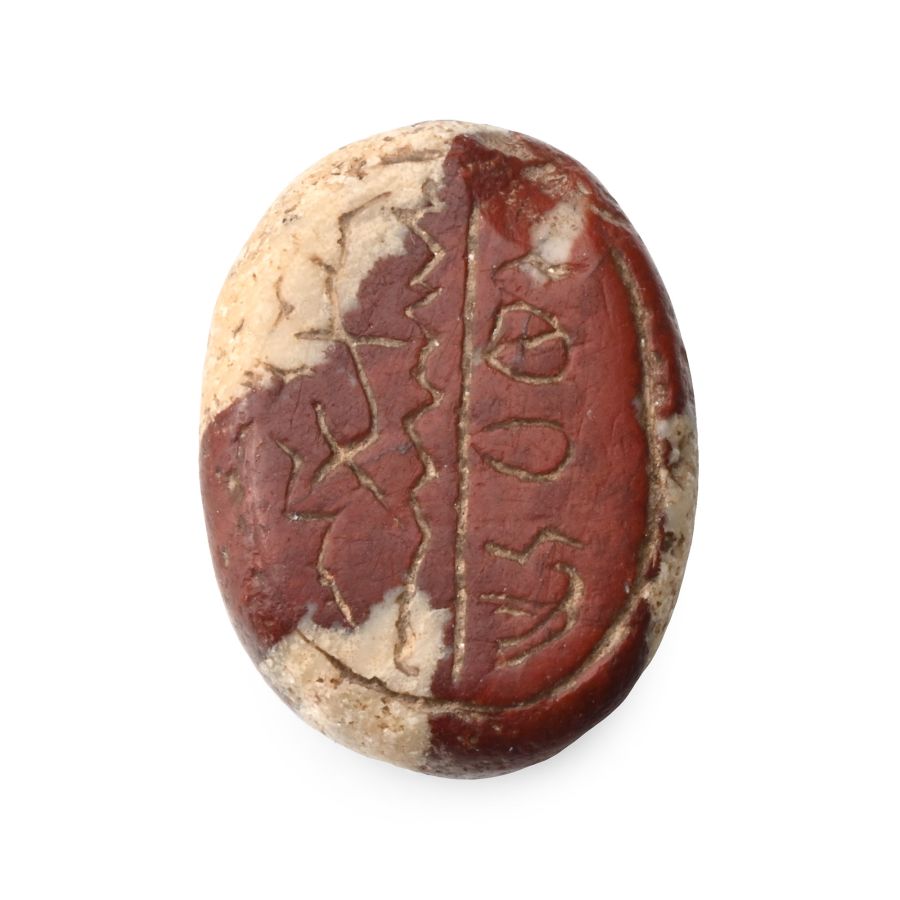
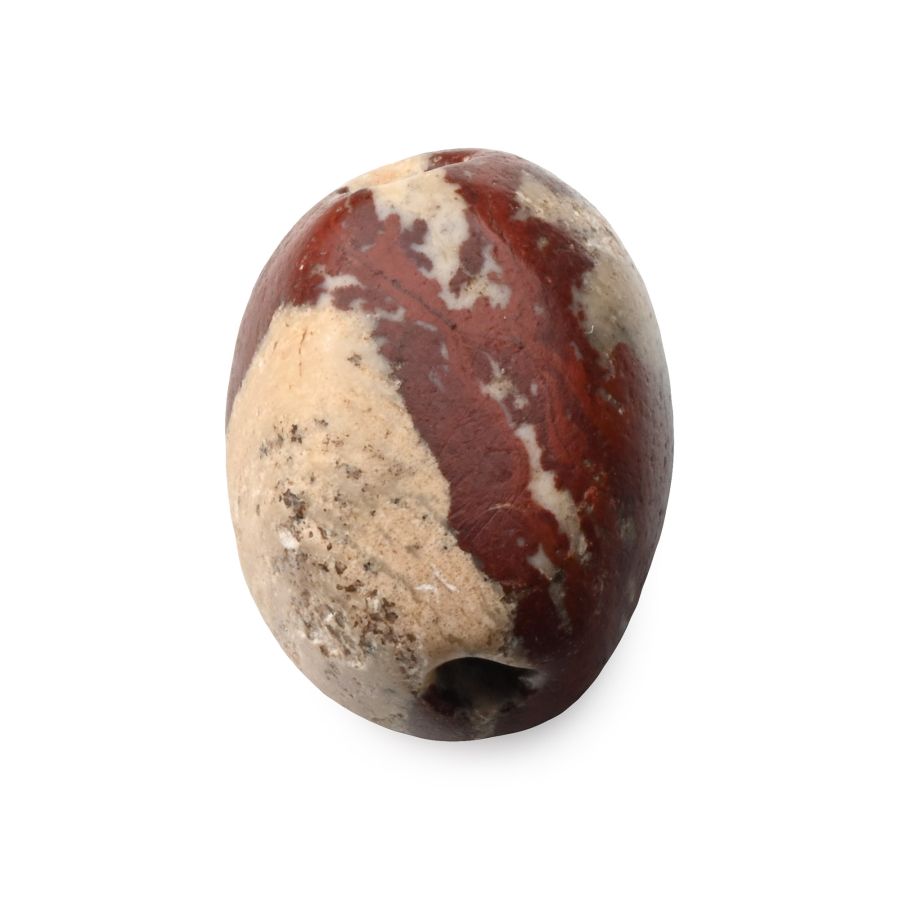
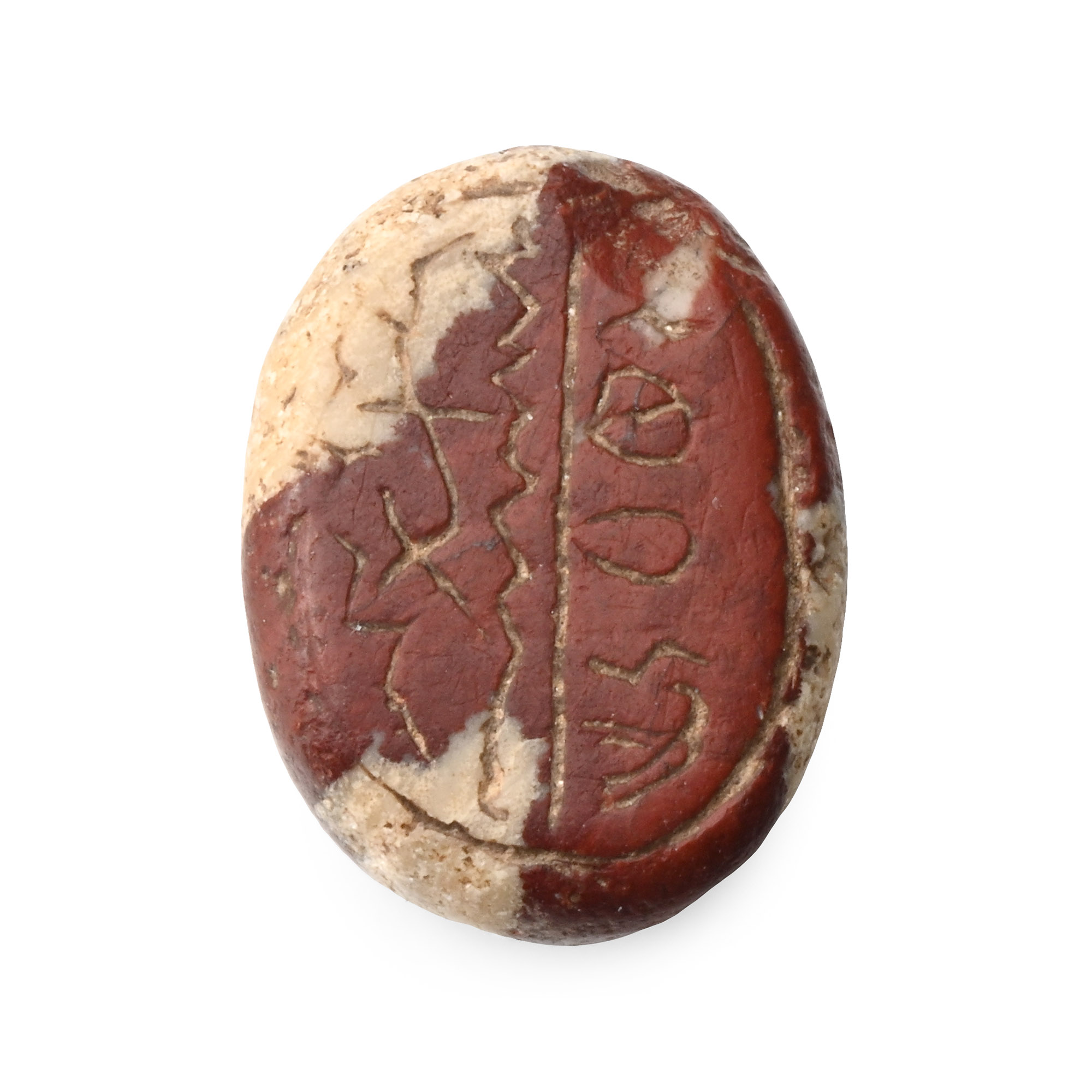
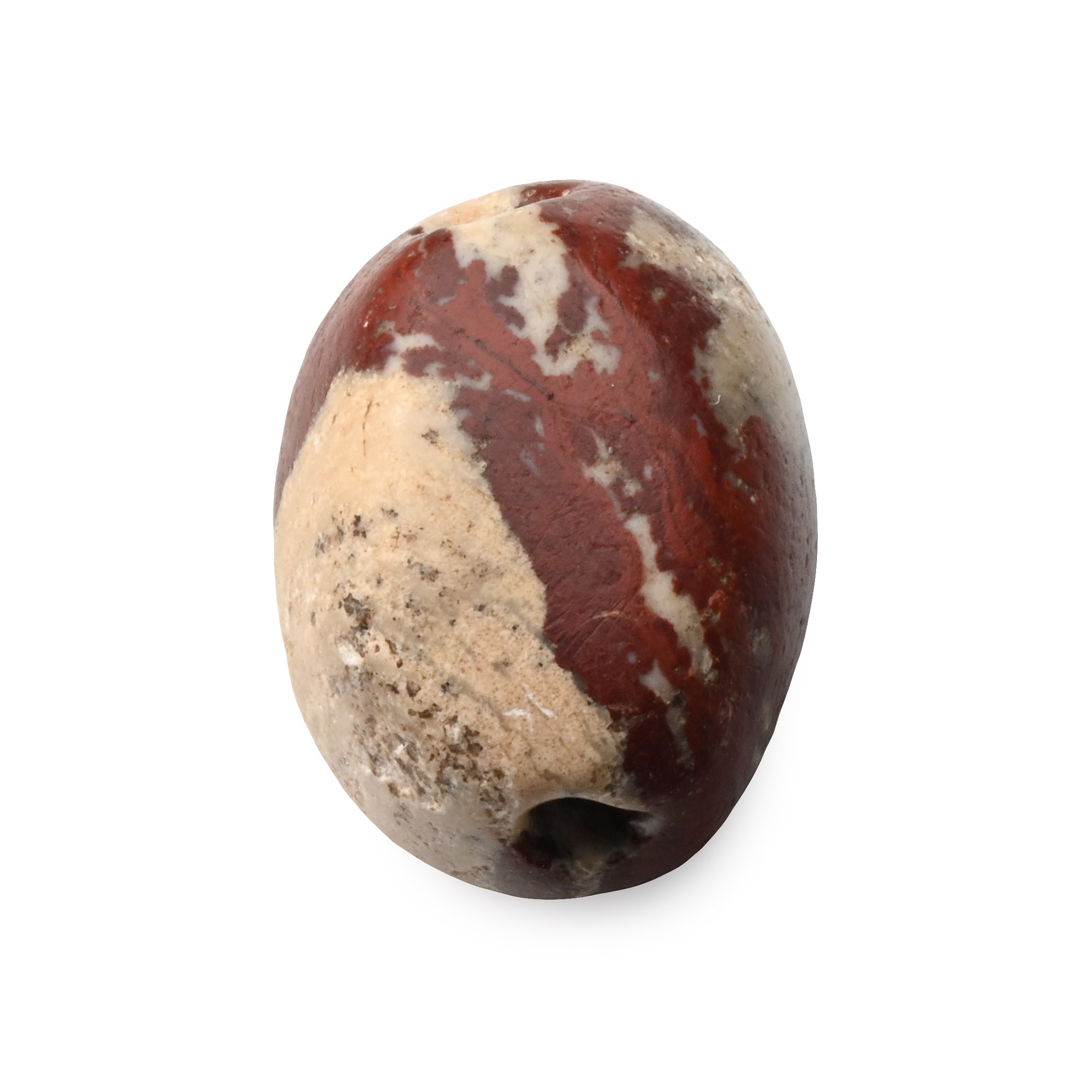
Western Asiatic Red and White Jasper Scaraboid with Semitic Inscription
1ST MILLENNIUM B.C.
3/4 in. (4.41 grams, 19 mm).
Plano-convex in section with longitudinal piercing; underside with incised border and tondo in two registers with five characters.
ProvenanceLondon, UK, art market, 1980s.
Private collection, London, UK.
TimeLine Auctions follows a vetting process to ensure the authenticity and legality of all items, reinforcing our commitment to integrity and responsible trading. Each antiquity, antique, and coin lot undergoes thorough examination by a vetting committee of at least ten external specialists, professional trade association members, scientists, and archaeologists: Our Vetting Process
AUCTIONS:
TimeLine is a leading auction house specialising in antiquities, ancient art, collectables, natural history, coins, medals, and books. Our auctions offer museums, collectors, historians, and enthusiasts the opportunity to acquire unique and historically significant pieces.
LOT 1477
Western Asiatic Red and White Jasper Scaraboid with Semitic Inscription
Sold for (Inc. bp): £156
-
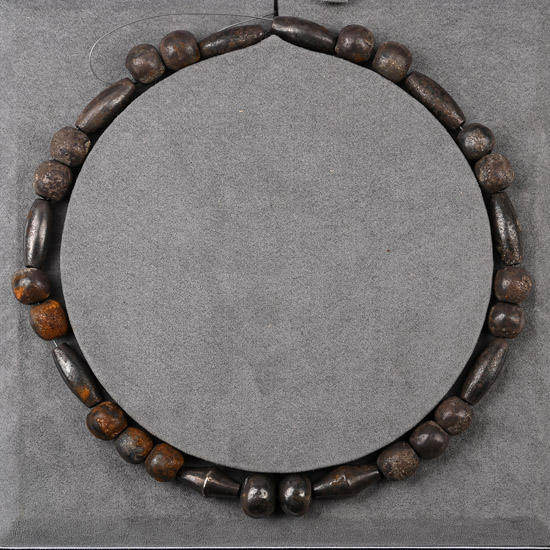
Mesopotamian Heavy Silver Bead Necklace
3rd-early 2nd millennium B.C.Estimate: £5,000 - 7,000 (+bp*)
Opening Bid: £2,500
Restrung and comprising mainly spherical, elongated ovals, oblates, and biconical shapes; accompanied by a custom-made lined display box. 224 grams, 56 cm
Numismatic and Ancient Art Gallery AG, Ancient Art of the Mediterranean World, No 8, no.5, c.1982. Taisei Gallery, Gold & Silver Auction, Part II, Ancient to Renaissance, 5 November 1992, The Conrad Salon, The Waldorf-Astoria, New York, no.39. Private collection, London. This lot has been checked against the Interpol Database of stolen works of art and is accompanied by search certificate number no.13265-253358.
The Sumerian word for silver is kú-babbar, which means ‘white metal’. Silver was mined from ores that contained significant amounts of other metals and impurities and therefore requires a great deal of further processing before it can be used. It was considered sacred and immutable, and an extremely high-status material, used for royal jewellery. -
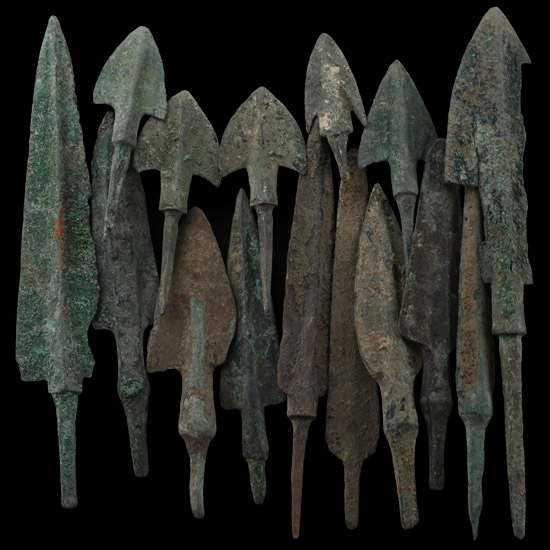
Western Asiatic Bronze Arrowhead Collection
2nd-1st millennium B.C.Sold for (Inc. bp): £247
Comprising tanged arrowheads, four with large elongated triangular blades and raised midrib, sharp central groove, one triangular type with barbed shoulders and flat tang, six with barbed shoulders and cylindrical stem with handle for the shaft; two with squared shoulders and rectangular stem with handle for the shaft, one with leafed blade, two with barbed shoulder and flat tang, one with flat blade, one with short triangular head and handle for the shaft, and another with short tang and trilobate blade with raised midrib. 221 grams total, 4.2-13.6 cm
London, UK, collection, 1990s.
Some of these arrowheads seem to belong to the type V, subcategory types A, B, C and D according to the classification of Khorasani and Negahban. In the four categories of triangular bronze arrowheads from Luristan, Marlik, and Northern Iran, individuated by Negahban, subtypes C and D of type V are larger arrow or javelin heads, C with barbed shoulders and D with round shoulders. Most of them were cast in moulds. -
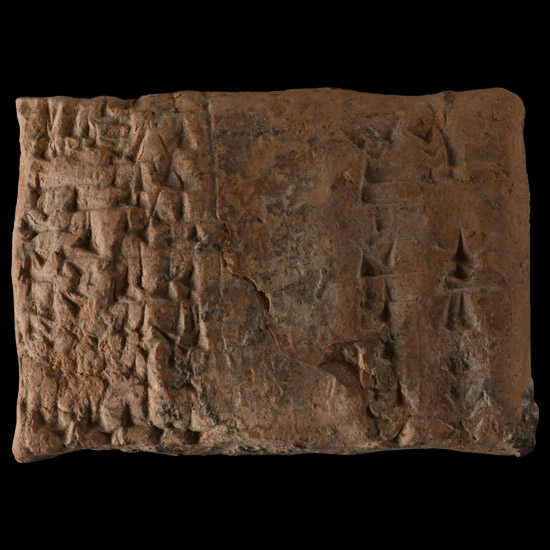
Old Babylonian Terracotta Cuneiform Tablet
2nd millennium B.C.Sold for (Inc. bp): £416
Pillow-shaped tablet with rows of cuneiform text on one side. 74.4 grams, 57.5 mm
From the private collection of a European gentleman (1942-2024), formed since the 1970s.
