
Loading, please wait...

LOT 0308
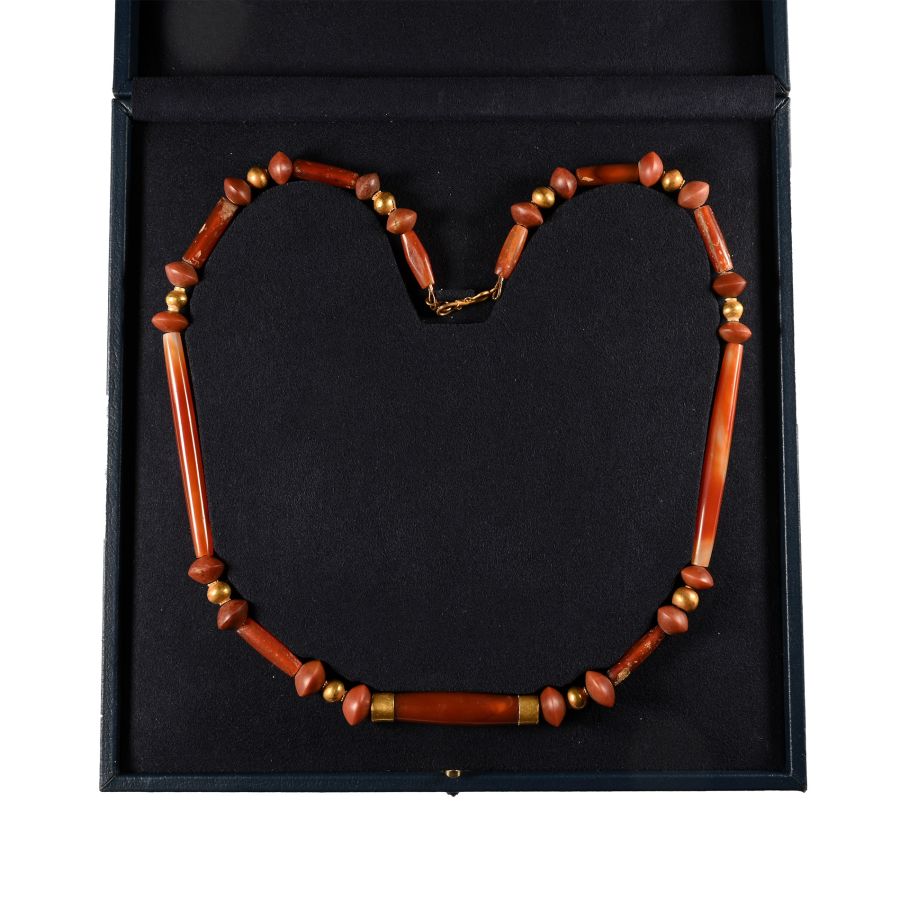
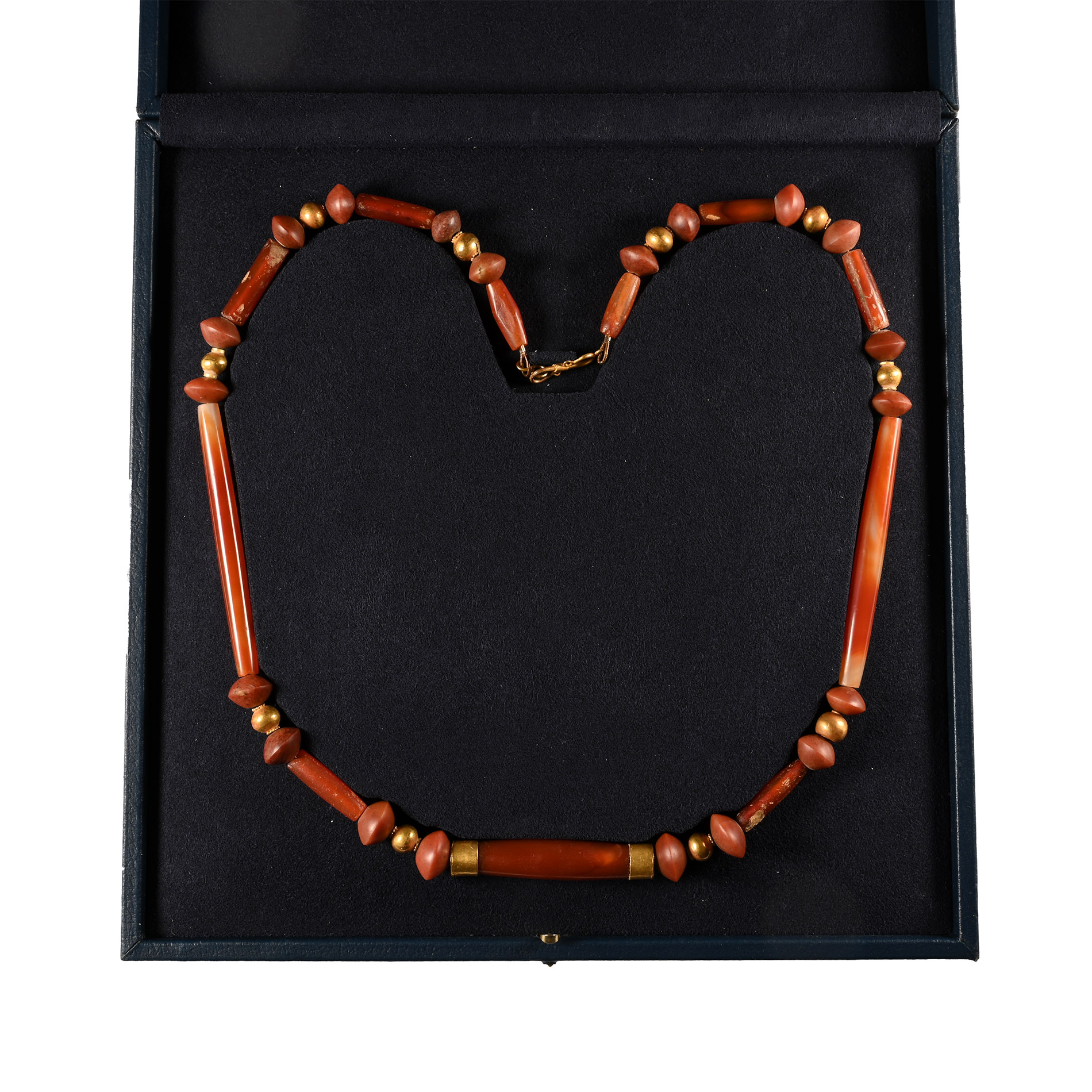
Western Asiatic Red Agate Necklace
2ND-1ST CENTURY B.C. AND LATER
24 1/4 in. (56.89 grams, 61.5 cm long).
Graduated group of restrung tubular and biconvex beads with later gilt-metal interstitial oblate collars; S-hook and eye closure; with custom display box.
ProvenanceEx Swiss collection, kept in London since the 1980s.
CONDITIONTimeLine Auctions follows a vetting process to ensure the authenticity and legality of all items, reinforcing our commitment to integrity and responsible trading. Each antiquity, antique, and coin lot undergoes thorough examination by a vetting committee of at least ten external specialists, professional trade association members, scientists, and archaeologists: Our Vetting Process
AUCTIONS:
TimeLine is a leading auction house specialising in antiquities, ancient art, collectables, natural history, coins, medals, and books. Our auctions offer museums, collectors, historians, and enthusiasts the opportunity to acquire unique and historically significant pieces.
LOT 0308
Western Asiatic Red Agate Necklace
Estimate £800 - 1,000€930 - 1,160 (for guidance only)$1,080 - 1,350 (for guidance only)
-

Mesopotamian Stone School Exercise Cylinder Seal
2nd-1st millennium B.C.Sold for (Inc. bp): £650
Frieze of four male figures in profile in advancing pose; supplied with a museum-quality impression. 9.8 grams, 18 mm
Ex S. collection, London, UK, 1980s-2000s. -

Western Asiatic Bronze Dish
1st millennium B.C.Sold for (Inc. bp): £117
Hemispherical in section with rolled rim. 235 grams, 15.5 cm
Acquired 1980-2015. Ex Abelita family collection. -

Amlash Type Bronze Spearhead
12th-11th century B.C.Sold for (Inc. bp): £117
With a long ovate blade and curved shoulders, broad midrib and a rectangular sectioned tang, a reinforced shaft opening to reveal the tang and rounded shoulders. 313 grams, 38 cm
Acquired 1980-2015. Ex Abelita family collection.
The weapon belongs to the type 1 of the spear-head classification of Khorasani, mainly originating from Marlik or Amlash areas. Similar pieces have been dated by Stutzinger to 1200-1100 B.C.
