
Loading, please wait...
LOT 0872
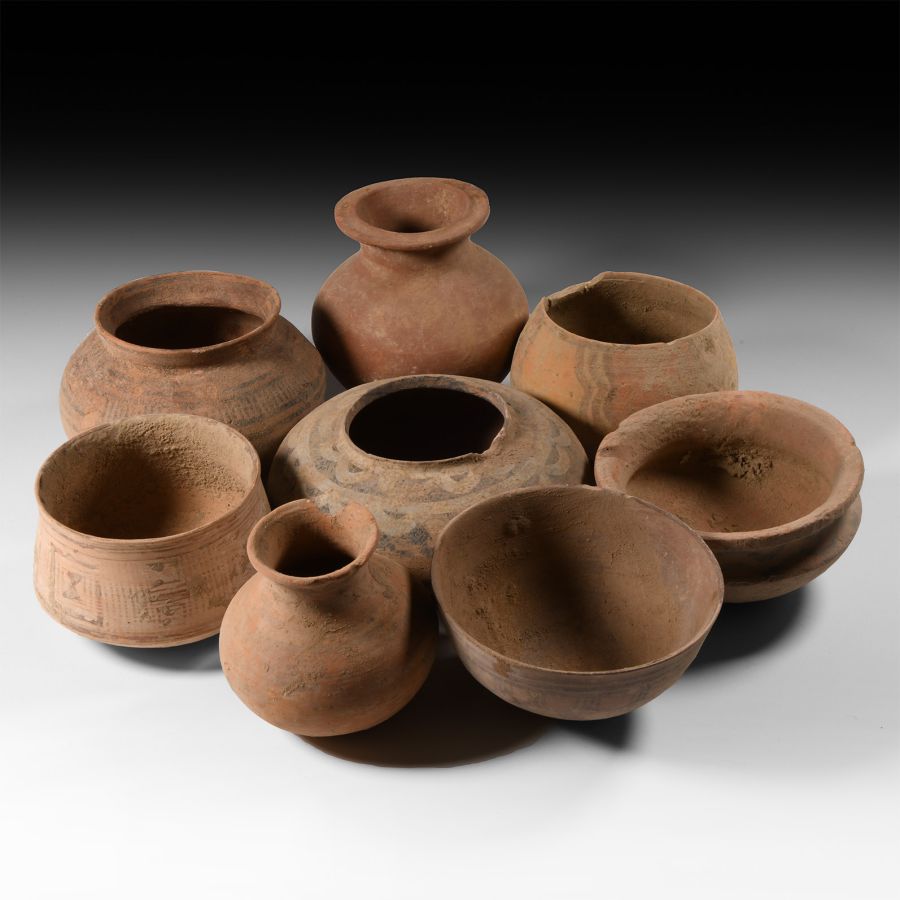
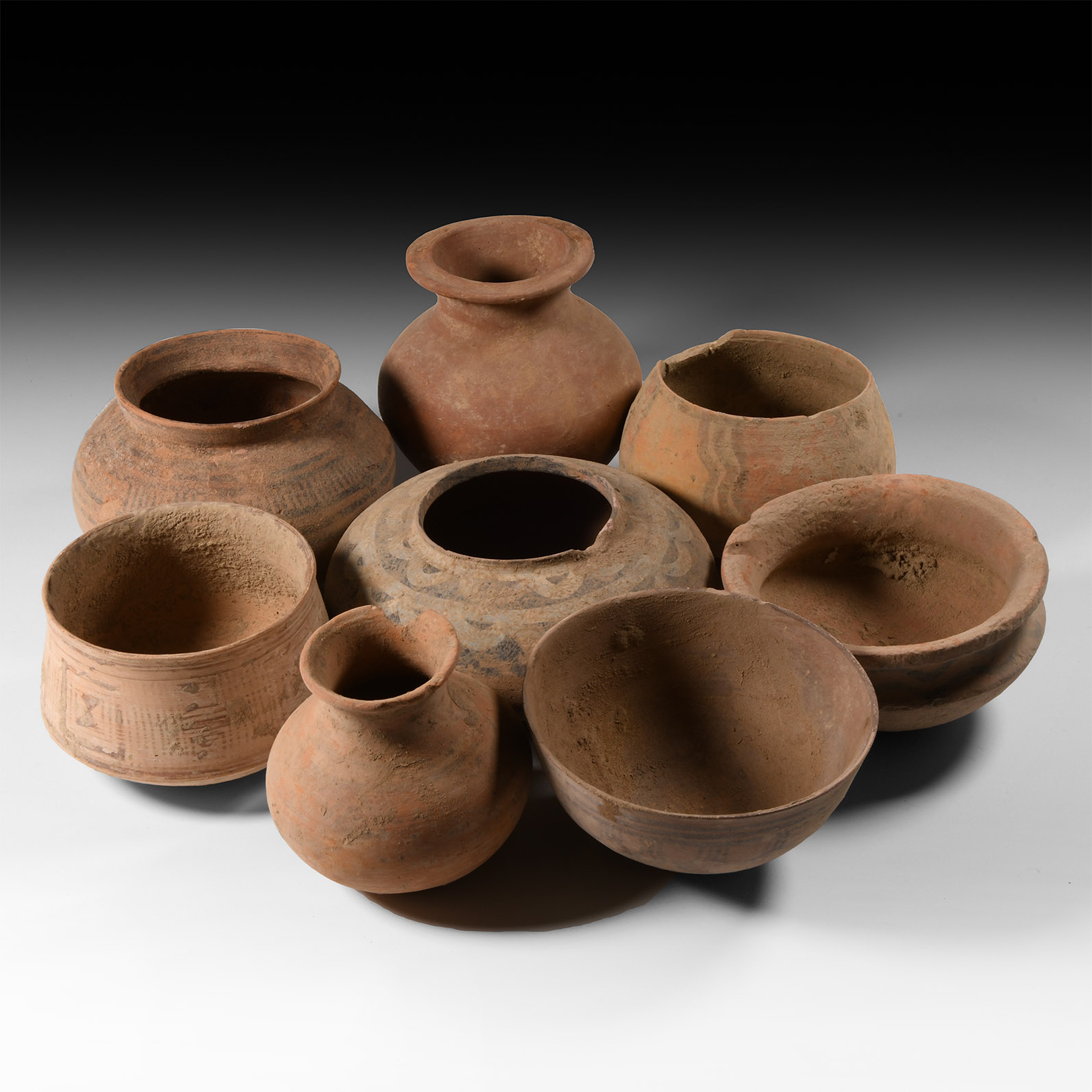
Western Asiatic Pottery Vessel Group
2ND-1ST MILLENNIUM B.C.
3 3/4 - 6 1/8 (2.35 kg total, 9.5-15.5 cm wide).
A group of eight ceramic vessels, mainly comprising jars of various forms, most painted with geometric motifs. [8]
ProvenanceAcquired 1970-2010.
Collection of a late Japanese gentleman.
TimeLine Auctions follows a vetting process to ensure the authenticity and legality of all items, reinforcing our commitment to integrity and responsible trading. Each antiquity, antique, and coin lot undergoes thorough examination by a vetting committee of at least ten external specialists, professional trade association members, scientists, and archaeologists: Our Vetting Process
AUCTIONS:
TimeLine is a leading auction house specialising in antiquities, ancient art, collectables, natural history, coins, medals, and books. Our auctions offer museums, collectors, historians, and enthusiasts the opportunity to acquire unique and historically significant pieces.
-
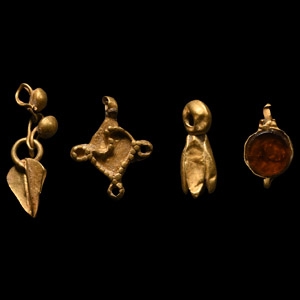
Western Asiatic Gold Pendant Collection
Mid 1st millennium B.C.Sold for (Inc. bp): £208
A group of four gold pendants: one segmented pedant on a chain with domed plaques; one circular set with polished garnet; a lozenge-shaped plaque with granulated border and knop to three corners; flower bud-shaped pendant with suspension loop. 0.84 grams total, 9-14 mm
Acquired 1970-2010. Collection of a late Japanese gentleman. -
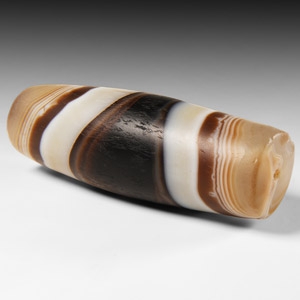
Western Asiatic Style Giant Agate Bead
20th century A.D. or earlierSold for (Inc. bp): £46
A very large banded agate bead in the style of ancient Western Asiatic examples with symmetrical banding; drilled for suspension. 149 grams, 90 mm
Acquired 1969-1999. London collection of the late Mr S.M., thence by descent. -

Aramaic Lead Amuletic Sheet with Magical Text
1st-3rd century A.D.Sold for (Inc. bp): £572
A roughly rectangular sheet-lead panel with columns of lightly incised Aramaic text of magical subject matter; the sheet originally rolled tightly. 4.34 grams, 41 mm
Acquired 1969-1999. London collection of the late Mr S.M., thence by descent.
The sheet was possibly meant to be a defixio or curse tablet on which the malediction was recorded and then shut away (by being tightly rolled up), so that the victim could not find or negate it.
