
Loading, please wait...
LOT 1128
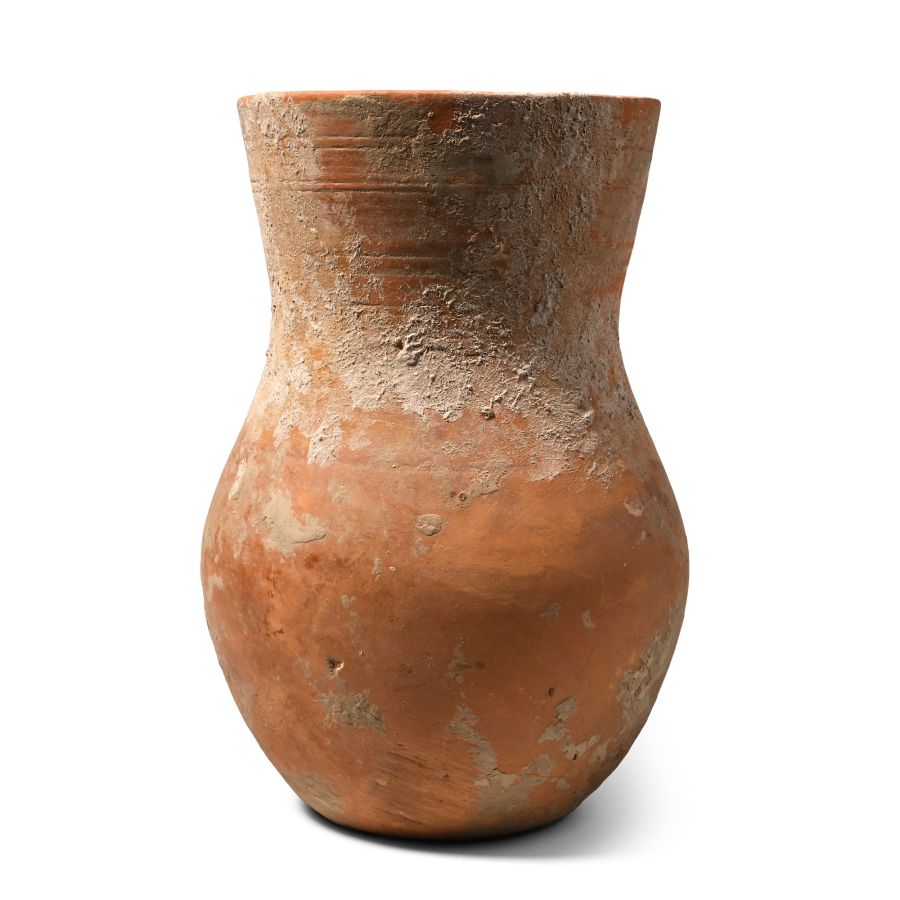
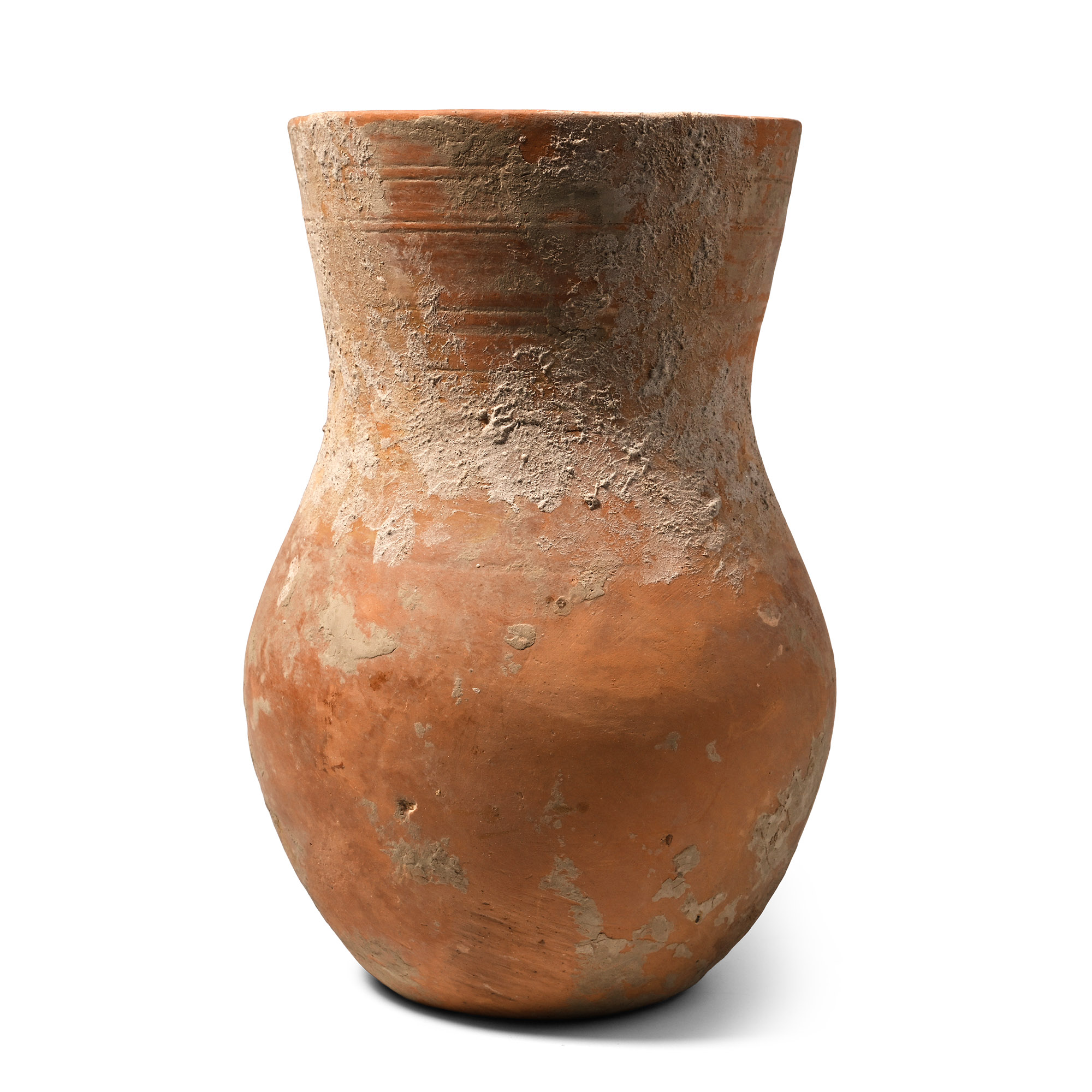
Western Asiatic Pottery Vase
1ST MILLENNIUM B.C.
7 1/2 in. (729 grams, 19 cm).
Comprising a biconvex body and broad flaring mouth, with circuferential impressed lines to the outer face.
ProvenanceFrom the collection of a gentleman, 1988-2000s.
CONDITIONTimeLine Auctions follows a vetting process to ensure the authenticity and legality of all items, reinforcing our commitment to integrity and responsible trading. Each antiquity, antique, and coin lot undergoes thorough examination by a vetting committee of at least ten external specialists, professional trade association members, scientists, and archaeologists: Our Vetting Process
AUCTIONS:
TimeLine is a leading auction house specialising in antiquities, ancient art, collectables, natural history, coins, medals, and books. Our auctions offer museums, collectors, historians, and enthusiasts the opportunity to acquire unique and historically significant pieces.
LOT 1128
Western Asiatic Pottery Vase
Estimate £100 - 140€120 - 160 (for guidance only)$140 - 190 (for guidance only)
-
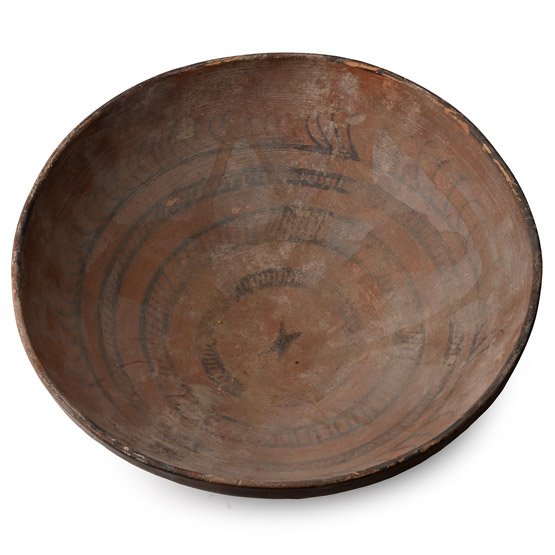
Large Western Asiatic Decorated Pottery Bowl
1st millennium B.C.Sold for (Inc. bp): £98
Hemispherical in profile with low discoid foot, rounded rim, painted detailing to inner face of concentric hatched rings and other ornament. 1.33 kg, 28 cm
From the collection of a gentleman, 1988-2000s. -
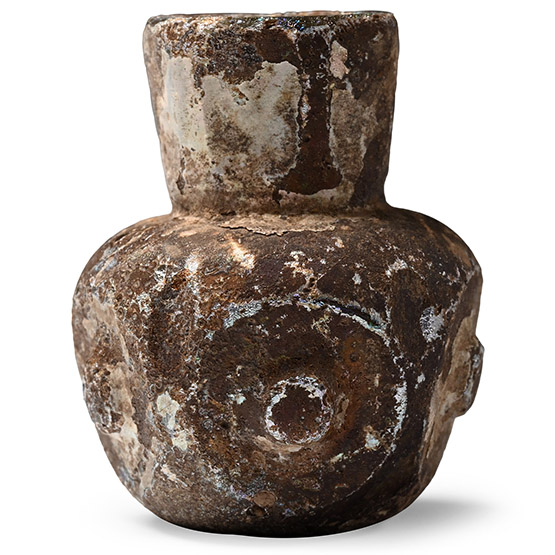
Western Asiatic Mould-Blown Glass Perfume Bottle
9th-10th century A.D.Sold for (Inc. bp): £46
In iridescent glass with squat body and hexagonal-section mouth; facetted body with impressed ring detailing. 13.2 grams, 33 mm
Ex collection of the late Mr S. M., London, UK, 1970-1990s. -
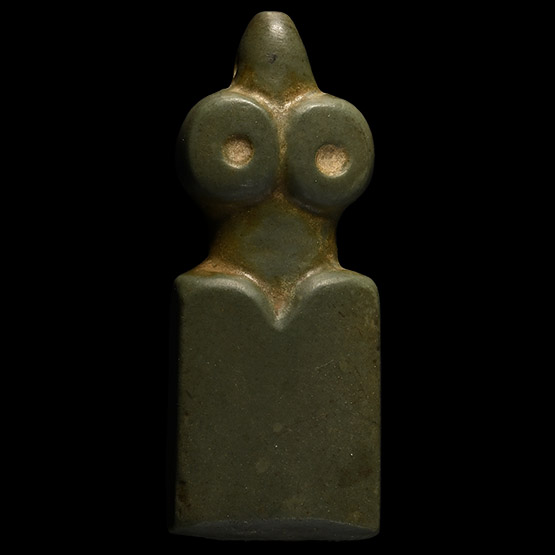
Sumerian Green Stone Eye Idol
3rd millennium B.C.Estimate: £3,000 - 4,000 (‡+bp*)
Opening Bid: £1,500
Carved in the round as a rectangular block with a slit to the upper edge, vertical spike with two annulet 'eyes'; pierced for suspension. 13.2 grams, 41 mm
with M. Petropoulos, Zurich, early 1990s. with Rhéa gallery. Private collection, acquired in 1999. This lot has been checked against the Interpol Database of stolen works of art and is accompanied by a search certificate number no.12897-241753.
