
Loading, please wait...

LOT 1253
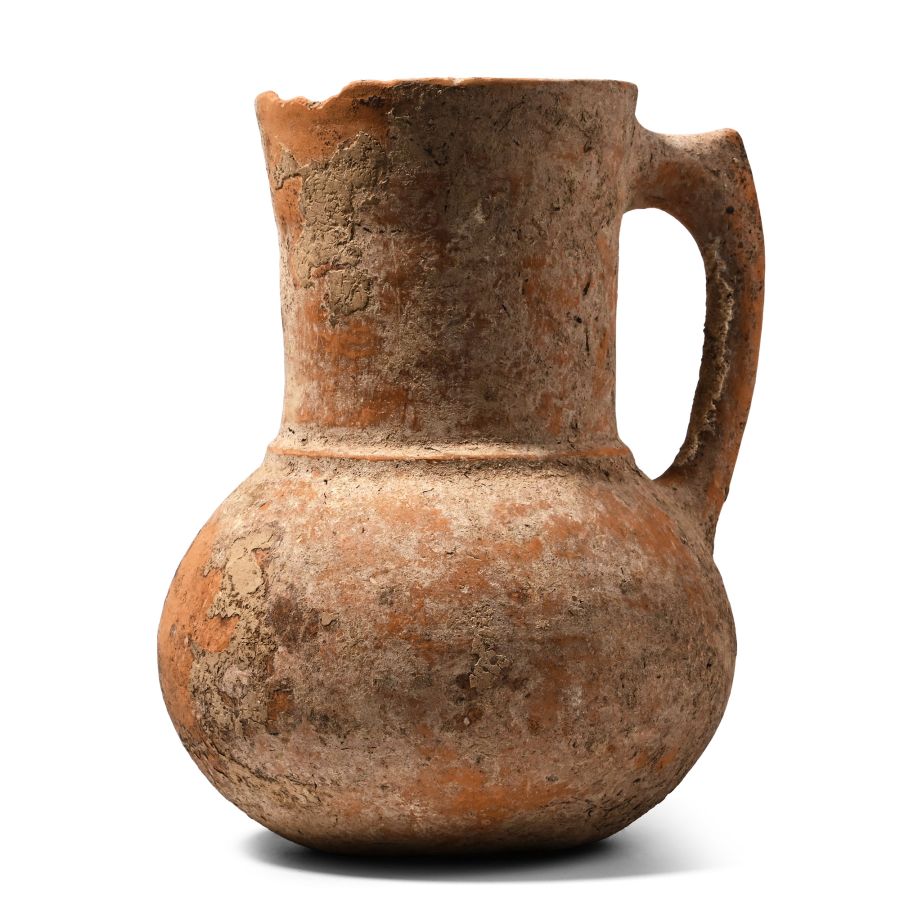
Western Asiatic Pottery Jug
1ST MILLENNIUM B.C.
7 1/4 in. (730 grams, 18.4 cm).
Comprising a broad tubular neck with carination at the junction with the squat body, strap handle with spur to the upper edge.
ProvenanceFrom the collection of a gentleman, 1988-2000s.
CONDITIONTimeLine Auctions follows a vetting process to ensure the authenticity and legality of all items, reinforcing our commitment to integrity and responsible trading. Each antiquity, antique, and coin lot undergoes thorough examination by a vetting committee of at least ten external specialists, professional trade association members, scientists, and archaeologists: Our Vetting Process
AUCTIONS:
TimeLine is a leading auction house specialising in antiquities, ancient art, collectables, natural history, coins, medals, and books. Our auctions offer museums, collectors, historians, and enthusiasts the opportunity to acquire unique and historically significant pieces.
-

Anatolian Black Steatite Gemstone in Gold Ring
2nd-1st millennium B.C.Sold for (Inc. bp): £1,170
Discoid plano-convex stamp-seal with transverse piercing, incuse profile image of an ibex with angular motif below the flank; set into a later sympathetic gold swivel ring; supplied with a museum-quality impression. 8.66 grams, 31.12 mm overall, 19.63 mm internal diameter (approximate size British Q, USA 8, Europe 17.49, Japan 16)
with Gorny and Mosch, Munich, 12 December 2019, no.657 (Part). Private collection, England. -
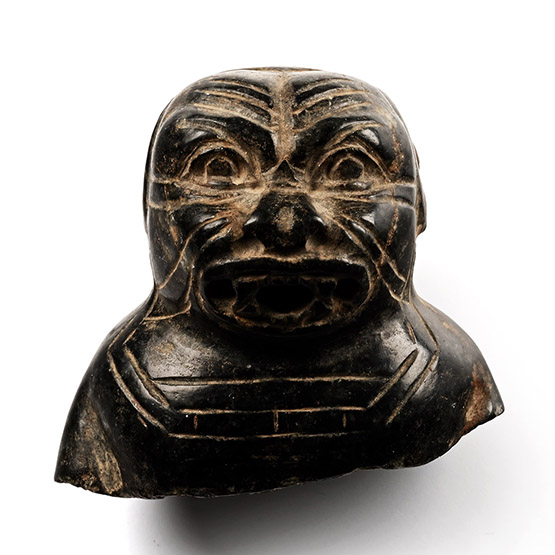
Assyrian Stone Bust of the Demon Pazuzu
8th-7th century B.C.Estimate: £1,500 - 2,000 (‡+bp*)
Opening Bid: £750
Carved in the round bust with heavily hatched brow and cheeks, D-shaped eyes, snubbed feline nose, ellipsoid mouth gaping with teeth exposed, segmented panel to chest. 47 grams, 37 mm
European art market, 1997. Acquired by the present owner from the above. This lot has been checked against the Interpol Database of stolen works of art and is accompanied by a search certificate no.12596-232196.
Pazuzu, in the old Mesopotamian mythology, is described as ‘the son of Hanbu and king of wind demons’. Amulets with images of his full body or, more often, just his head, were common in the early first millennium B.C. Pazuzu was most popular in the Neo-Assyrian and Neo-Babylonian periods, from about the late 8th century B.C. through the 6th century B.C. -

Western Asiatic White and Beige Stone Bead Necklace String
1st millennium B.C. and laterSold for (Inc. bp): £46
Mixed group of beads in alternating sizes, restrung to a Y-shape. 14.49 grams, 32 cm
From London, UK, gallery collection, 1990s.
