
Loading, please wait...
LOT 1395
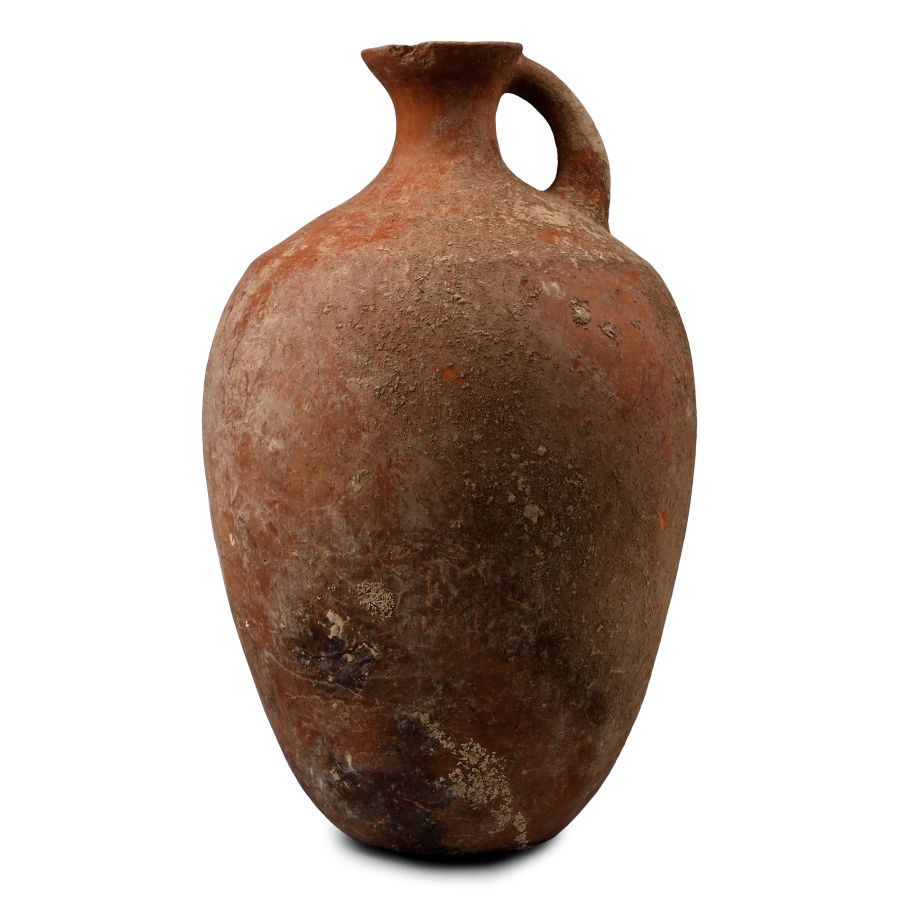
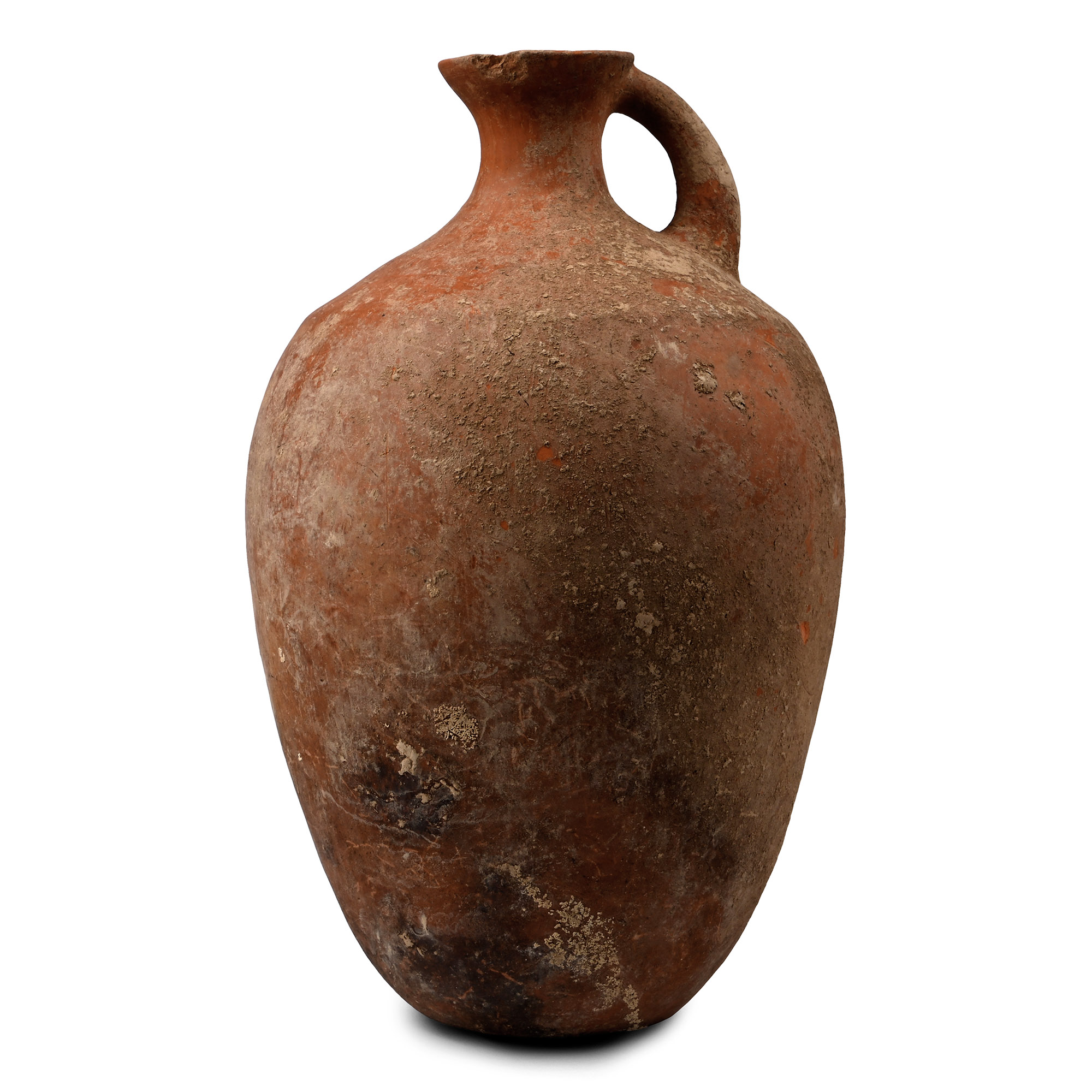
Western Asiatic Pottery Amphora
1ST MILLENNIUM B.C.
11 3/4 in. (1.03 kg, 30 cm).
Tall and piriform in profile with small trumpet-shaped mouth, lateral loop handle.
ProvenanceFrom the collection of a gentleman, 1988-2000s.
CONDITIONTimeLine Auctions follows a vetting process to ensure the authenticity and legality of all items, reinforcing our commitment to integrity and responsible trading. Each antiquity, antique, and coin lot undergoes thorough examination by a vetting committee of at least ten external specialists, professional trade association members, scientists, and archaeologists: Our Vetting Process
AUCTIONS:
TimeLine is a leading auction house specialising in antiquities, ancient art, collectables, natural history, coins, medals, and books. Our auctions offer museums, collectors, historians, and enthusiasts the opportunity to acquire unique and historically significant pieces.
-
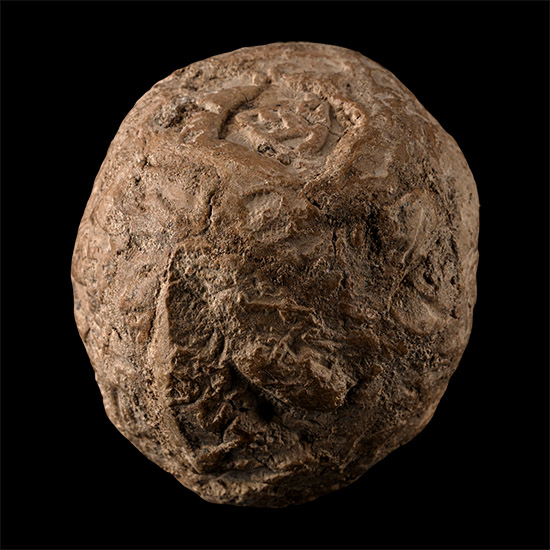
Sumerian Terracotta Bulla
4th millennium B.C.Sold for (Inc. bp): £468
A bulla with oval stamped impression of two animals. 147 grams, 60 mm
Specialised collection of cuneiform texts, the property of a London gentleman and housed in London before 1988. Thence by descent to family members. Examined by Professor Wilfrid George Lambert FBA (1926-2011), historian, archaeologist, and specialist in Assyriology and Near Eastern archaeology, in the late 1980s and early 1990s. The collection is exceptional for the variety of types, including some very rare and well preserved examples. Accompanied by a copy of a previous catalogue page.
Small globular and hollowed clay balls are defined as 'bulla'. They are also known as ‘bulla-envelopes', some of which are plain and some displaying epigraphic, zoomorphic and/or figural decoration, impressed by either cylinder or stamp seals. Bulla first emerged in Mesopotamia and their earliest occurrence can be traced to circa 8000 B.C. Most know decorated bullae come from the Uruk area and offer an insight into its culture. This bulla represents a religious scene, indicated by the combination of the pyramid-shaped byre and the 'sacred herd', which are seen on the early Uruk seals. The symbol of the Mother-Goddess, presented in conjunction with the representations of sheep herd and byre, gave such imagery symbolic significance. The impression with two sheep depicted under the byre, might have been impressed by a stamp seal of the early Uruk period. -
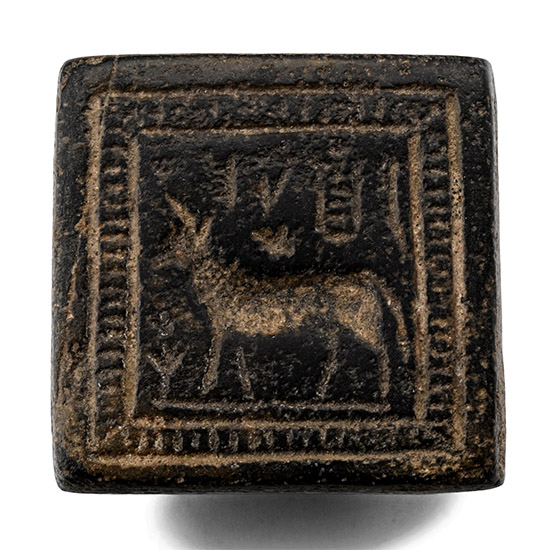
Western Asiatic Stone Stamp Seal with Inscription
1st millennium B.C.Estimate: £400 - 600 (+bp*)
Opening Bid: £200
Pierced tapering handle to reverse, billeted border enclosing profile standing bull and legend in Indus Valley script. 21.1 grams, 28 mm
From the London collection of the late Mr S.M., 1969-1999. -
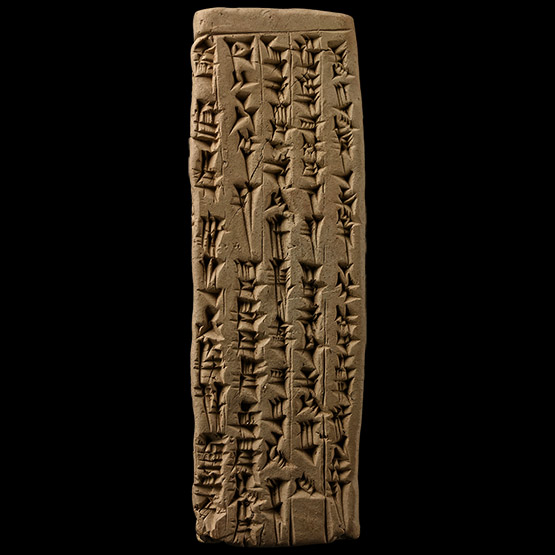
Middle Assyrian Brick-Shaped Tablet with Funerary Inscription for Adad-Shumu-lesir’s Tomb
1363-912 B.C.Estimate: £5,000 - 7,000 (‡+bp*)
Opening Bid: £2,778
A rectangular brick-shaped tablet, inscribed in cuneiform script across three vertical faces, with a single column to the fourth and a continuation of text across the top surface; the inscription a funerary curse relating to the tomb of Adad-šumu-lešir, warning against interference with the burial, reading in part: 'As for a stranger, or somebody who would approach that tomb, or would bring up a corpse out of it and bury his own within, or would touch the silver inside - Adad, Šamaš, or Nergal will fill his house and field with shortage, collapse, and murder. He will repay the property of that tomb sevenfold, dedicating it to Šuriha. For the offspring of Adad-šumu-lešir he shall be undone for taking out and bringing down objects in the tomb, and for burying another body within it. Month Kalmartu, third day, eponymy of Aššur-mušezib.' 333 grams, 14.3 cm
Acquired in 1996. Private collection, Switzerland, thence by descent. Private collection, since the late 1990s. This lot has been checked against the Interpol Database of stolen works of art and is accompanied by a search certificate number no.12872-241667.
Funerary inscriptions of this type are extremely rare survivals, serving both as legal texts and spiritual safeguards, invoking the major deities Adad, Šamaš, and Nergal to enforce the curse.
