
Loading, please wait...
LOT 1550
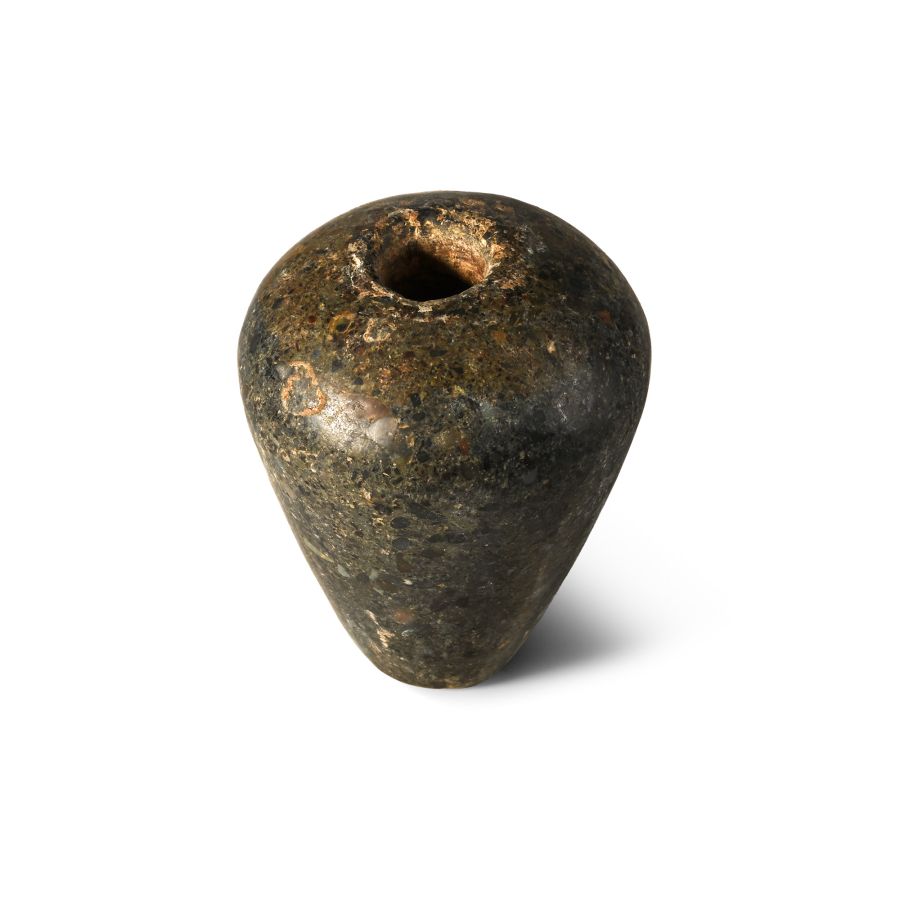
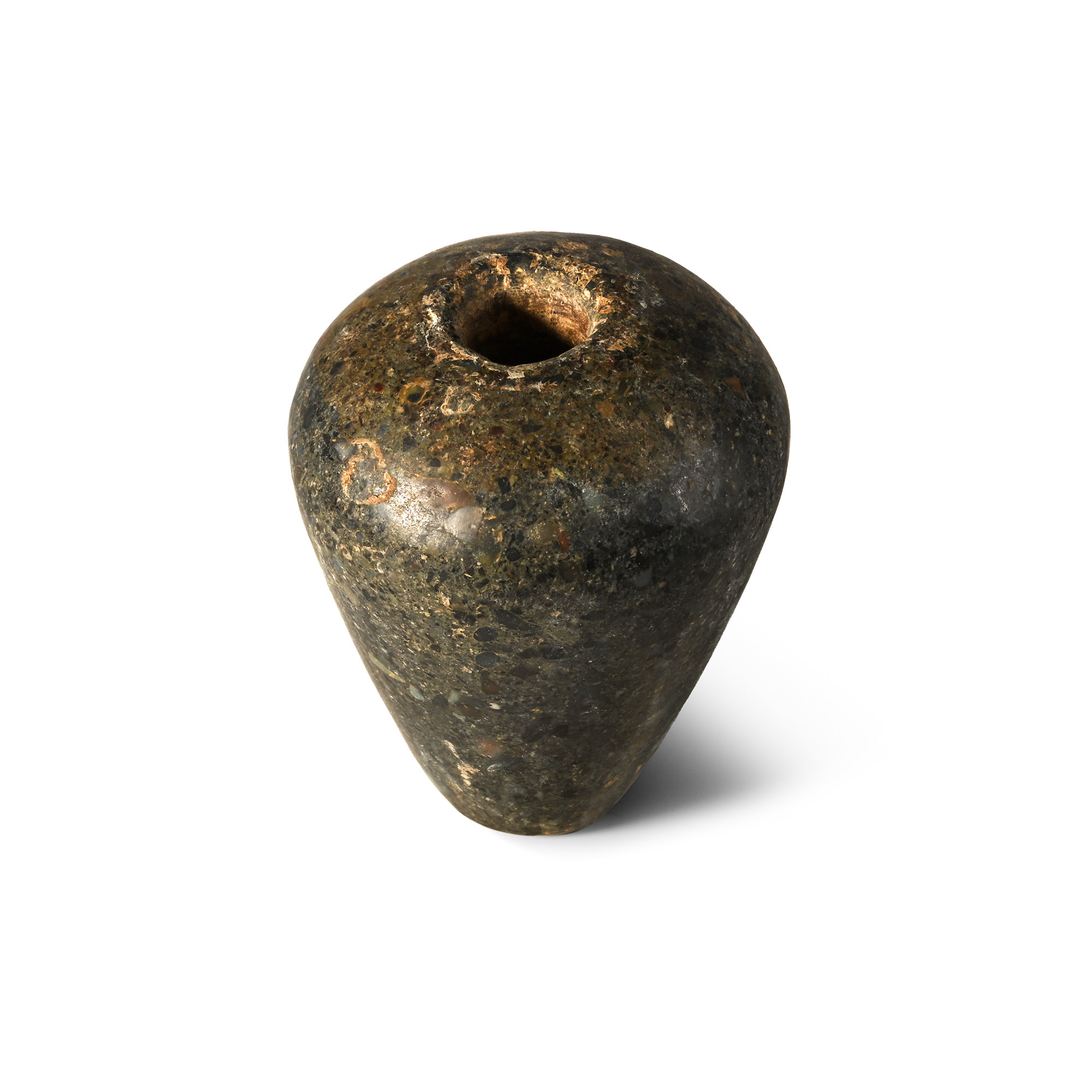
Western Asiatic Polished Stone Macehead
3RD-2ND MILLENNIUM B.C.
3 3/8 in. (435 grams, 86 mm).
Ovoid body with circular socket.
ProvenanceFrom the collection of a London, UK, gentleman, 1990s.
LiteratureCf. Gorelik, M., Weapons of Ancient East, IV millennium BC-IV century BC, Saint Petersburg, 2003, pl.XXXI, no.30, for type.
CONDITIONTimeLine Auctions follows a vetting process to ensure the authenticity and legality of all items, reinforcing our commitment to integrity and responsible trading. Each antiquity, antique, and coin lot undergoes thorough examination by a vetting committee of at least ten external specialists, professional trade association members, scientists, and archaeologists: Our Vetting Process
AUCTIONS:
TimeLine is a leading auction house specialising in antiquities, ancient art, collectables, natural history, coins, medals, and books. Our auctions offer museums, collectors, historians, and enthusiasts the opportunity to acquire unique and historically significant pieces.
-
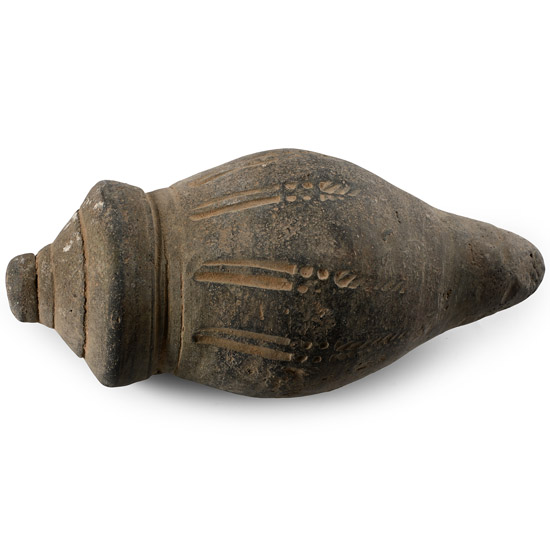
Turco-Mongol 'Greek Fire' Ceramic Fire Bomb or Hand Grenade
14th-15th century A.D.Sold for (Inc. bp): £98
Piriform in profile with a stepped neck, incised decoration; intended to be filled with explosive liquid and a wick, and used as a hand grenade. 385 grams, 16 cm
From an important specialist collection, London, UK, 1990s. Accompanied by an academic paper by military specialist Dr Raffaele D'Amato, dated 15 July 2019 and titled 'Eastern Roman Empire - Greek Fire Bomb or Hand Grenade (μεσαίον kακάβιον) 9th-11th century AD'.
Apart from the use of siphons or manual flame-throwers called cheirosiphona, special corps of Roman soldiers employed terracotta grenades, in the form of small jars, abundantly evidenced in archaeological excavations. They were called μεσαία kακαβιά or κυτροκακάβια, where the former had a bulbous shape and the latter a more cylindrical form. -
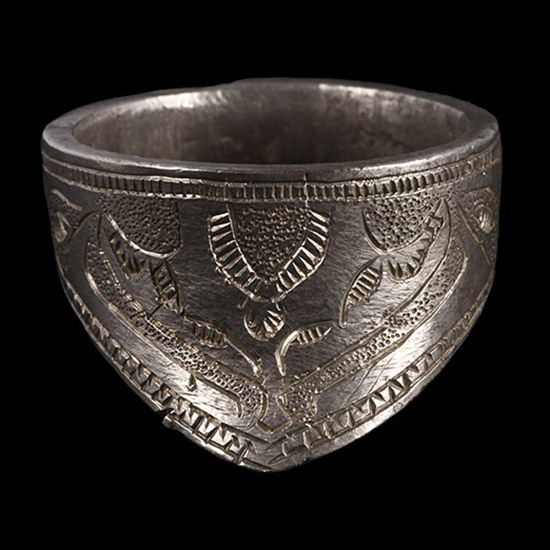
Large Byzantine Silver Archer's Ring
14th-15th century A.D.Sold for (Inc. bp): £1,430
Comprising a hoop with reserved triangular ornament on the edges and triangular plaque with foliage motifs, raised central panel with frond motif. 22.61 grams, 34.77 mm overall, 25.16 mm internal diameter
Acquired in the 1990s. Ex Cambridgeshire, UK, collection.
Archer rings in Late Byzantium and the medieval Balkans were connected with the employment of the powerful composite bow, but very often, in the 14th century they served as insignia of rank for aristocratic noblemen. Archaeological findings of archers’ rings originate mainly from fortified towns, including mining centres. Many were made in bone, simple in design and undecorated. In contrast, the ones made in bronze and silver were usually decorated in rather uniform style, consisting of floral motifs on the head, mostly tulip and foliage, and linear motifs around the edges. This decoration combined Turkish, Central European and Eastern Roman traditional patterns. -
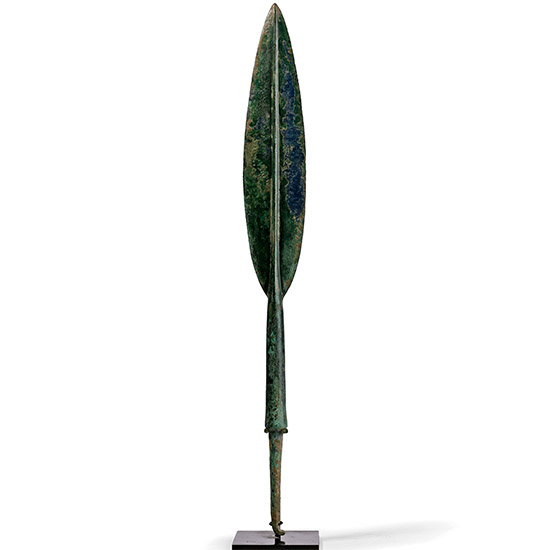
Large Luristan Leaf-Shaped Bronze Spearhead
Circa 1000-700 B.C.Sold for (Inc. bp): £845
Comprising a leaf-shaped blade with a midrib and a long tapering socket; accompanied by a display stand. 771 grams total, 44 cm including stand
with Art Ancient, London, UK. Private collection, London.
The spear, belonging to type 3 of the Khorasani classification, was used by chariot fighters to strike each other or the enemy infantry from above. Similar specimens with longer sockets were excavated by Negahban in the Amlash area. According to Moorey, sockets as long, if not longer than the blade, are a characteristic of Iranian spearheads in the late 2nd and early 1st millennium B.C. A similar spearhead from the Tappeh Sialk has been dated to the 9th-7th century B.C.
