
Loading, please wait...
LOT 1870
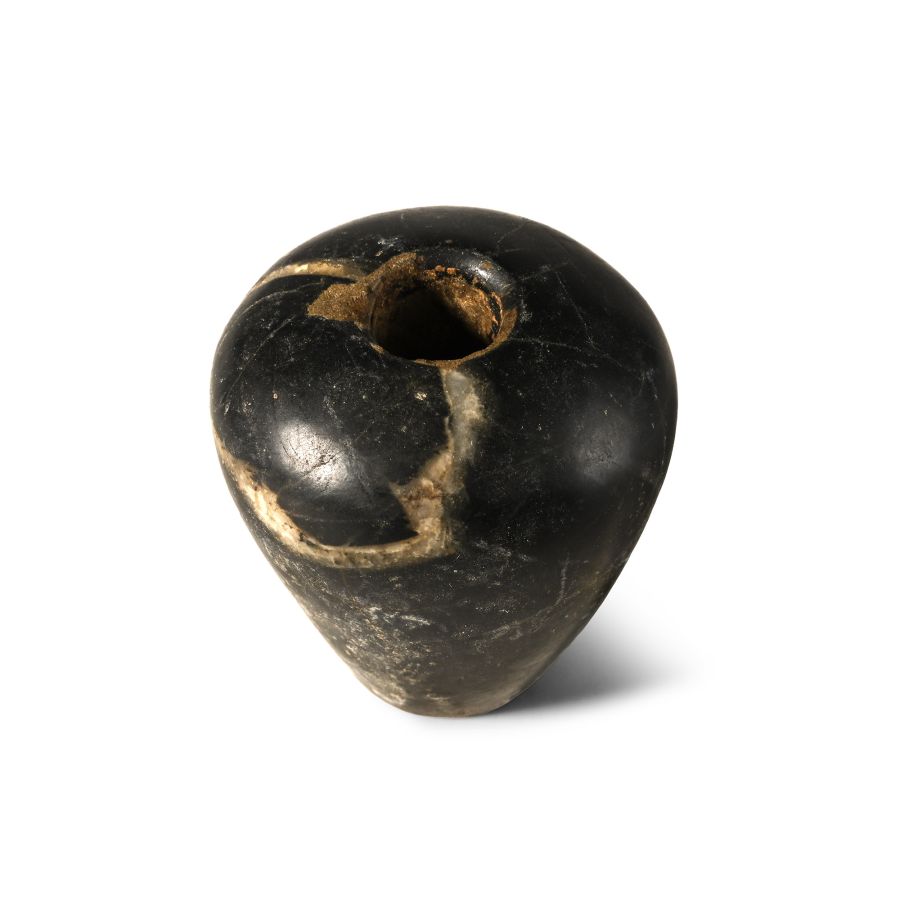
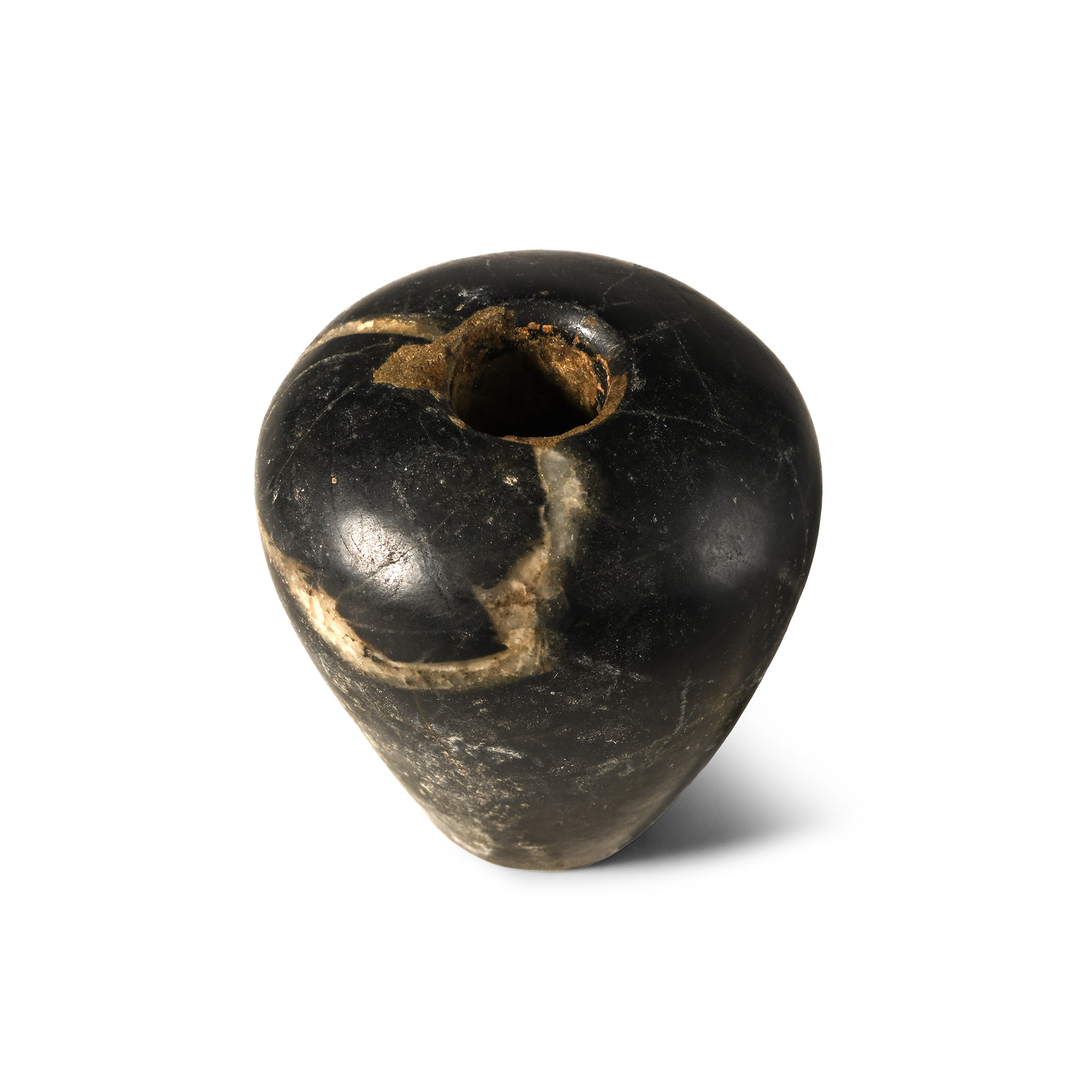
Western Asiatic Polished Stone Macehead
3RD-2ND MILLENNIUM B.C.
2 1/2 in. (233 grams, 63 mm).
Ovoid body with a round socket.
ProvenanceFrom the collection of a London, UK, gentleman, 1990s.
LiteratureCf. Gorelik, M., Weapons of Ancient East, IV millennium BC-IV century BC, Saint Petersburg, 2003, pl.XXXI, no.30, for similar example.
CONDITIONTimeLine Auctions follows a vetting process to ensure the authenticity and legality of all items, reinforcing our commitment to integrity and responsible trading. Each antiquity, antique, and coin lot undergoes thorough examination by a vetting committee of at least ten external specialists, professional trade association members, scientists, and archaeologists: Our Vetting Process
AUCTIONS:
TimeLine is a leading auction house specialising in antiquities, ancient art, collectables, natural history, coins, medals, and books. Our auctions offer museums, collectors, historians, and enthusiasts the opportunity to acquire unique and historically significant pieces.
-
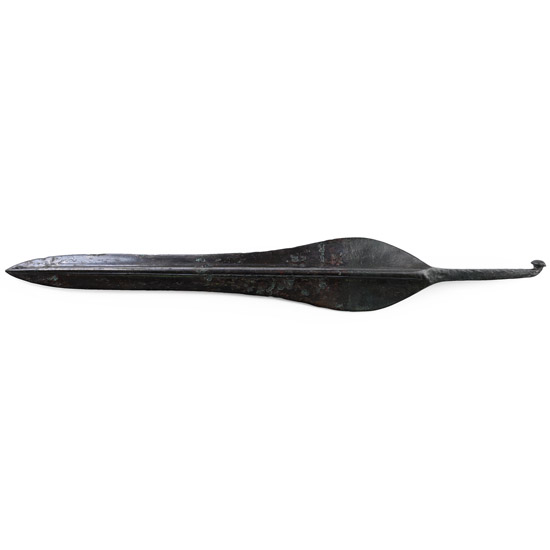
Luristan Bronze Spearhead
Early 2nd millennium B.C.Sold for (Inc. bp): £442
Foliate blade with a central rib and slender shoulders, short rectangular shaft and tang with a bent finial. 643 grams, 42.2 cm
Ex Abelita family collection, 1980s-2000s.
A number of similar blades, some considered to be spearheads and others to be daggers, all with a bent tang, derived from Tepe Hissar Culture III. Some of them, like our specimen, have a button terminal, and some others have a plain, pointed terminal. The general dating of these specimens is fixed to the early 2nd millennium B.C. -
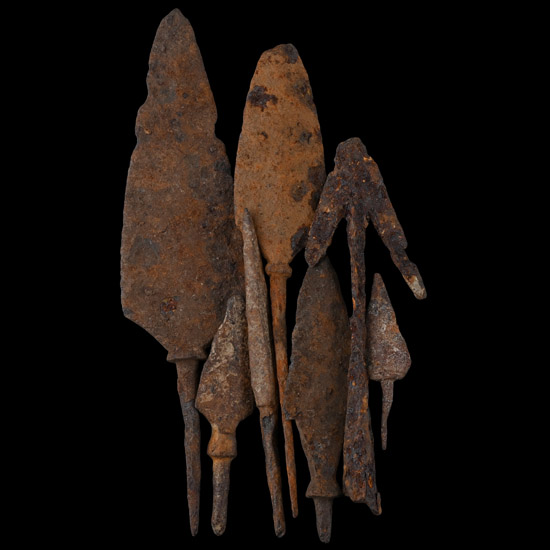
Roman to Medieval Iron Arrowhead Collection
3rd-14th century A.D.Sold for (Inc. bp): £117
Comprising seven tanged arrowheads, one a swallowtail type. 86 grams total, 5.7-13 cm
Ex German art market, 2000s. Acquired from an EU collector living in London. From the collection of a Surrey, UK, gentleman. -
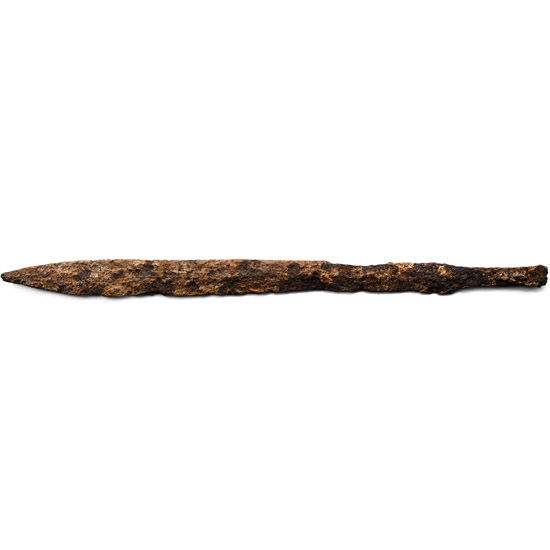
Greek Iron Short Sword
Hellenistic, 2nd-1st century B.C.Sold for (Inc. bp): £468
Lentoid in section with two cutting edges and narrow point; slight flare towards the tip; small shoulder and rectangular-section tang. 400 grams, 56 cm
Ex German art market, 2000s. Acquired from an EU collector living in London. From the collection of a Surrey, UK, gentleman.
This style of straight, parallel-sided weapon is referred to in Greek sources of the time as a xiphe. It was a secondary battlefield armament after the spear and javelin. It is associated with the revolutionary developments in armour, weaponry and tactics between the Classical and Iron Age periods.
