
Loading, please wait...
LOT 1553
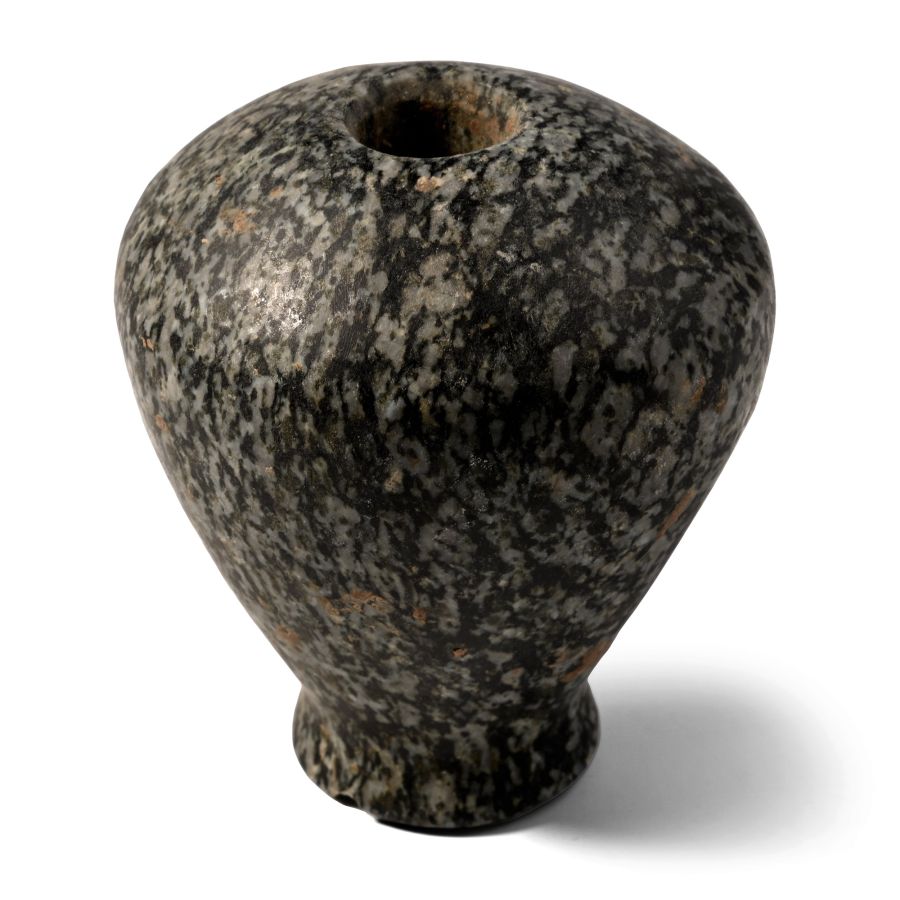
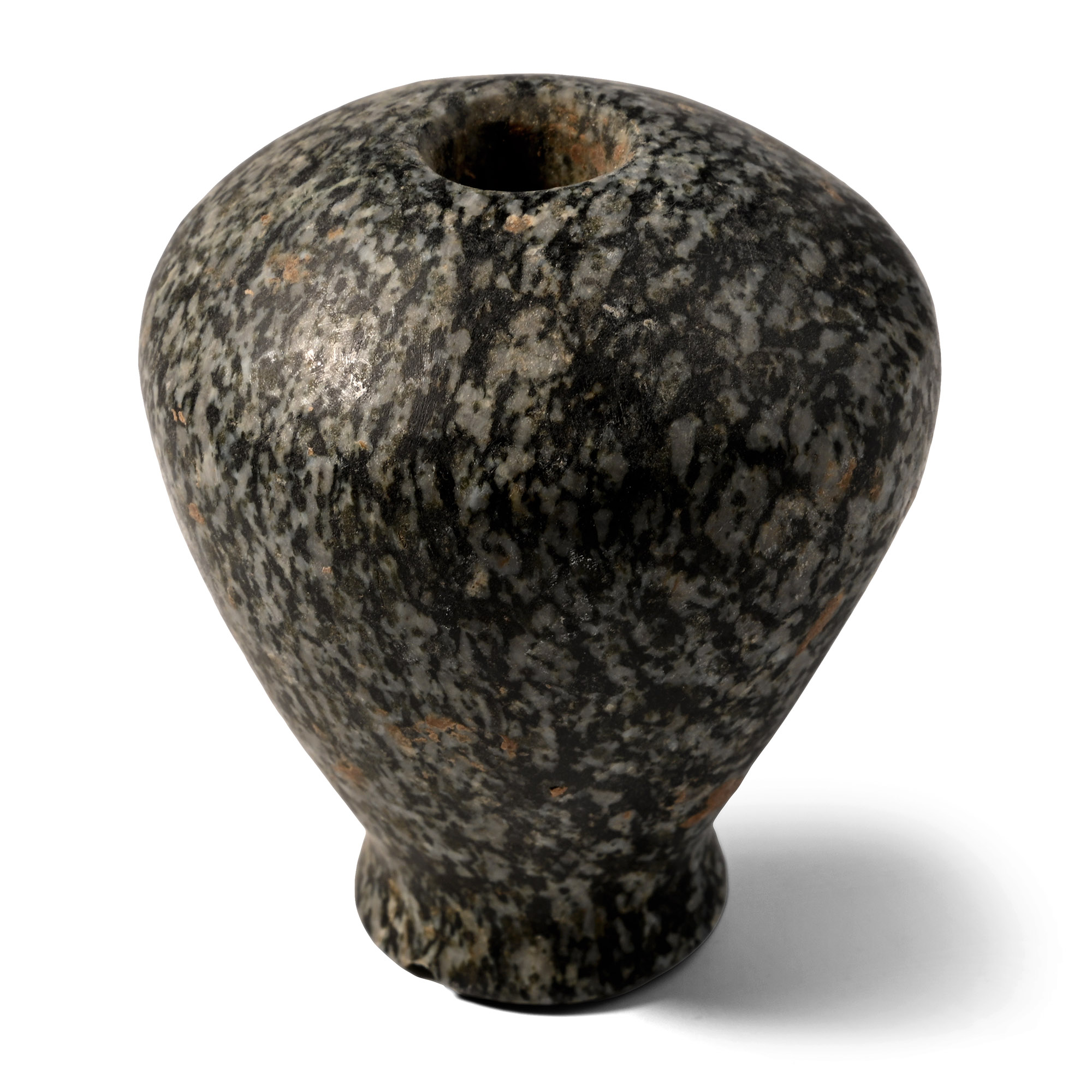
Western Asiatic Polished Stone Macehead
3RD-2ND MILLENNIUM B.C.
3 in. (404 grams, 76 mm).
Piriform in profile with drilled socket expanding towards the narrower end.
ProvenanceFrom the collection of North West London, UK, gentleman, early 2000s.
LiteratureCf. Gorelik, M., Weapons of Ancient East, IV millennium BC-IV century BC, Saint Petersburg, 2003, in Russian, see pl.XXXI, no.30, from Armenia, for similar.
CONDITIONTimeLine Auctions follows a vetting process to ensure the authenticity and legality of all items, reinforcing our commitment to integrity and responsible trading. Each antiquity, antique, and coin lot undergoes thorough examination by a vetting committee of at least ten external specialists, professional trade association members, scientists, and archaeologists: Our Vetting Process
AUCTIONS:
TimeLine is a leading auction house specialising in antiquities, ancient art, collectables, natural history, coins, medals, and books. Our auctions offer museums, collectors, historians, and enthusiasts the opportunity to acquire unique and historically significant pieces.
-
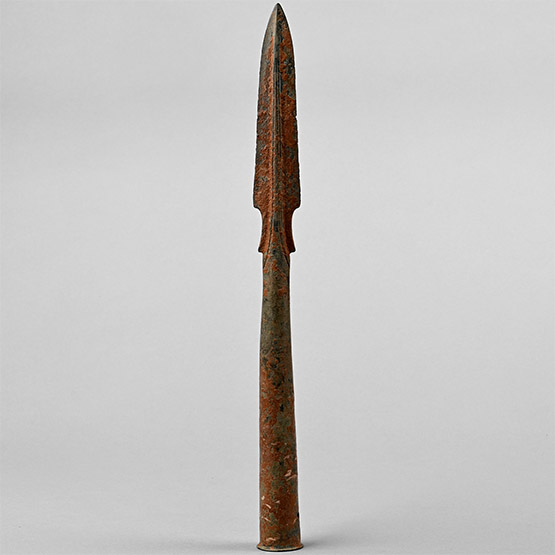
Chinese Zhou Bronze Socketted Spearhead
Zhou Dynasty, 1046-256 B.C.Estimate: £450 - 650 (‡+bp*)
Opening Bid: £250
With thick midrib, leaf-shaped blade with lateral spurs, deep tubular socket with fastening hole for the attachment to the wooden shaft. 250 grams, 32 cm
Acquired in the mid 1980s-1990s. Private collection, Switzerland, thence by descent. Private collection, since the late 1990s. -
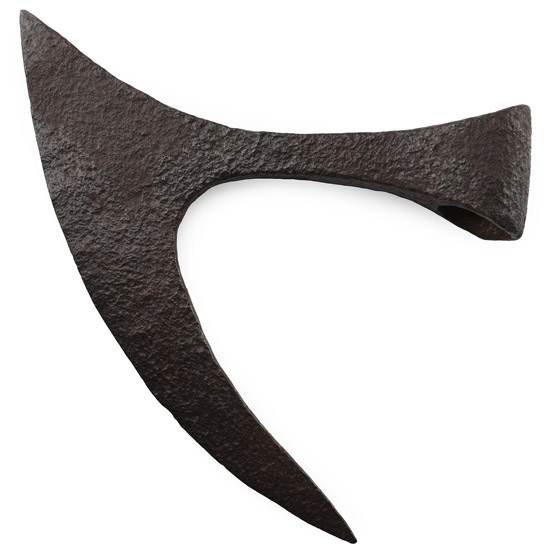
Viking Hooked Iron Axehead
Circa 9th-11th century A.D.Sold for (Inc. bp): £442
With broad curved blade and pointed chin, tapering neck, deep socket. 366 grams, 20.1 cm
Ex North American private collection, 1970s. -
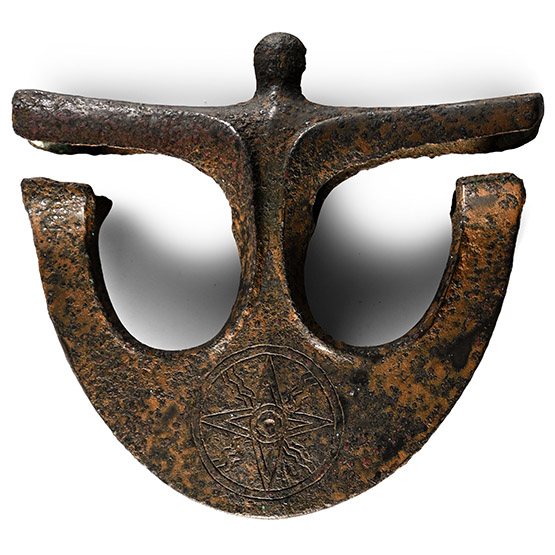
Mesopotamian Bronze 'Anchor' Axehead with Incised Star Sign of the Sun God Shamash
Late 3rd millennium B.C.Sold for (Inc. bp): £4,160
Comprising a crescentic blade with two spurs at each end intended to brace against the shaft, a narrow neck, flared socket with vertical spurs and a knop finial projecting from the rear; ribbed decoration on the rear edge; one side of the blade incised with a symbol of the god sun Shamash, depicted as a four-pointed star with wavy rays alternating with straight rays, a winged solar disc inside. 294 grams, 12.7 cm
UK private collection before 2000. Acquired on the UK art market. Private collection, London, UK. Accompanied by an academic report by Dr Raffaele D’Amato. This lot has been checked against the Interpol Database of stolen works of art and is accompanied by search certificate number no.13043-248308.
This specific type of weapon is called an ‘anchor’ axe because of its shape. Anchor axes have been excavated in Egypt, at Byblos and Ur. Many of them have been said to come from Iran as well, especially from the area of Gilan. The present specimen, in which the shaft hole is joined to the blade by the central tang, is of the same specific type as that excavated in Ur. According to Calmeyer, these axes developed in Mesopotamia. Moorey further explains that the large numbers of these axes reported from Iran could derive from Mesopotamian imports. The Mesopotamian origin of our axe could be further confirmed by the incised motif on the blade, the symbol of the sun god Shamash. The ‘star of Shamash’, typically represented as a four-pointed star with wavy lines placed between the points, is attested as early as the period of Sargon of Accad, who dominated Mesopotamia in 2200 B.C. This symbol can be visible on various Mesopotamian artworks, like the ‘Kudurru’ of Ritti-Marduk at the British Museum; however, dated to 1125-1104 B.C. Another representation is visible on the Tablet of Shamash at the BM, dated 800 B.C. It is also possible, therefore, that the symbol of Shamash was incised on the axe in a later period, but not later than 800 B.C.
