
Loading, please wait...
LOT 1484
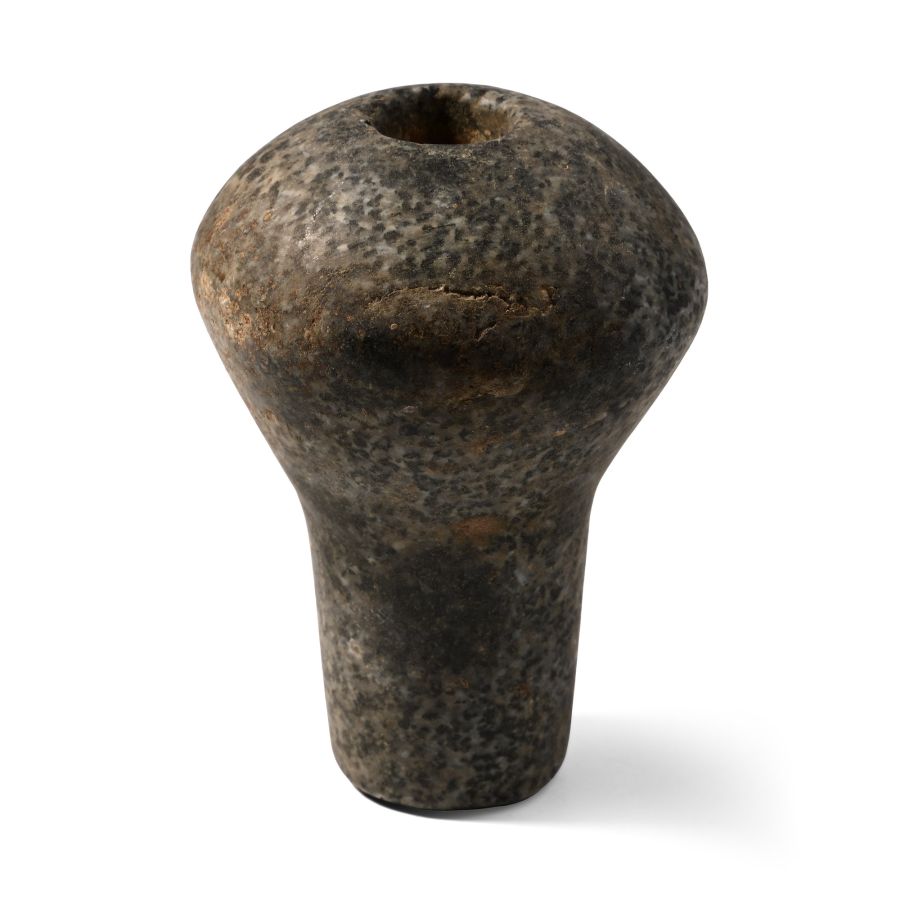
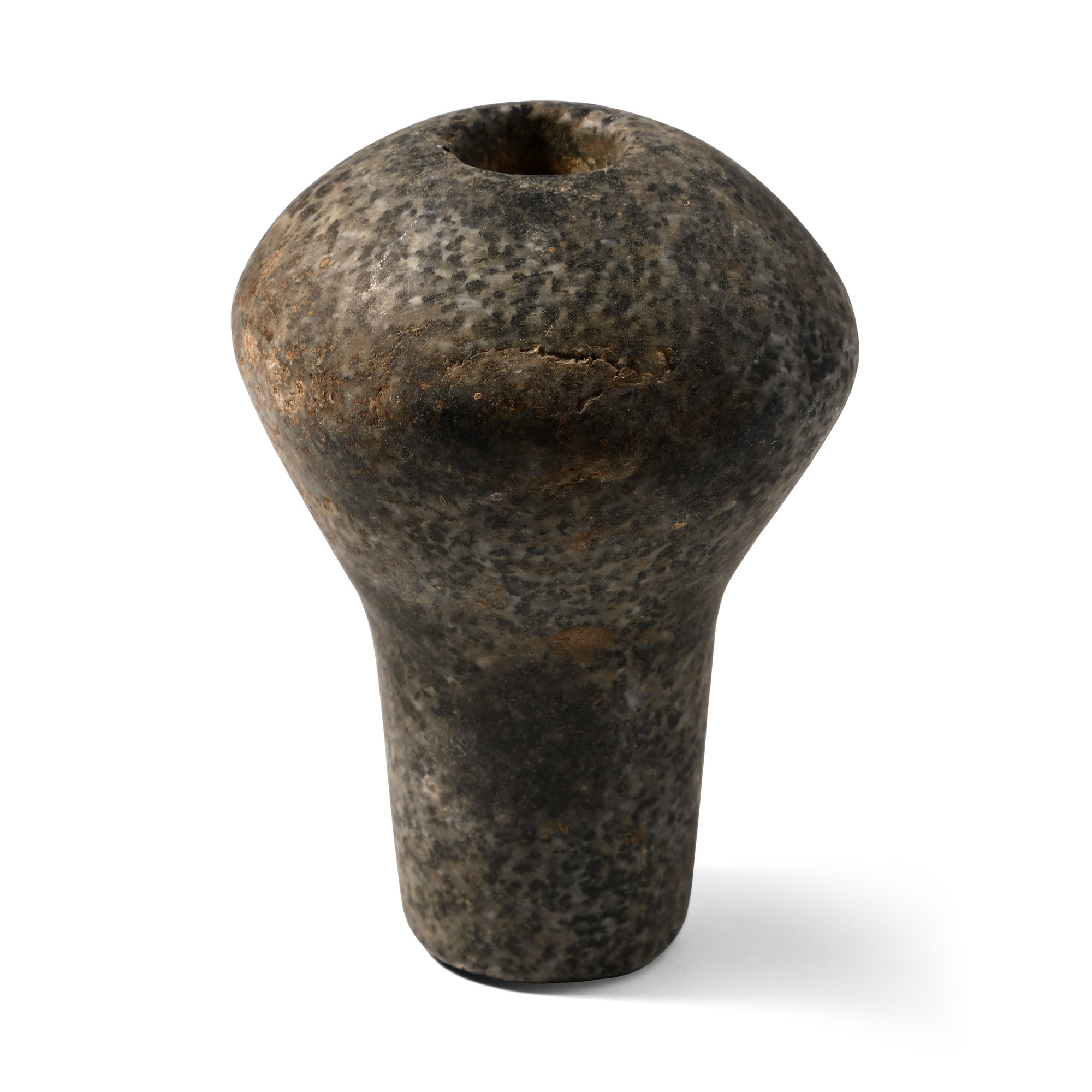
Western Asiatic Polished Stone Macehead
3RD-2ND MILLENNIUM B.C.
3 1/2 in. (377 grams, 91 mm).
With slightly carinated equator to the globular body and tubular shaft.
ProvenanceFrom the collection of North West London, UK, gentleman, early 2000s.
LiteratureSee Gorelik, M., Weapons of Ancient East, IV millennium BC-IV century BC, Saint Petersburg, 2003, pl.XXX, no.47, mace of a deity, detail of the image on the “Stela of Kites” Eanatuma, Ngirsu, mid-3rd millennium B.C.
CONDITIONTimeLine Auctions follows a vetting process to ensure the authenticity and legality of all items, reinforcing our commitment to integrity and responsible trading. Each antiquity, antique, and coin lot undergoes thorough examination by a vetting committee of at least ten external specialists, professional trade association members, scientists, and archaeologists: Our Vetting Process
AUCTIONS:
TimeLine is a leading auction house specialising in antiquities, ancient art, collectables, natural history, coins, medals, and books. Our auctions offer museums, collectors, historians, and enthusiasts the opportunity to acquire unique and historically significant pieces.
-
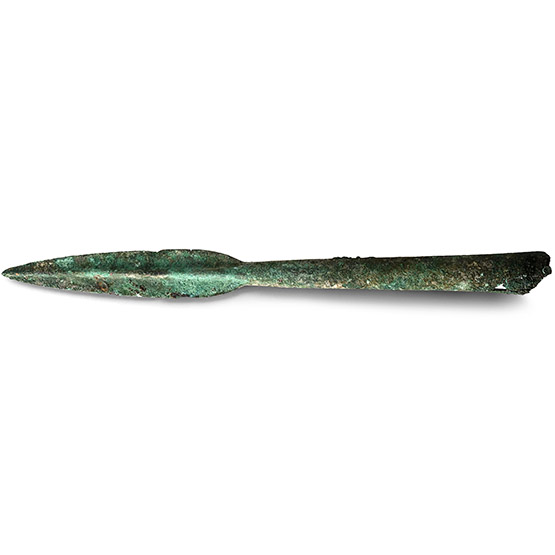
Western Asiatic Bronze Spearhead
9th-7th century B.C.Estimate: £150 - 200 (+bp*)
Opening Bid: £75
Comprising a leaf-shaped blade with a midrib and a long tapering socket; accompanied by a display stand, repaired. 365 grams total, spearhead: 36.5 cm (38.2 cm including stand)
Ex Abelita family collection, 1980s-2000s.
The spear, belonging to type 3 of the Khorasani classification, was used by chariot fighters to strike each other or the enemy infantry from above. Similar specimens with longer sockets were excavated by Negahban in the Amlash area. According to Moorey, sockets as long, if not longer than the blade, are a characteristic of Iranian spearheads in the late 2nd and early 1st millennium B.C. A similar spearhead from the Tappeh Sialk has been dated to the 9th-7th century B.C. -
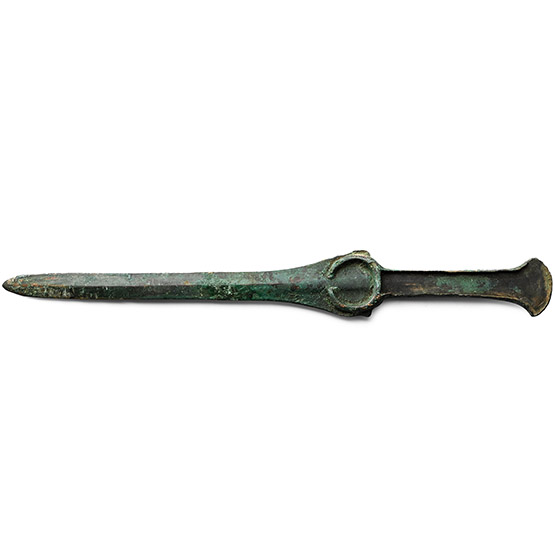
Luristan Bronze Dagger
2nd-1st millennium B.C.Sold for (Inc. bp): £338
Blade with a shallow median rib, crescentic pennannular guard, handle with pommel in the shape of a nail head. 151 grams, 30.5 cm
Ex Abelita family collection, 1980s-2000s.
This is a type of blade rare among Luristan weapons. The simplest type that appeared to J. de Morgan and Godard in the first excavations of Luristan looked like this: a blade always featuring a median groove, a guard decorated with a crescent, and a round hilt with a nail-shaped head. The hilt was usually filled with organic material, such as wood, bone, or ivory. -
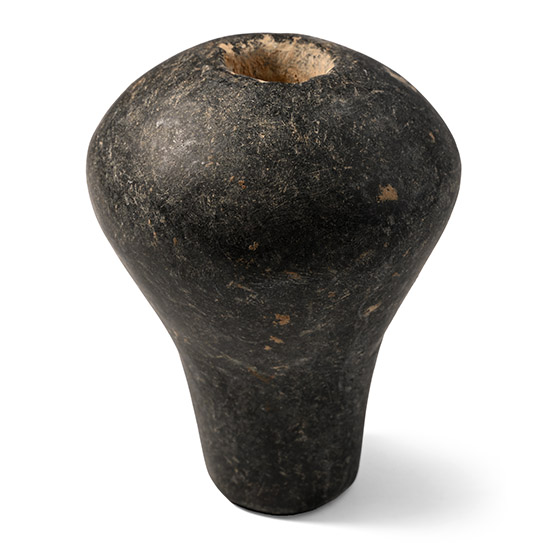
Western Asiatic Polished Stone Macehead
3rd-2nd millennium B.C.Sold for (Inc. bp): £143
With slightly carinated equator to the globular body and tubular shaft. 456 grams, 90 mm
From the collection of North West London, UK, gentleman, early 2000s.
