
Loading, please wait...
LOT 0901
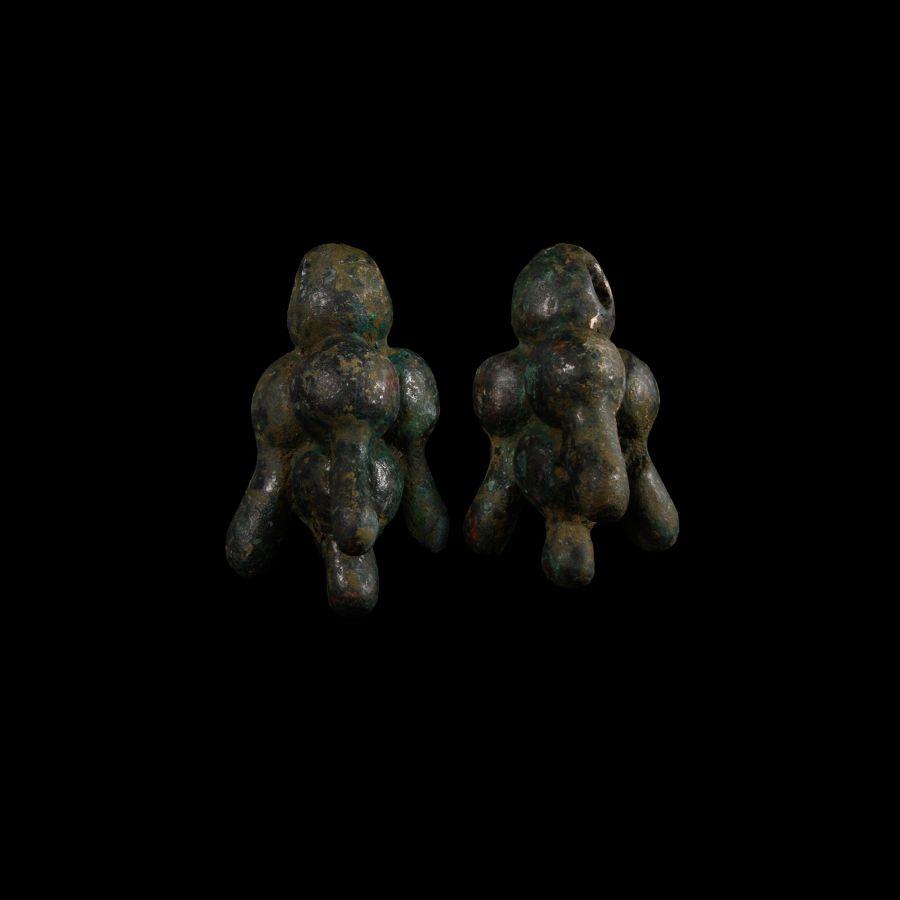
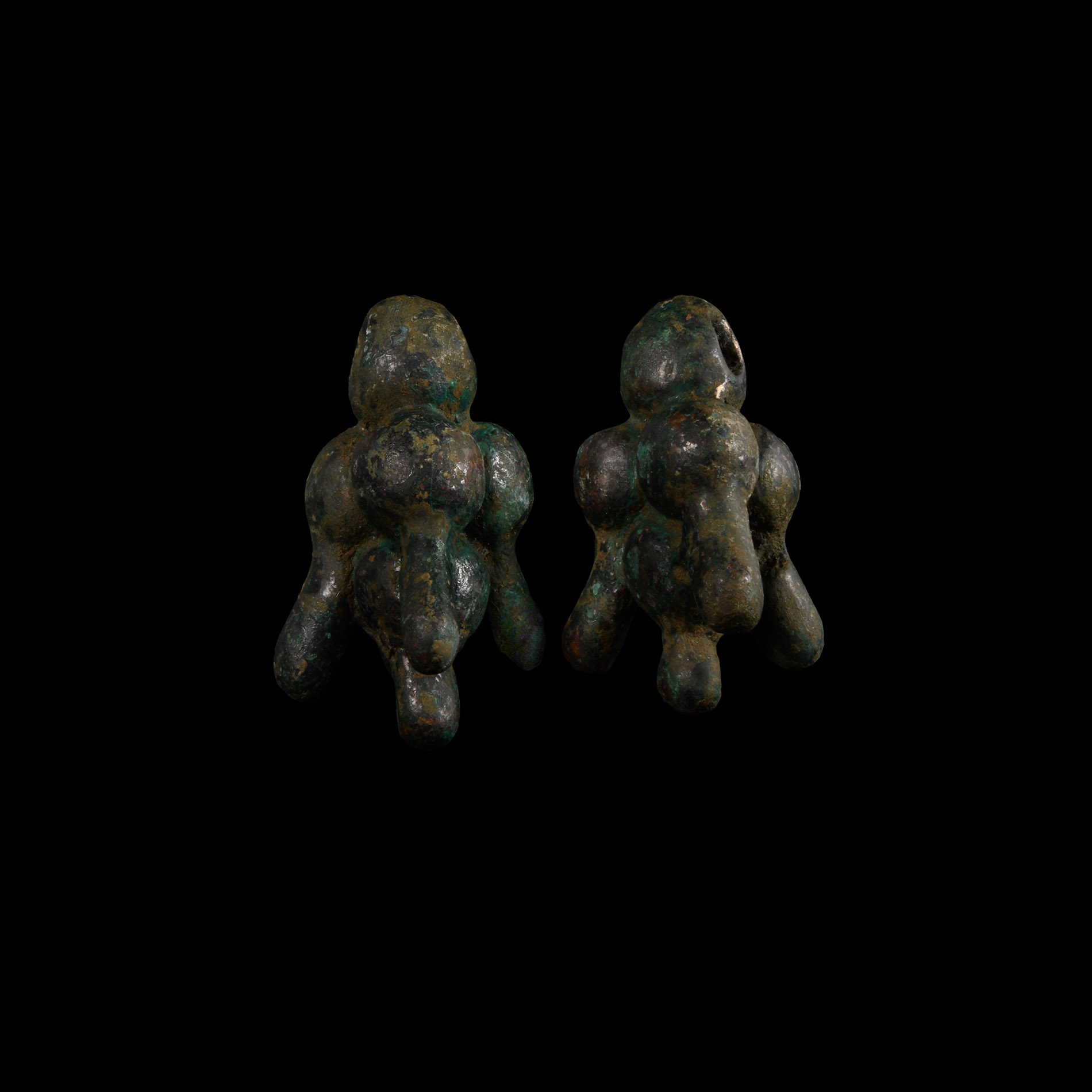
Western Asiatic Pendant Pair
MID 1ST MILLENNIUM B.C.
2 - 2 1/8 in. (180 grams total, 49-53 mm).
A pair of heavy copper-alloy pendants formed as large pyramid clusters with protrusions to the bulbs, bulbous suspension loop above. [2, No Reserve]
ProvenanceEarly 1990s London collection.
Acquired on the UK art market.
From a private collection, Lancashire, UK.
TimeLine Auctions follows a vetting process to ensure the authenticity and legality of all items, reinforcing our commitment to integrity and responsible trading. Each antiquity, antique, and coin lot undergoes thorough examination by a vetting committee of at least ten external specialists, professional trade association members, scientists, and archaeologists: Our Vetting Process
AUCTIONS:
TimeLine is a leading auction house specialising in antiquities, ancient art, collectables, natural history, coins, medals, and books. Our auctions offer museums, collectors, historians, and enthusiasts the opportunity to acquire unique and historically significant pieces.
-
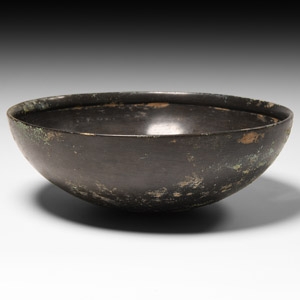
Western Asiatic Bronze Bowl
1st millennium B.C.Sold for (Inc. bp): £98
A hemispherical bronze bowl with rounded base, convex lip to the inner rim. 218 grams, 13.1 cm
Previously in a private collection since the 1990s. Property of a Sussex, UK, teacher. -
.jpg)
Western Asiatic Carnelian and Agate Bead String
1st millennium B.C. and laterEstimate: £600 - 800 (+bp*)
Opening Bid: £300
A restrung necklace composed of double drilled oval agate beads from the Near East or India with later polished round carnelian beads. 95 grams, 66 cm long
Fine condition.
Acquired 1980-2015. Ex Abelita family collection. -
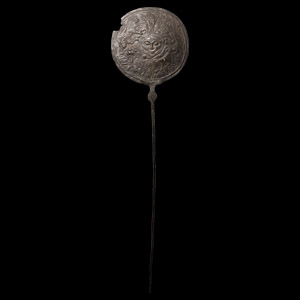
Urartian Pin with Repousse Decorated Disc
7th-6th century B.C.Estimate: £700 - 900 (+bp*)
Opening Bid: £350
A bronze dress pin comprising a round-section tapering shank with hipped bulb below the head; discoid head with raised border, repoussé design featuring a central facing mask with lentoid eyes and piriform face, hatched hair and beard; below, two rosettes above the backs of addorsed advancing goats with decorated and segmented bodies; plant motifs before the goats' chests and leaping lions above with gaping mouths flanking the mask of a master of animals with ibexes emerging from the cheeks; mounted on a stand; chipped. 88 grams, 43 cm long
Acquired 1970s-1990s. Ex Rabi Gallery, Mayfair, London, U.K. From a specialist collection of pottery.
