
Loading, please wait...
LOT 0908
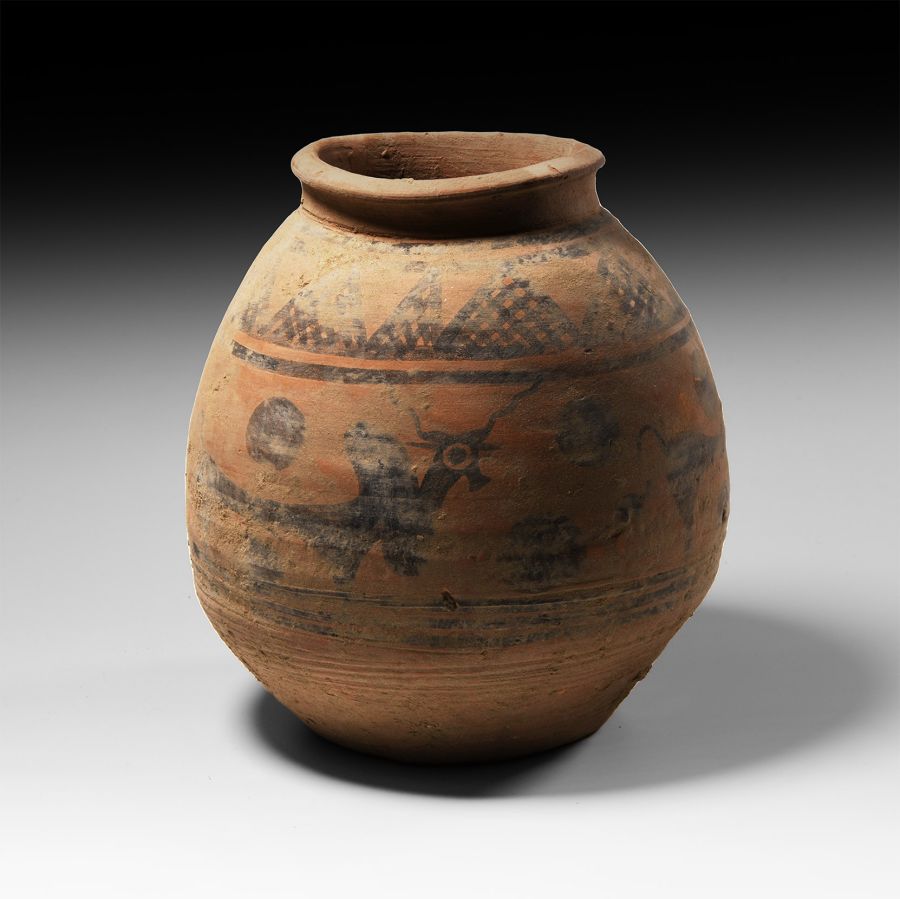
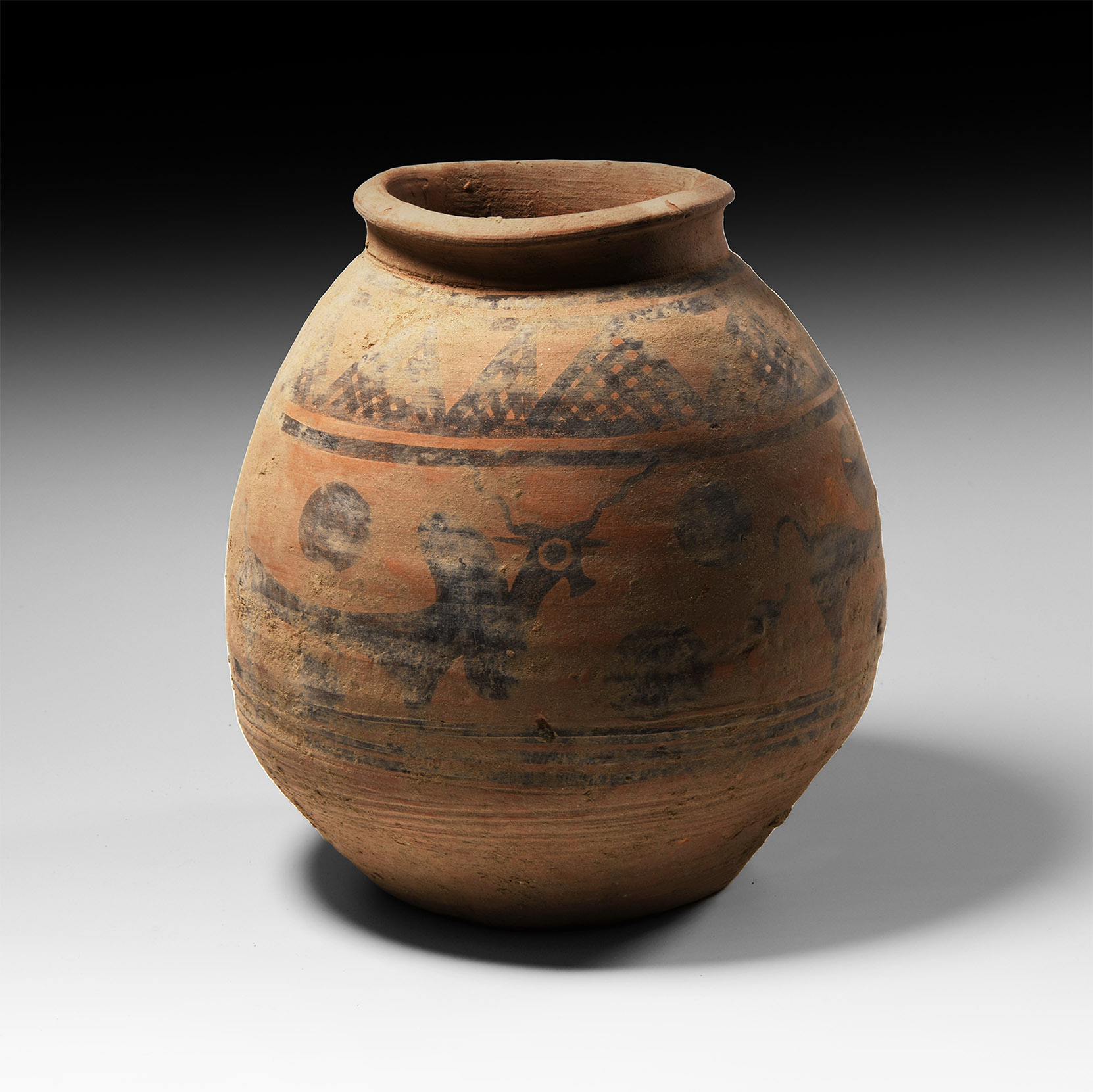
Western Asiatic Painted Vessel with Zebu
1ST MILLENNIUM B.C.
7 7/8 in. (380 grams, 20 cm high).
A piriform ceramic vessel with short neck and inverted rim, painted with hatched triangles over a frieze of processing zebu bulls with solid circles in the field.
ProvenanceAcquired 1980-2015.
Ex Abelita family collection.
TimeLine Auctions follows a vetting process to ensure the authenticity and legality of all items, reinforcing our commitment to integrity and responsible trading. Each antiquity, antique, and coin lot undergoes thorough examination by a vetting committee of at least ten external specialists, professional trade association members, scientists, and archaeologists: Our Vetting Process
AUCTIONS:
TimeLine is a leading auction house specialising in antiquities, ancient art, collectables, natural history, coins, medals, and books. Our auctions offer museums, collectors, historians, and enthusiasts the opportunity to acquire unique and historically significant pieces.
-
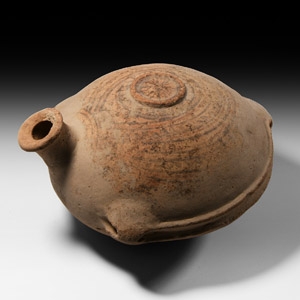
Western Asiatic Flask with Star Design
1st millennium B.C.Estimate: £150 - 200 (+bp*)
Opening Bid: £75
A ceramic flask of lentoid form with u-section medial channel incorporating three suspension lugs, short spout with rounded rim, central raised ring to the upper face decorated with a stylised star, the body with concentric roundels. 1.4 kg, 26 cm wide
Acquired 1980-2015. Ex Abelita family collection. -
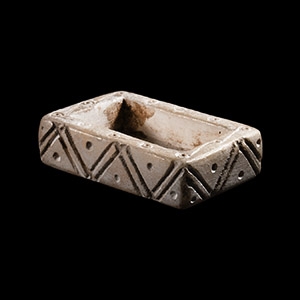
Western Asiatic Alabaster Dish
Circa 1600 B.C.Estimate: £300 - 400 (+bp*)
Opening Bid: £100
A rectangular alabaster dish with classic Middle Bronze Age geometric schemes to the sidewalls and rim. 45 grams, 54mm
Acquired from Harmer Rooke galleries, New York, in 1986. From the collection of a West London, UK, gentleman. -
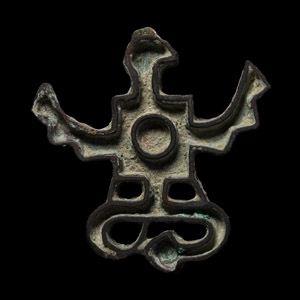
Central Asian Eagle and Snake Compartmented Seal Pendant
23rd-20th century B.C.Sold for (Inc. bp): £195
A copper-alloy compartmented stamp seal formed as a geometric style eagle with spread wings, a coiled snake gripped in its talons; suspension loop to reverse. 17.6 grams, 47 mm
1980s-early 1990s collection, UK.
