
Loading, please wait...
_900x900.jpg "Western Asiatic Painted Terracotta Vase with Birds")
_200x200.jpg "Western Asiatic Painted Terracotta Vase with Birds")
.jpg "Western Asiatic Painted Terracotta Vase with Birds")
LOT 0915
Western Asiatic Painted Terracotta Vase with Birds
3RD-2ND MILLENNIUM B.C.
5 3/8 in. (285 grams, 13.5 cm high).
A terracotta vase with bulbous body, small disc base, trumpet-shaped mouth; bands of painted rings to the neck, frieze of birds and leaves to the shoulder, rim chipped. [No Reserve]
ProvenanceAcquired 1980-2015.
Ex Abelita family collection.
Cf. Satyawadi, S., Proto-Historic Pottery of Indus Valley Civilisation: Study of Painted Motifs, Perspectives in Indian Art and Archaeology vol.2, New Delhi, 1994, chart 8.
CONDITIONTimeLine Auctions follows a vetting process to ensure the authenticity and legality of all items, reinforcing our commitment to integrity and responsible trading. Each antiquity, antique, and coin lot undergoes thorough examination by a vetting committee of at least ten external specialists, professional trade association members, scientists, and archaeologists: Our Vetting Process
AUCTIONS:
TimeLine is a leading auction house specialising in antiquities, ancient art, collectables, natural history, coins, medals, and books. Our auctions offer museums, collectors, historians, and enthusiasts the opportunity to acquire unique and historically significant pieces.
-
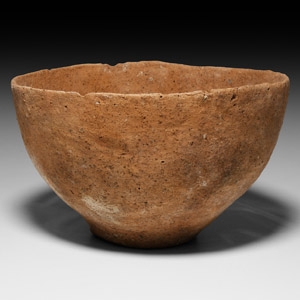
Holy Land Terracotta Bowl
3rd-2nd millennium B.C.Sold for (Inc. bp): £117
A carinated terracotta bowl with integral foot. 950 grams, 13 cm high
Acquired before 2000. Property of a London, UK, gentleman. Property of an Essex, UK, gentleman. -
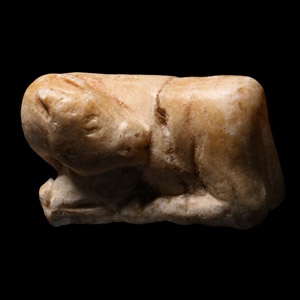
Sumerian Amuletic Calf Figurine
3rd-2nd millennium B.C.Estimate: £300 - 400 (+bp*)
Opening Bid: £150
A composition amuletic figurine of a calf with legs folded and bound beneath the body, head turned along the flank, slot to the underside. 9.46 grams, 30 mm
Fine condition.
Acquired 1969-1999. London collection of the late Mr S.M., thence by descent. -
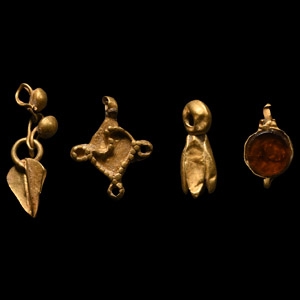
Western Asiatic Gold Pendant Collection
Mid 1st millennium B.C.Sold for (Inc. bp): £208
A group of four gold pendants: one segmented pedant on a chain with domed plaques; one circular set with polished garnet; a lozenge-shaped plaque with granulated border and knop to three corners; flower bud-shaped pendant with suspension loop. 0.84 grams total, 9-14 mm
Acquired 1970-2010. Collection of a late Japanese gentleman.
