
Loading, please wait...
_900x900.jpg "Western Asiatic Painted Terracotta Jar")
_200x200.jpg "Western Asiatic Painted Terracotta Jar")
.jpg "Western Asiatic Painted Terracotta Jar")
LOT 1092
Western Asiatic Painted Terracotta Jar
1ST MILLENNIUM B.C.
7 in. (819 grams, 18 cm).
With rounded profile, low foot and rounded everted rim to the mouth, painted horizontal bands to the shoulder enclosing a frieze of zebus. [No Reserve]
ProvenanceAcquired 1990s-2000s.
From the late David Gold (d.2015) collection of pottery.
David Gold and his brother were famous for setting up the first clothes shop in Carnaby Street and dressed the famous in the swinging 1960s, making Carnaby Street famous.
CONDITIONTimeLine Auctions follows a vetting process to ensure the authenticity and legality of all items, reinforcing our commitment to integrity and responsible trading. Each antiquity, antique, and coin lot undergoes thorough examination by a vetting committee of at least ten external specialists, professional trade association members, scientists, and archaeologists: Our Vetting Process
AUCTIONS:
TimeLine is a leading auction house specialising in antiquities, ancient art, collectables, natural history, coins, medals, and books. Our auctions offer museums, collectors, historians, and enthusiasts the opportunity to acquire unique and historically significant pieces.
-
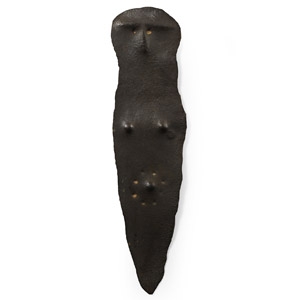
Western Asiatic Bronze Female Idol
3rd-2nd millennium B.C.Sold for (Inc. bp): £104
Flat-section leaf-shaped panel with repoussé eye and nose, pellet breasts, navel with pointillé circle surrounding. 6.55 grams, 90 mm
UK private collection before 2000. Acquired on the UK art market. Property of a London gentleman. -
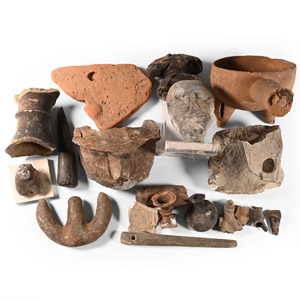
Western Asiatic Stone and Other Mixed Artefact Group
1st millennium B.C. and laterSold for (Inc. bp): £33
Including terracotta tile, vase and jar fragments, tripod vessel and other items. 1.7 kg total, 3.1-14.2 cm
From a collection acquired on the UK art market from various auction houses and collections mostly before 2000. From an important Cambridgeshire estate; thence by descent. -
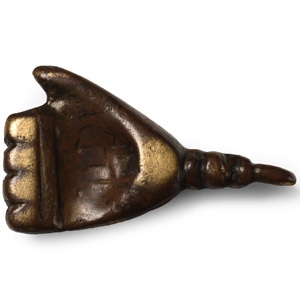
Western Asiatic Inscribed Bronze Hand Pendant
14th-15th century A.D.Sold for (Inc. bp): £111
In the form of a hand with fingers held in a gripping position against the top of the palm; possible enigmatic inscription to the palm; simple detailing delineating each finger; collared arm and suspension loop. 42.6 grams, 50 mm
Acquired before the early 1970s. Ex London, UK, gallery. Property of a London gentleman.
