
Loading, please wait...
LOT 0963
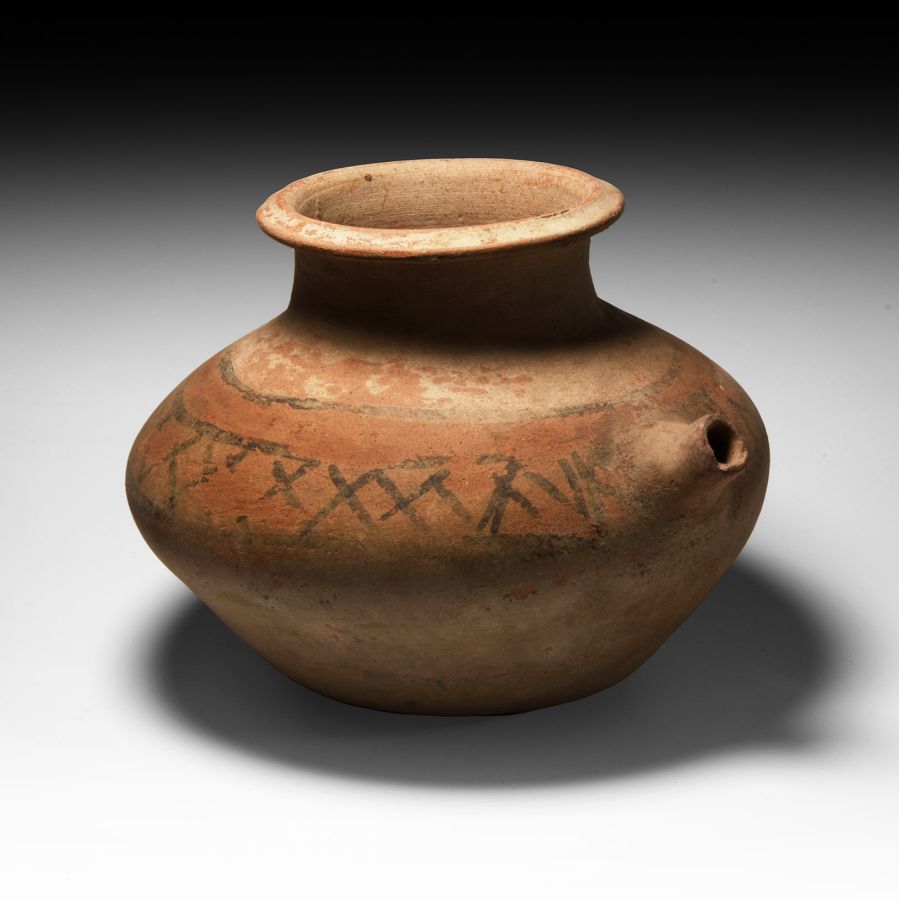
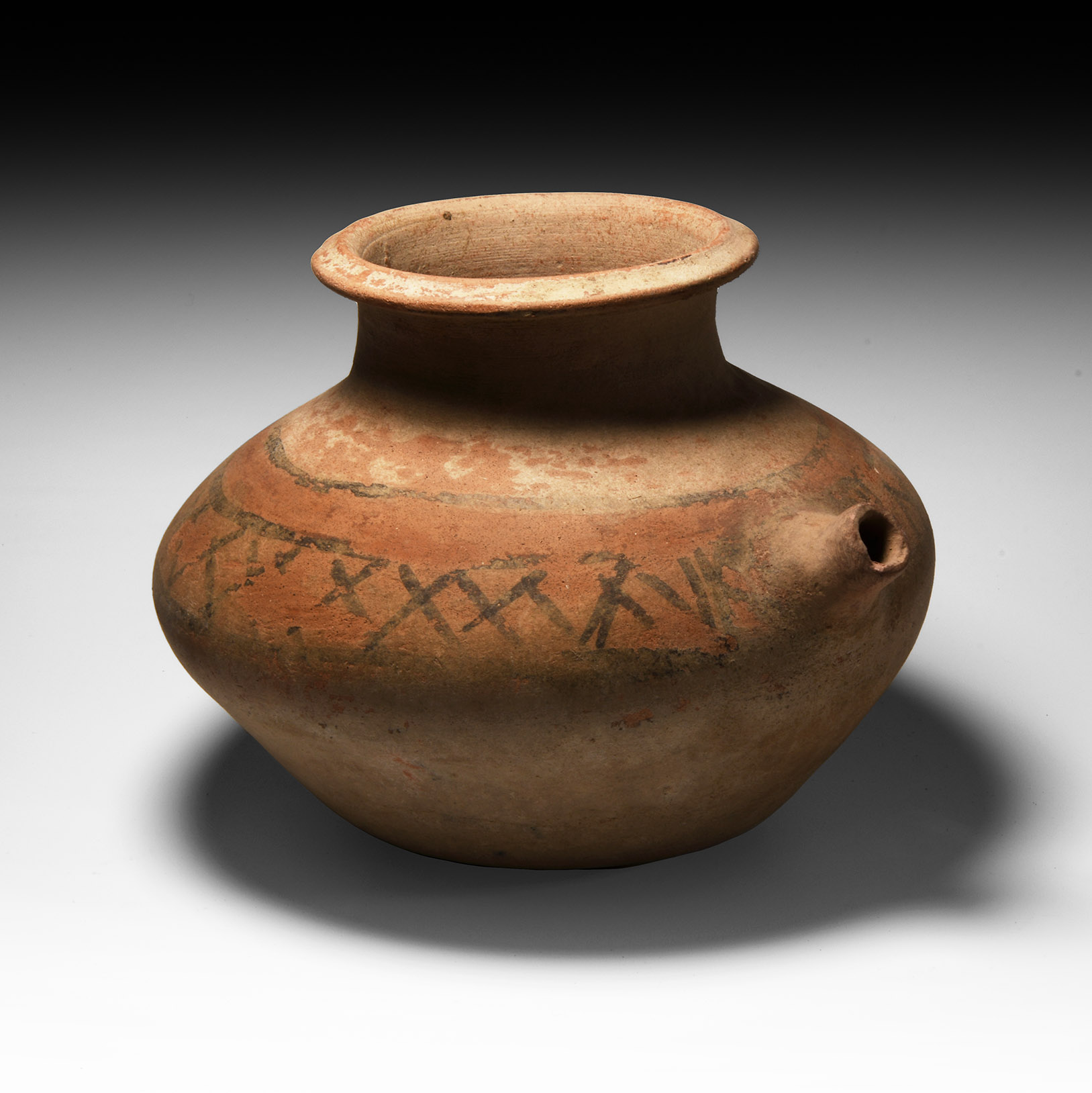
Western Asiatic Painted Spouted Vessel
2ND-1ST MILLENNIUM B.C.
8 1/4 in. (724 grams, 21 cm wide).
A ceramic vessel with rounded underside, biconvex body, trumpet-shaped mouth with raised internal rim; spout to the shoulder; painted band of decoration to the shoulder. [No Reserve]
ProvenanceAcquired 1980-2015.
Ex Abelita family collection.
TimeLine Auctions follows a vetting process to ensure the authenticity and legality of all items, reinforcing our commitment to integrity and responsible trading. Each antiquity, antique, and coin lot undergoes thorough examination by a vetting committee of at least ten external specialists, professional trade association members, scientists, and archaeologists: Our Vetting Process
AUCTIONS:
TimeLine is a leading auction house specialising in antiquities, ancient art, collectables, natural history, coins, medals, and books. Our auctions offer museums, collectors, historians, and enthusiasts the opportunity to acquire unique and historically significant pieces.
-
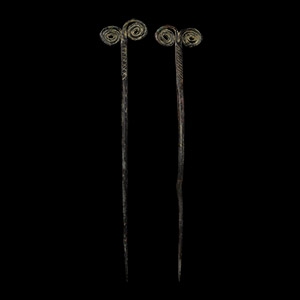
Luristan Decorated Pin Pair
13th-6th century B.C.Sold for (Inc. bp): £72
A pair of bronze pins with bifurcated coiled terminals and incised geometric motifs to the upper stems. 59 grams total, 19-19.5 cm
UK private collection before 2000. UK art market. Property of a London gentleman. -
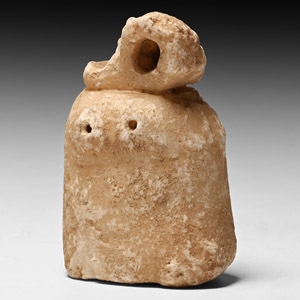
Tel Brak Type Alabaster Eye Idol
Circa 3rd millennium B.C.Estimate: £250 - 350 (+bp*)
Opening Bid: £125
A Tel Brak type creamy alabaster anthropomorphic eye idol, possibly of figurative female form, carved with a bell-shaped body, two 'breasts', remains of openwork 'eyes' above. 33.5 grams, 43 mm
Acquired 1969-1999. London collection of the late Mr S.M., thence by descent.
A classic artefact type from ancient Mesopotamia. Likely hand-carved using drills and string cutting. Eye idols were so named in the 1930s by the British archaeologist Max Mallowan. Whilst excavating a mound called Tel Brak, he discovered hundreds of anthropomorphic items of similar form, thus naming the mound 'Temple of the Eyes'. -
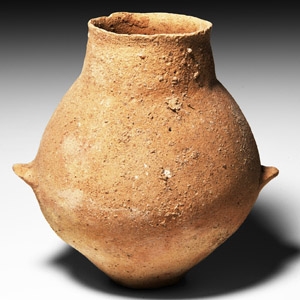
Western Asiatic Trans Jordan Redware Burnished Jar
Circa 3000 B.C.Sold for (Inc. bp): £46
An early Bronze Age terracotta jar with flat base and rounded upper body, two ledge handles to the equator, broad neck with band of impressed dots beneath the rim. 378 grams, 14 cm high
Acquired 1970s. From an important deceased family collection by descent.
