
Loading, please wait...
LOT 1011
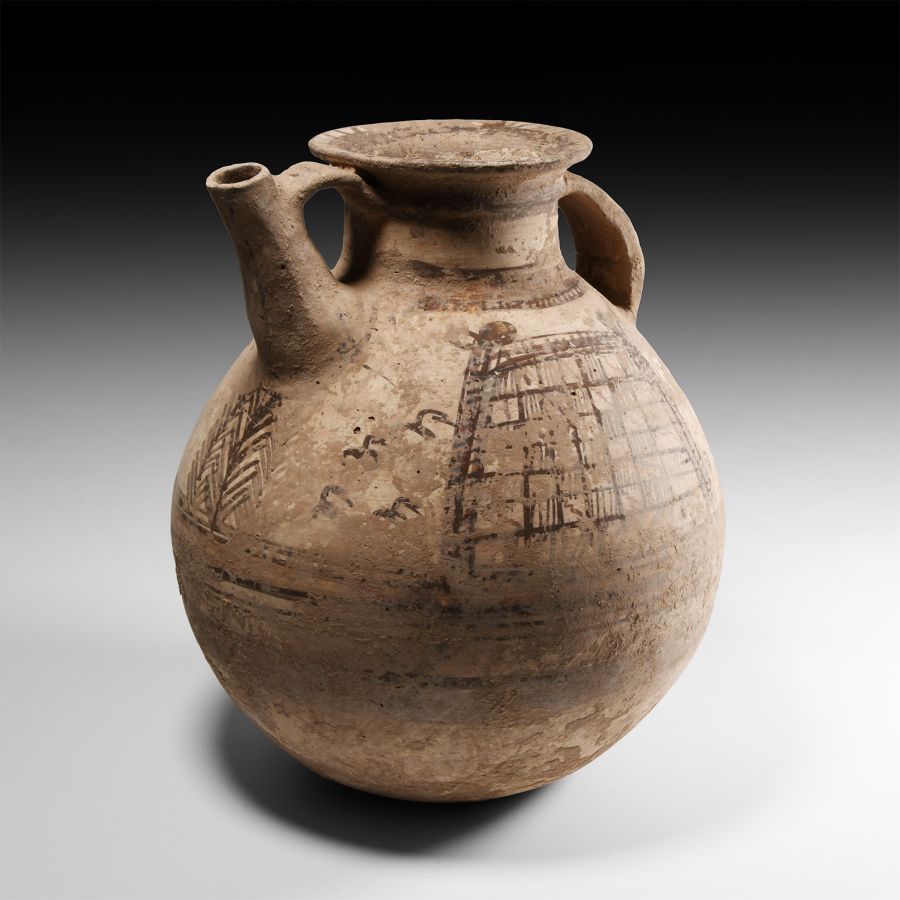
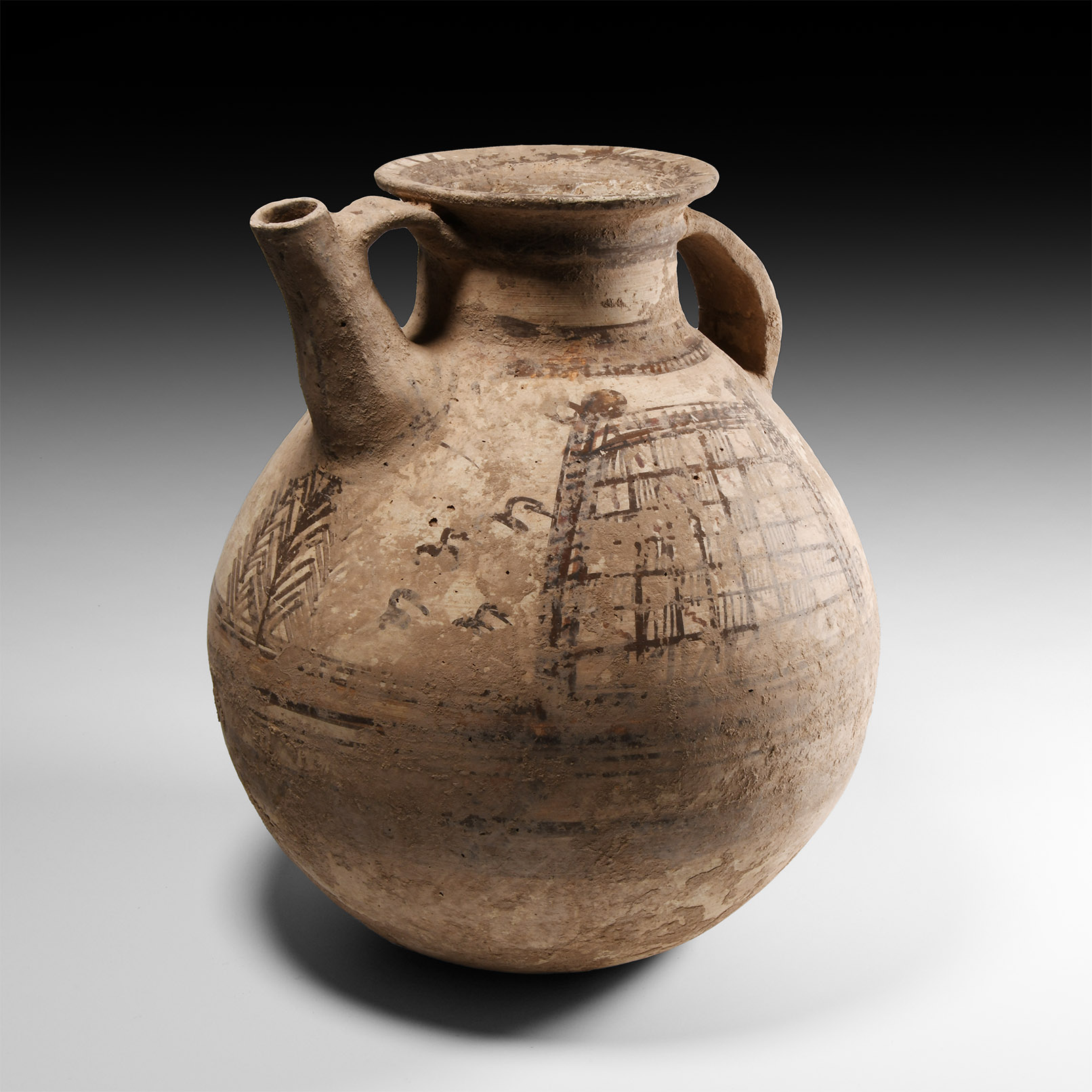
Western Asiatic Painted Spouted Vessel
1ST MILLENNIUM B.C.
11 in. (2.27 kg, 28 cm high).
A bulbous ceramic 'tea pot' with everted rim, bridged spout and strap handle, polychrome painted frieze composed of stylised trees, possibly animal beneath a canopy and figurative architectural form, bands and geometric motifs elsewhere, possibly phallus beneath the handle.
ProvenanceAcquired 1980-2015.
Ex Abelita family collection.
TimeLine Auctions follows a vetting process to ensure the authenticity and legality of all items, reinforcing our commitment to integrity and responsible trading. Each antiquity, antique, and coin lot undergoes thorough examination by a vetting committee of at least ten external specialists, professional trade association members, scientists, and archaeologists: Our Vetting Process
AUCTIONS:
TimeLine is a leading auction house specialising in antiquities, ancient art, collectables, natural history, coins, medals, and books. Our auctions offer museums, collectors, historians, and enthusiasts the opportunity to acquire unique and historically significant pieces.
LOT 1011
Western Asiatic Painted Spouted Vessel
Estimate £300 - 400€350 - 460 (for guidance only)$410 - 540 (for guidance only)
-
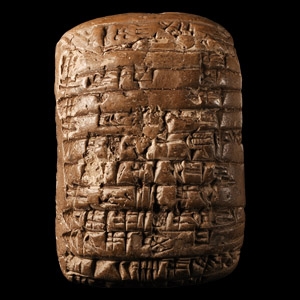
Ur III Cuneiform Tablet, an Inventory of Drivers of Plough Oxen
Late 3rd millennium B.C.Sold for (Inc. bp): £1,300
A pillow-shaped clay tablet bearing dense rows of cuneiform text to both principal faces; an inventory of workers, drivers of plough oxen, under the responsibility of a team leader; among the workers, several are mentioned as 'sick', the lower part of the tablet has been restored, the cuneiform signs on two lines are false. 82 grams, 63 mm
Acquired early 1990s. Ex private American collection; thence by descent. Private Swiss collection since 1998. -
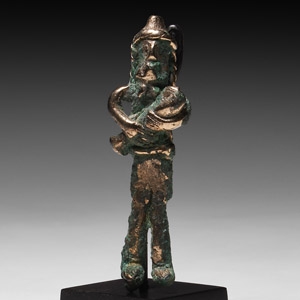
Amlash Mother and Child Figure
Mid 2nd millennium B.C.Estimate: £250 - 350 (+bp*)
Opening Bid: £139
A copper-alloy figural pendant formed as a standing figure cradling an infant, stylised facial and anatomical detailing; suspension loop to reverse; accompanied by a custom-made display stand. 28 grams, 66 mm (39 grams total, 73 mm including stand)
Fine condition.
Acquired before 1983. Ex London gallery, 1990s. -
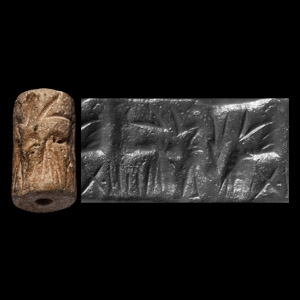
Sumerian Cylinder Seal with Banqueting Scene
26th-24th century B.C.Sold for (Inc. bp): £191
A chalk cylinder seal with frieze; accompanied by an old scholarly note, handwritten and signed by W.G. Lambert, late Professor of Assyriology, University of Birmingham, 1970-1993, which states: 'Cylinder seal of white stone, 28x17 mm. Two facing seated drinkers, wearing long robes and holding up cups. Standing servant in short clothes between them. Vessel with pointed base and two straws in it. Mesopotamian, c.2600-2400 B.C.. Top of seal damaged, but design deep and clear.' In a different hand beneath 'Sumerian seal; early Dynastic Period III. Banquet scene. Manuscript of Prof. W.G. Lambert' and further notation to the reverse; accompanied by a museum-quality impression. 7.2 grams, 28 mm
Fine condition.
From the private collection of Emilio Bacarani, Valbonne, France, 1950-1988. Acquired in 1988. From the collection of G.M.R.H., London, UK. Accompanied by an original handwritten unsigned scholarly note by Professor Wilfrid George Lambert FBA.
