
Loading, please wait...
LOT 0952
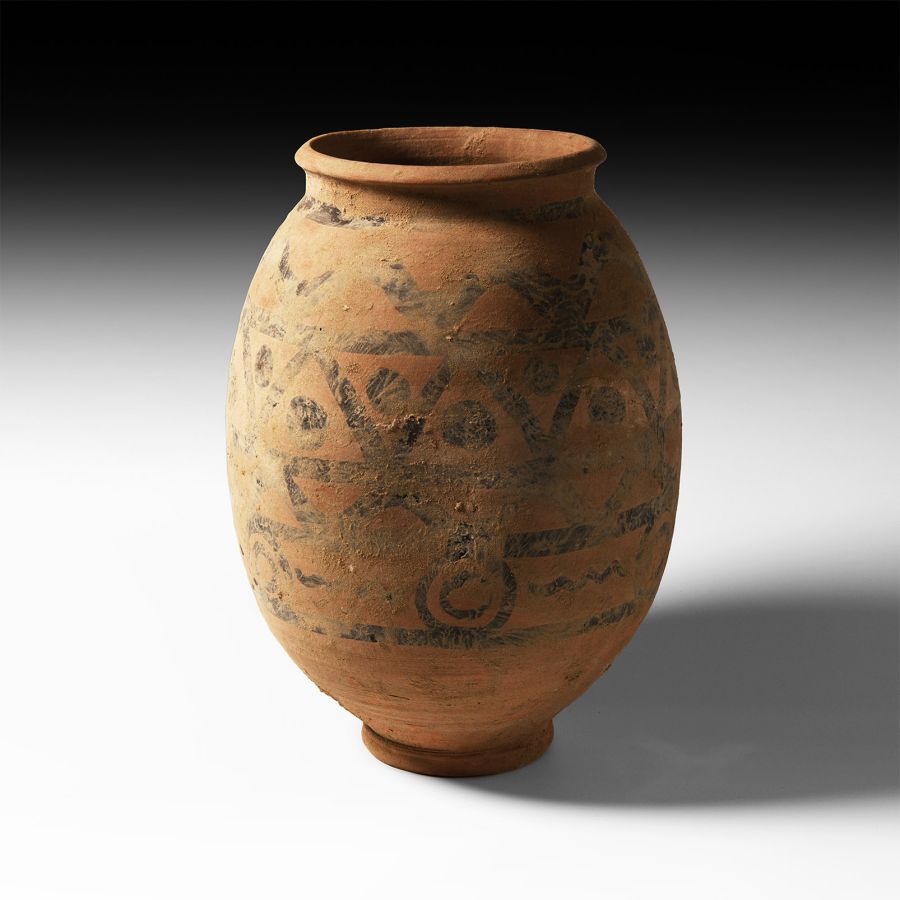
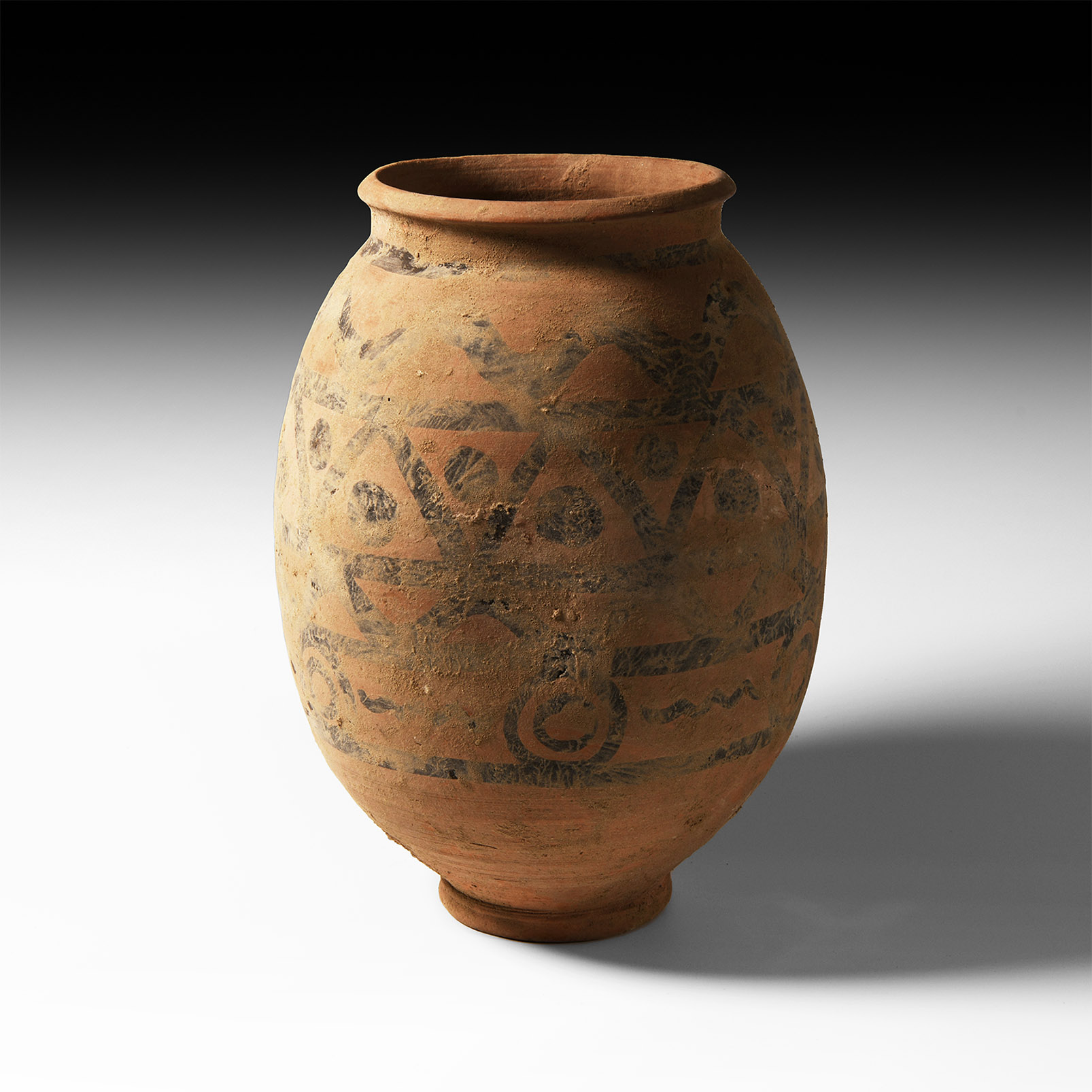
Western Asiatic Painted Jar
2ND-1ST MILLENNIUM B.C.
8 3/8 in. (805 grams, 21.2 cm high).
An ovoid ceramic jar with short neck, chamfered rim and discoid foot, painted geometric frieze to the upper body composed of plain circumferential bands, chevrons and pellets.
ProvenanceAcquired 1980-2015.
Ex Abelita family collection.
TimeLine Auctions follows a vetting process to ensure the authenticity and legality of all items, reinforcing our commitment to integrity and responsible trading. Each antiquity, antique, and coin lot undergoes thorough examination by a vetting committee of at least ten external specialists, professional trade association members, scientists, and archaeologists: Our Vetting Process
AUCTIONS:
TimeLine is a leading auction house specialising in antiquities, ancient art, collectables, natural history, coins, medals, and books. Our auctions offer museums, collectors, historians, and enthusiasts the opportunity to acquire unique and historically significant pieces.
LOT 0952
Western Asiatic Painted Jar
Estimate £200 - 300€230 - 350 (for guidance only)$270 - 410 (for guidance only)
-
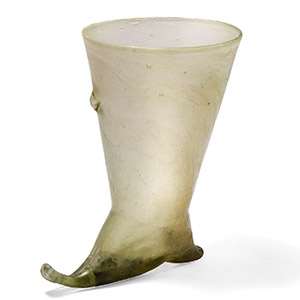
Sassanian Glass Rhyton- Style Vessel
3rd-7th century A.D.Estimate: £500 - 700 (+bp*)
Opening Bid: £250
A pale green glass vessel with tapering sidewalls and foot formed as a stylised shoe or boot; iridescent surfaces. 86 grams, 11.2 cm high
French collection, 1960s-early 2000s. From an important Paris gallery, France. with Vermot & Associés, Paris, France, 16 November 2019, lot 44. -
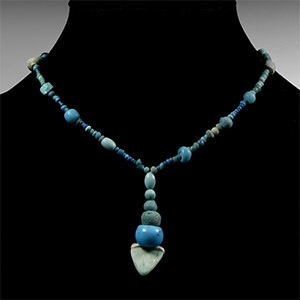
Achaemenid Faience and Other Bead Necklace
6th-4th century B.C. and laterSold for (Inc. bp): £65
A restrung designer necklace composed mainly of glass, faience and stone beads of different sizes, dates and types, including facetted, spherical, oblate, triangular and other types; in various shades of blue. 14.9 grams, 68 cm long
Acquired 1980-2015. Ex Abelita family collection. -
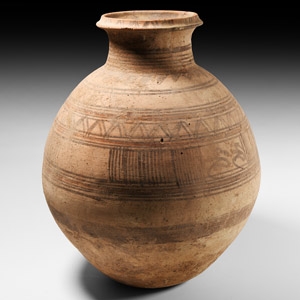
Western Asiatic Jar with Birds
3rd-2nd millennium B.C.Estimate: £350 - 450 (+bp*)
Opening Bid: £194
An ovoid ceramic jar with waisted neck and collared rim, decorated with polychrome geometric motifs including circumferential bands of chevrons, plain bands and hatching. 3.4 kg, 32.5 cm high
Fine condition.
Acquired 1970s-1990s. Ex Pars Gallery, Mayfair, London, UK. From a specialist collection of pottery.
