
Loading, please wait...
LOT 0929
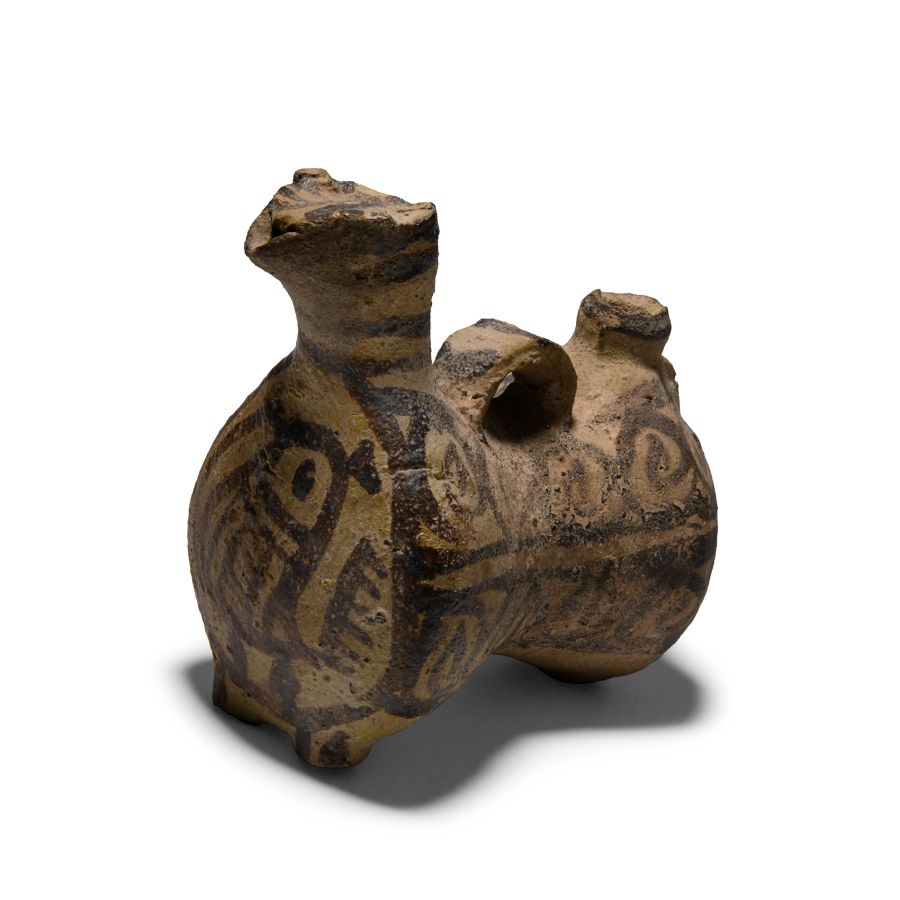
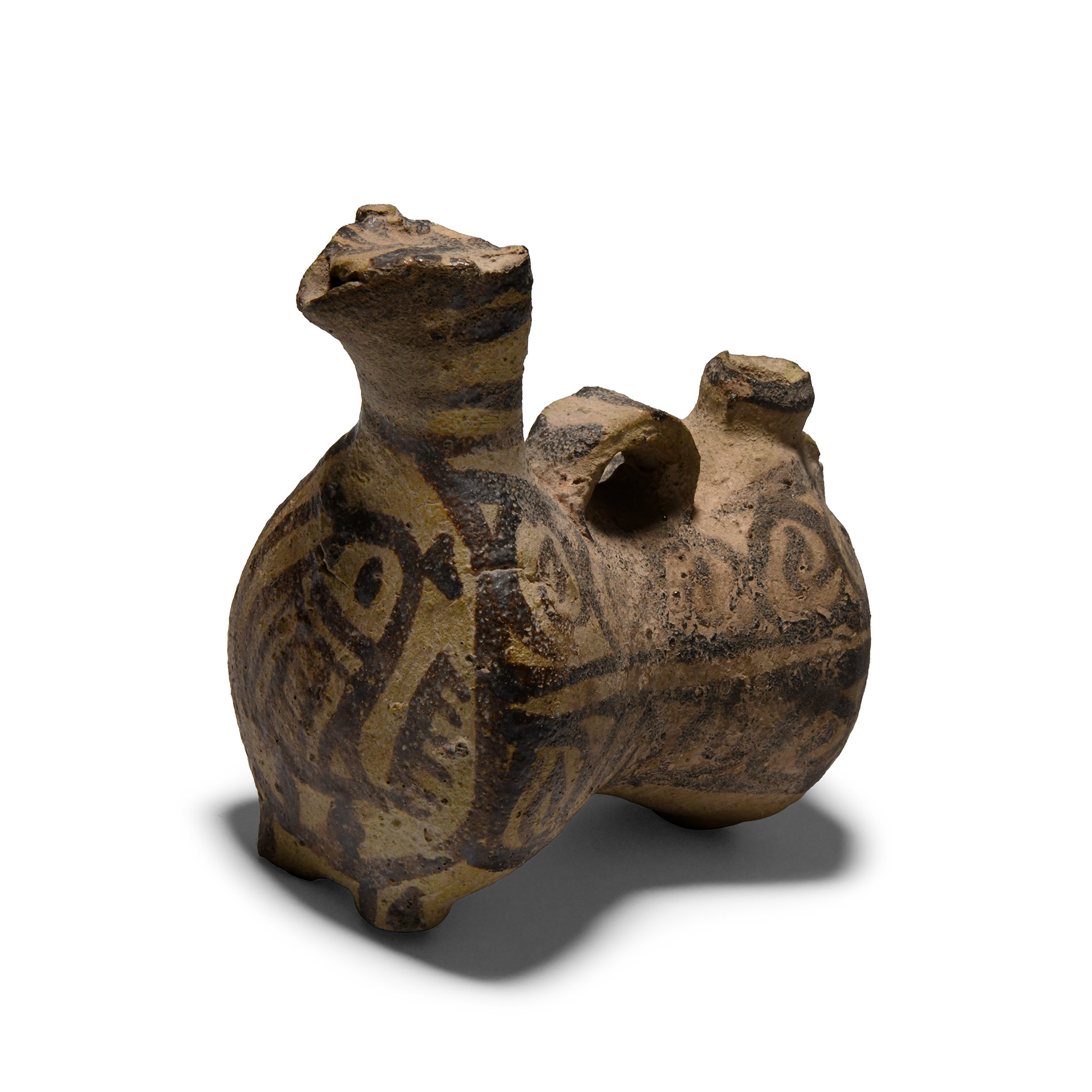
Western Asiatic Painted Ceramic Zoomorphic Ewer
CIRCA 9TH-12TH CENTURY A.D.
6 in. (537 grams, 15 cm wide).
Formed as a stylised animal with stocky waisted body formed from conjoined bulbs, long tail, flared neck developing to a spout with lugs, loop handle to the middle back and filler-hole to the rump; painted with bands of running scroll designs and bands.
ProvenanceFrom the Steel family collection, 1950s-late 1990s.
CONDITIONTimeLine Auctions follows a vetting process to ensure the authenticity and legality of all items, reinforcing our commitment to integrity and responsible trading. Each antiquity, antique, and coin lot undergoes thorough examination by a vetting committee of at least ten external specialists, professional trade association members, scientists, and archaeologists: Our Vetting Process
AUCTIONS:
TimeLine is a leading auction house specialising in antiquities, ancient art, collectables, natural history, coins, medals, and books. Our auctions offer museums, collectors, historians, and enthusiasts the opportunity to acquire unique and historically significant pieces.
-
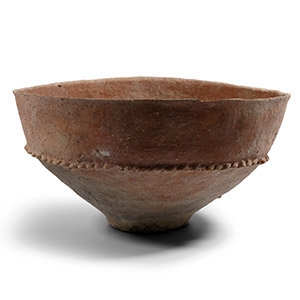
Trans Jordan Terracotta Bowl
Early Bronze Age, 3rd millennium B.C.Sold for (Inc. bp): £117
Large with conical body and narrow base, applied fluted strip to the vertical shoulder, narrow rim. 1.07 kg, 26.5 cm wide
Ex London, UK, collection, 1988. -
.jpg)
Old Babylonian Cuneiform Tablet
Sumerian, 3rd millennium B.C.Sold for (Inc. bp): £1,300
Of pillow-shape with lines of impressed cuneiform text to both principal faces, reading: 1) 1 wineskin suspended from a rope, 2) (for) Šu-Sîn the royal messenger 3-5) when he came <...>. 6) Intermediary Ašgi-tillassu, chief of the weavers. 7) Expense. 8) In the month šugargal, 9-10) the year bis when the priestess of Eridu was 'hired'. 24.2 grams, 36 mm
Specialised collection of cuneiform texts, the property of a London gentleman and housed in London before 1988. Thence by descent to family members. Examined by Professor Wilfrid George Lambert FBA (1926-2011), historian, archaeologist, and specialist in Assyriology and Near Eastern archaeology, in the late 1980s and early 1990s. The collection is exceptional for the variety of types, including some very rare and well preserved examples. -
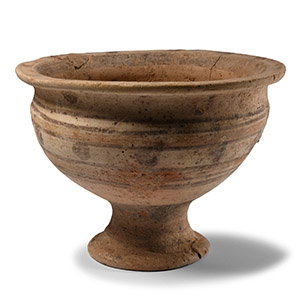
Western Asiatic Painted Pottery Chalice
2nd-1st millennium B.C.Sold for (Inc. bp): £65
With broad everted rim, painted with brown and ochre bands of varying width with bosses to centre. 651 grams, 16.8 cm wide
Acquired 1980-2015. Ex Abelita family collection.
