
Loading, please wait...
LOT 1078
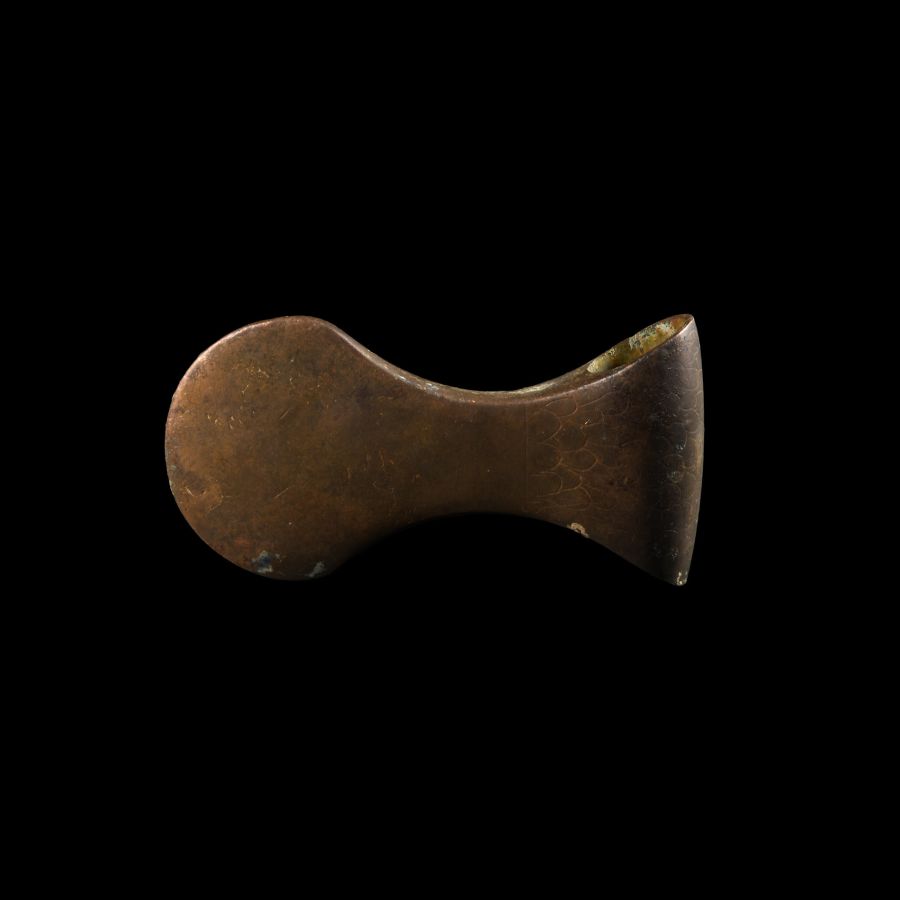
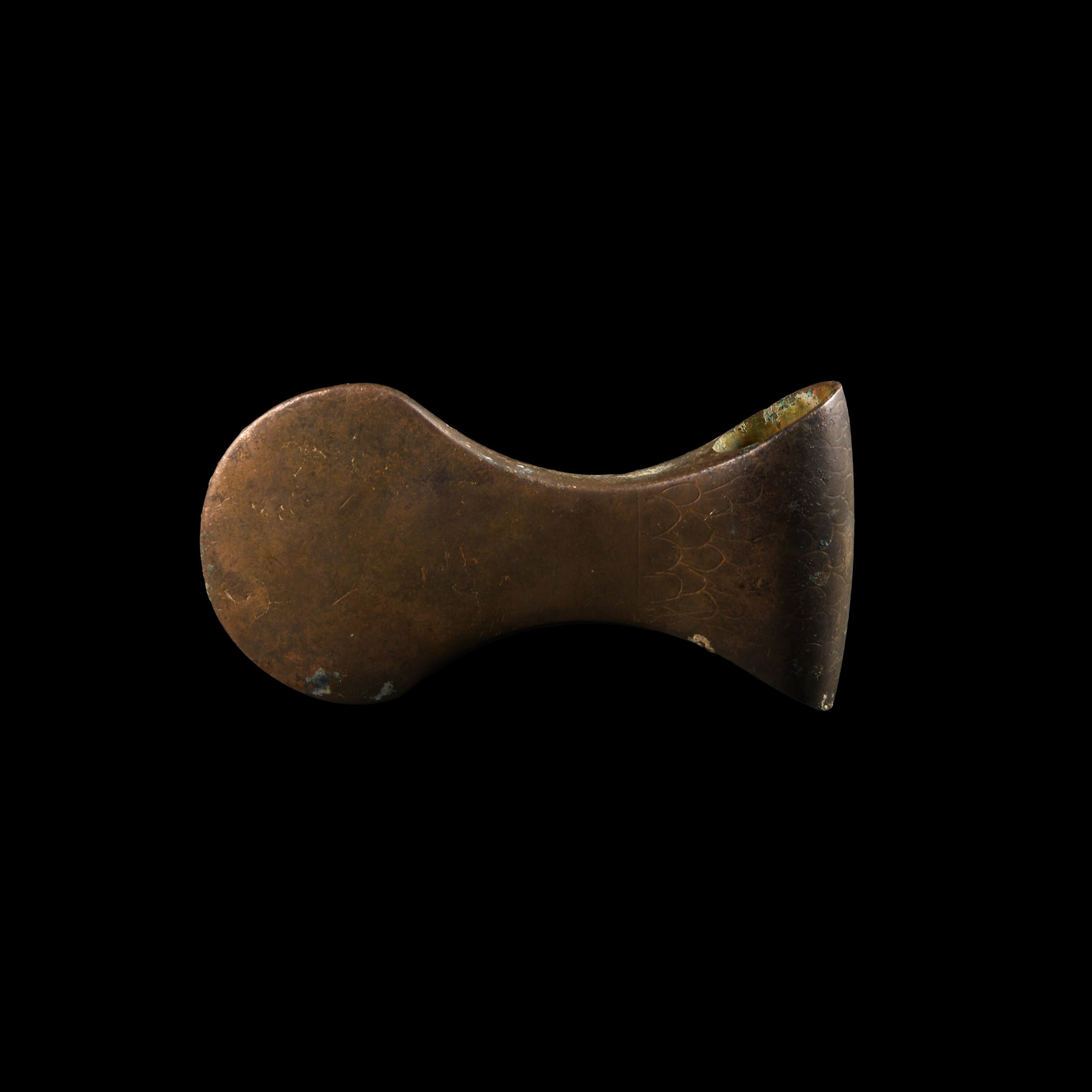
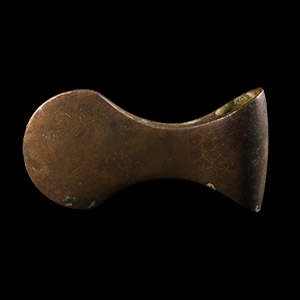
Western Asiatic Paddle-Shaped Axehead
2ND-1ST MILLENNIUM B.C.
4 3/4 in. (353 grams, 12 cm).
A copper-alloy axehead with curved cylindrical butt and socket, waisted neck and D-shaped cutting edge; incised scale decoration to the socket. [No Reserve]
ProvenanceEarly 1990s London collection.
Acquired on the UK art market.
From a private collection, Lancashire, UK.
Cf. Muscarella, O.W., Bronze and Iron Ancient Near Eastern Artifacts in the Metropolitan Museum of Art, New York, 1988, no.539, p.407, for similar.
FootnotesThese kind of axes had a simple but aesthetic form, with the round socket placed at the edge of the rounded butt which tapered smoothly to a flat, splayed crescent-shaped blade.
CONDITIONTimeLine Auctions follows a vetting process to ensure the authenticity and legality of all items, reinforcing our commitment to integrity and responsible trading. Each antiquity, antique, and coin lot undergoes thorough examination by a vetting committee of at least ten external specialists, professional trade association members, scientists, and archaeologists: Our Vetting Process
AUCTIONS:
TimeLine is a leading auction house specialising in antiquities, ancient art, collectables, natural history, coins, medals, and books. Our auctions offer museums, collectors, historians, and enthusiasts the opportunity to acquire unique and historically significant pieces.
-
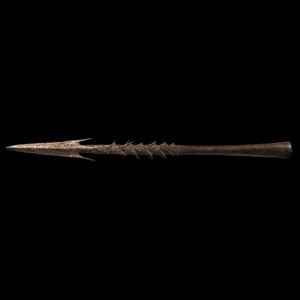
Medieval Socketted Catapult Dart
14th-16th century A.D.Sold for (Inc. bp): £208
An iron catapult dart formed with a tapering cylindrical socket and rectangular-section neck with barbs, barbed triangular head with full-length medial rib to both faces. 83 grams, 25 cm
Acquired before 2000. From the collection of a European gentleman living in the UK. -
Western Asiatic Paddle-Shaped Axehead
2nd-1st millennium B.C.Sold for (Inc. bp): £98
A copper-alloy axehead with curved cylindrical butt and socket, waisted neck and D-shaped cutting edge; incised scale decoration to the socket. 353 grams, 12 cm
Early 1990s London collection. Acquired on the UK art market. From a private collection, Lancashire, UK.
These kind of axes had a simple but aesthetic form, with the round socket placed at the edge of the rounded butt which tapered smoothly to a flat, splayed crescent-shaped blade. -
Luristan Socketted Axe-Adze
13th-7th century B.C.Sold for (Inc. bp): £121
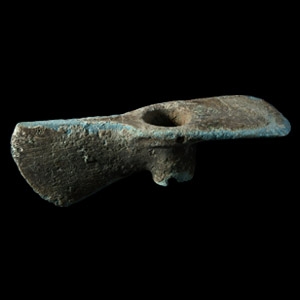
A substantial copper-alloy adze-axe head composed of a cylindrical socket, one blade at a right angle to the socket with tapering sides and D-section cutting edge; one blade upright with convex cutting edge. 559 grams, 16.5 cm
Fine condition.
Acquired in the 1980s. London, UK, private collection. Property of an Essex gentleman.
