
Loading, please wait...
LOT 1328
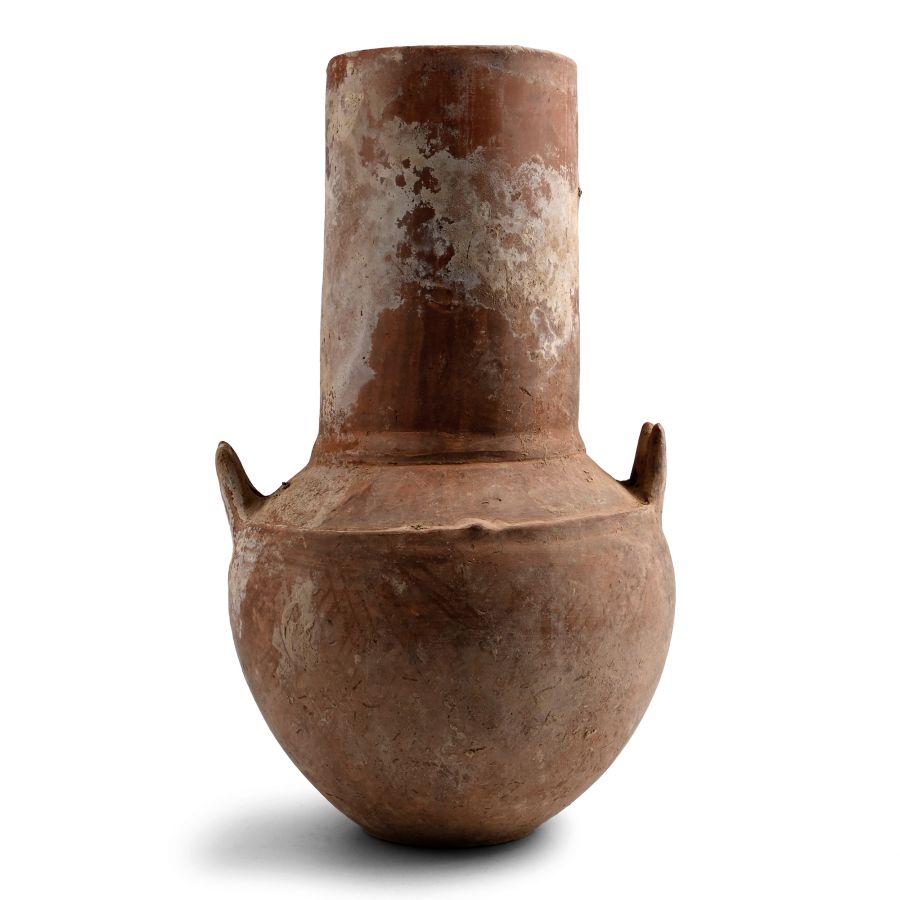
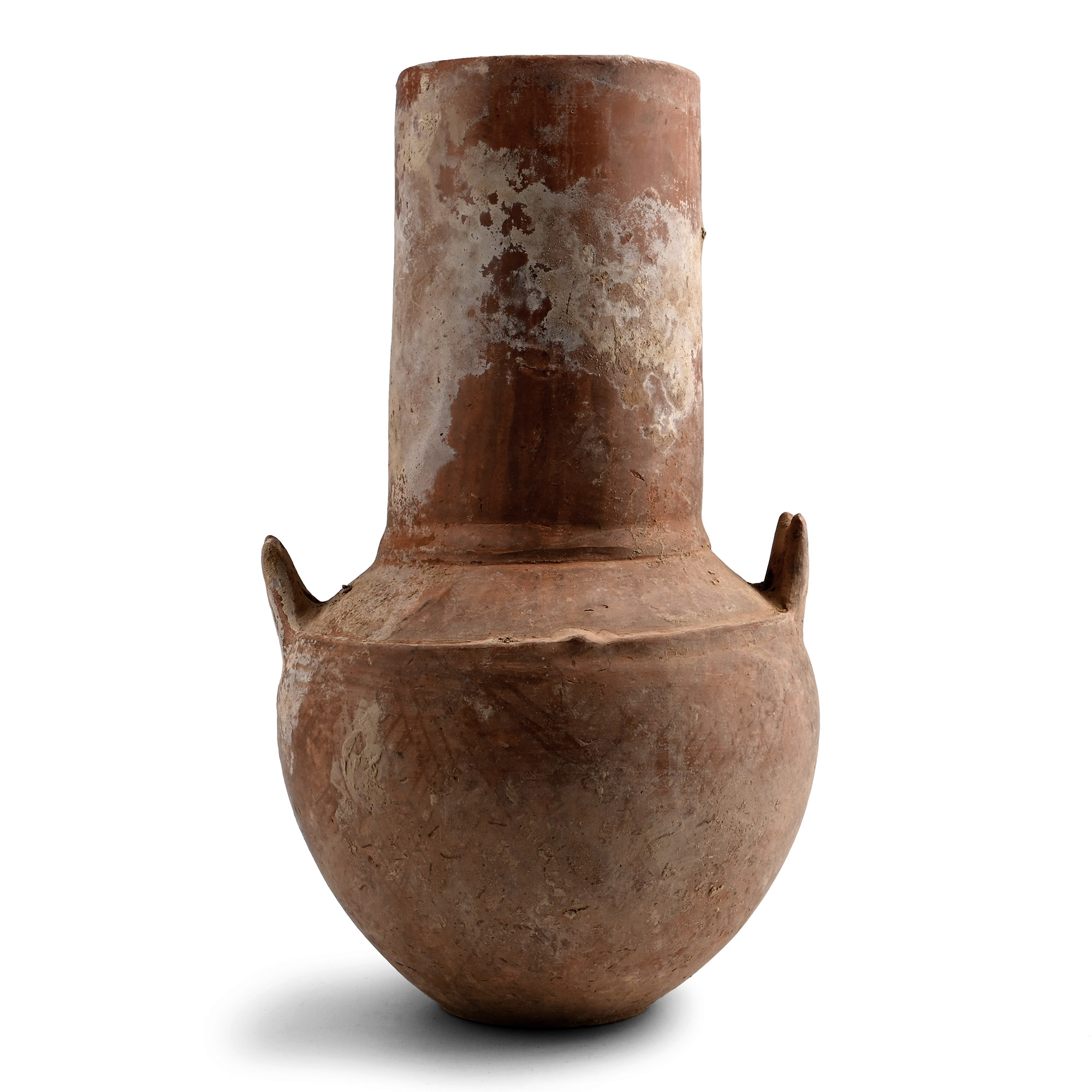
Western Asiatic Net-Painted Pottery Vase
1ST MILLENNIUM B.C.
10 1/4 in. (715 grams, 26 cm).
Comprising a tall tubular neck and deep shoulder, carination at the junction with the squat bowl; two pierced flanges at the shoulder for attachment of a suspension cord, and remains of net painting to the body.
ProvenanceFrom the collection of a gentleman, 1988-2000s.
CONDITIONTimeLine Auctions follows a vetting process to ensure the authenticity and legality of all items, reinforcing our commitment to integrity and responsible trading. Each antiquity, antique, and coin lot undergoes thorough examination by a vetting committee of at least ten external specialists, professional trade association members, scientists, and archaeologists: Our Vetting Process
AUCTIONS:
TimeLine is a leading auction house specialising in antiquities, ancient art, collectables, natural history, coins, medals, and books. Our auctions offer museums, collectors, historians, and enthusiasts the opportunity to acquire unique and historically significant pieces.
-
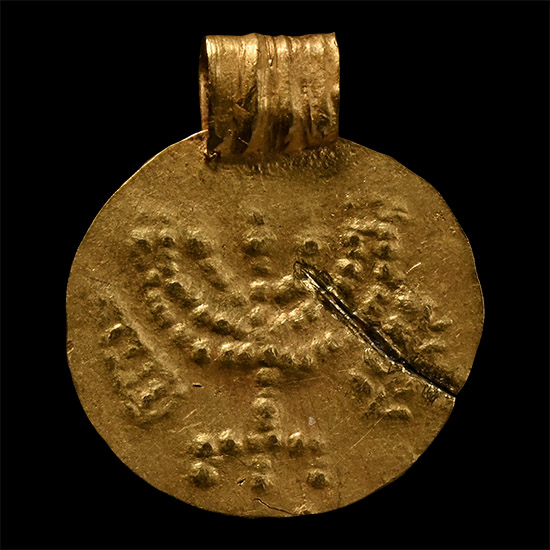
Judaean Gold Pendant with Menorah
3rd-4th century A.D.Sold for (Inc. bp): £1,040
Foil disc with integral suspension loop, repoussé menorah motif in pointillé technique. 1.19 grams, 17 mm
Private collection formed in Europe in the 1980s. Westminster collection, central London, UK. -
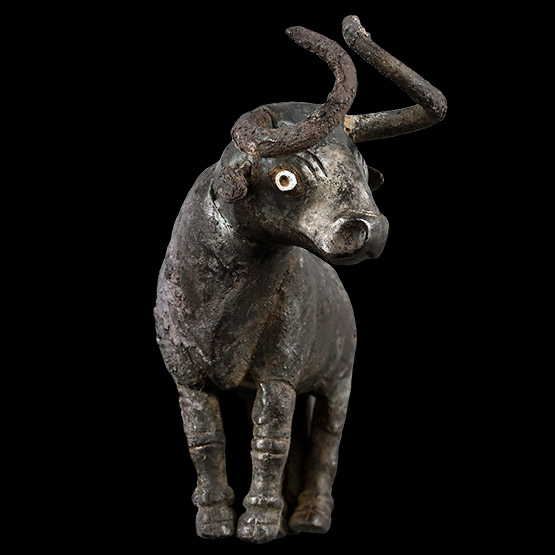
Early Proto-Elamite Silver Horned Bull Pendant
3100-2900 B.C.Estimate: £20,000 - 30,000 (+bp*)
Opening Bid: £10,000
Representing an exquisite bull figure standing with his head turned dramatically to the left, depicted with large curled horns and inlaid white stone eyes, formed from thin hammered silver sheet in repoussé, depicting the bull as a hollow pendant, with the interior filled with natural bitumen; traces of an original suspension loop on the shoulder. 54.5 grams, 70 mm wide
with Mahboubian Gallery, New York, acquired prior to 1969. Accompanied by an academic report by Dr Raffaele D’Amato. This lot has been checked against the Interpol Database of stolen works of art and is accompanied by search certificate number no.13140-249434.
Objects of this type are understood to be ritual or votive pendants, produced not for everyday wear but primarily for dedication in temple contexts. Bulls, goats, rams and other herd animals with horns were thematically abundant in the Ancient Near East, especially around the Iranian plateau circumscribed by the Zagros and Elbruz Mountains and multiple deserts. There are representations of bulls as pendants or votive statuettes (Mahboubian,1997, pp.59, 213, 224, 225, 225, 235, 240), vessel stands (Mahboubian, 1997, pp.40-41), vessel protomes and rhytons from Mesopotamia to Caucasus. -
.jpg)
Syrian Haematite Cylinder Seal with Animals
Circa 1700-1600 B.C.Sold for (Inc. bp): £468
With lions and horned animals between scrolls, accompanied by a copy of an old scholarly note, typed and signed by W.G. Lambert, late Professor of Assyriology, University of Birmingham, 1970-1993, which states: 'Description of Cylinder Seal of Hematite, 22 x 13 mm. Main scene: two lions facing, on their haunches, upended quadruped with big ears between them; above and below elegant guilloche. Minor scene: two facing quadrupeds with big ears, bush between, below them a guilloche, below that a prancing horned animal and two fillers. Horizontal rules mark off each part of the design. Syrian, c. 1700-1600 B.C., somewhat worn, but the cutting of hight quality.'; accompanied by a museum quality impression and a pair of red stone beads. 8.98 grams, 22 mm
Private collection, London, UK. Accompanied by a copy of an old scholarly note, typed and signed by W.G. Lambert, late Professor of Assyriology, University of Birmingham, 1970-1993.
