
Loading, please wait...
LOT 0229
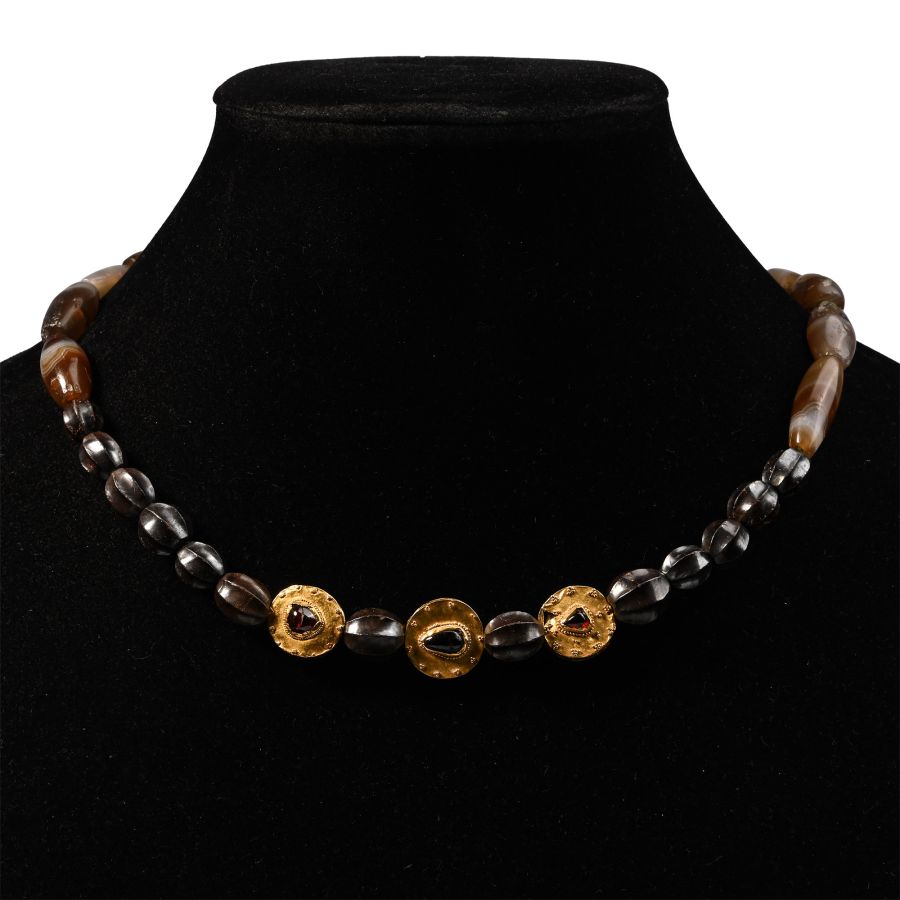
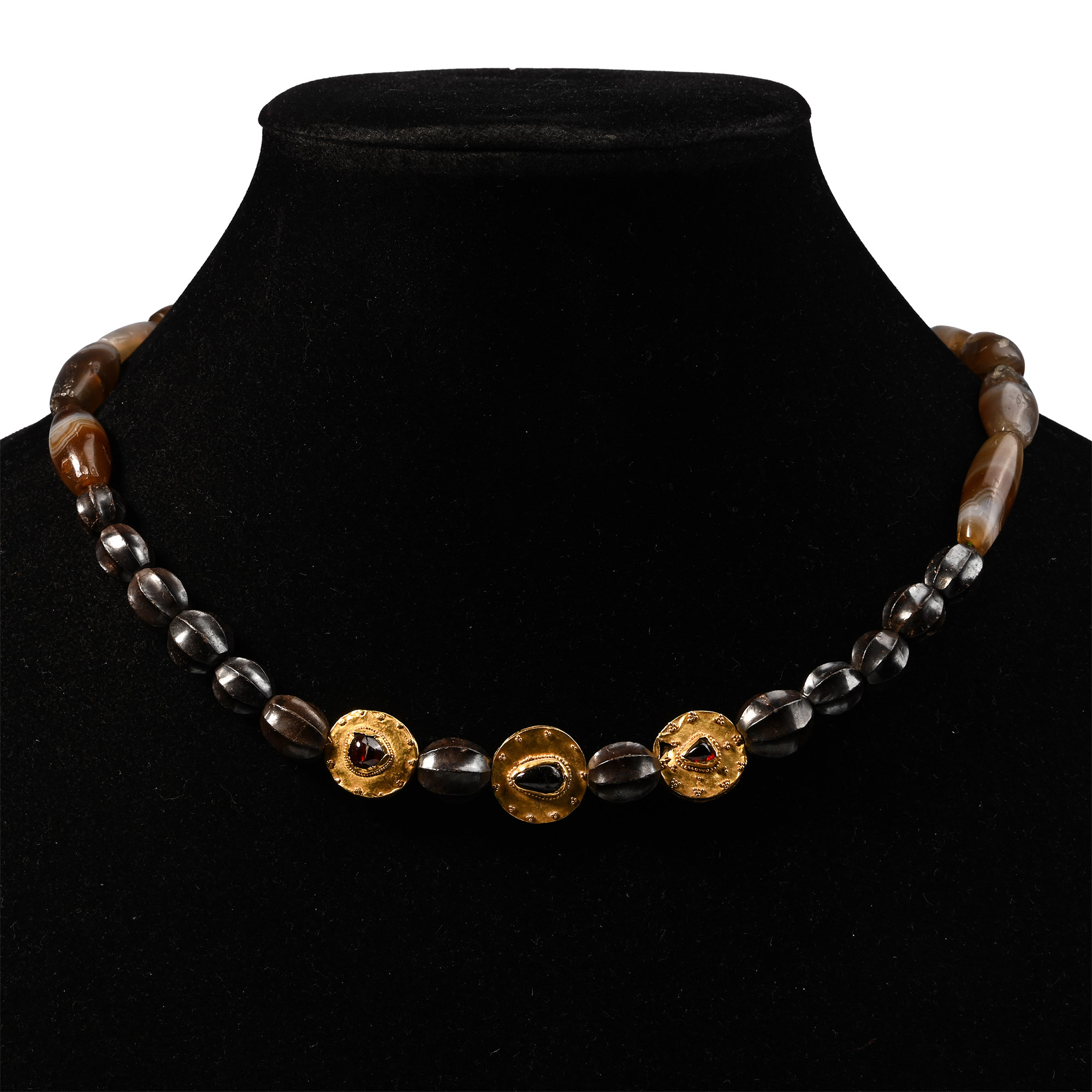
Western Asiatic Necklace with Gold Beads
1ST MILLENNIUM B.C. AND LATER
13 3/8 in. (46.45 grams, 34 cm).
Restrung group of fluted melon and other beads with three later hollow-formed gold drum-shaped panels, each with an inset cabochon garnet to the upper face, and granule clusters.
ProvenancePrivate collection, Jerusalem, assembled in the 1960s.
with Holy Land Antiquities, Jerusalem.
European private collection, acquired 2001.
This lot has been checked against the Interpol Database of stolen works of art and is accompanied by search certificate number no.13141-246774.
TimeLine Auctions follows a vetting process to ensure the authenticity and legality of all items, reinforcing our commitment to integrity and responsible trading. Each antiquity, antique, and coin lot undergoes thorough examination by a vetting committee of at least ten external specialists, professional trade association members, scientists, and archaeologists: Our Vetting Process
AUCTIONS:
TimeLine is a leading auction house specialising in antiquities, ancient art, collectables, natural history, coins, medals, and books. Our auctions offer museums, collectors, historians, and enthusiasts the opportunity to acquire unique and historically significant pieces.
LOT 0229
Western Asiatic Necklace with Gold Beads
Estimate £3,000 - 4,000€3,480 - 4,640 (for guidance only)$4,050 - 5,400 (for guidance only)
-
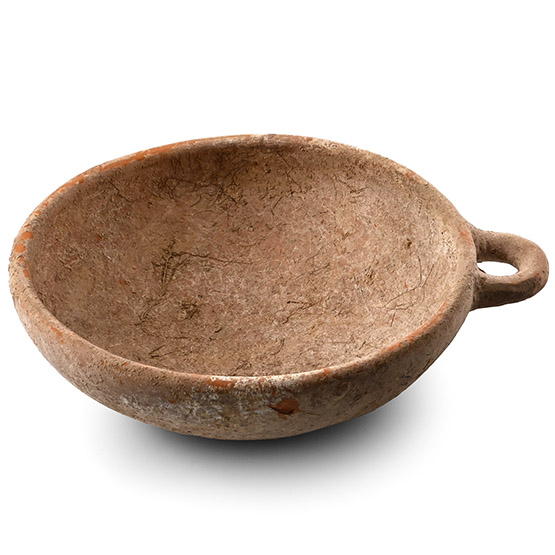
Western Asiatic Handled Pottery Bowl
1st millennium B.C.Sold for (Inc. bp): £117
Shallow bowl with inturned rim and loop handle below the rim. 477 grams, 21 cm
From the collection of a gentleman, 1988-2000s. -
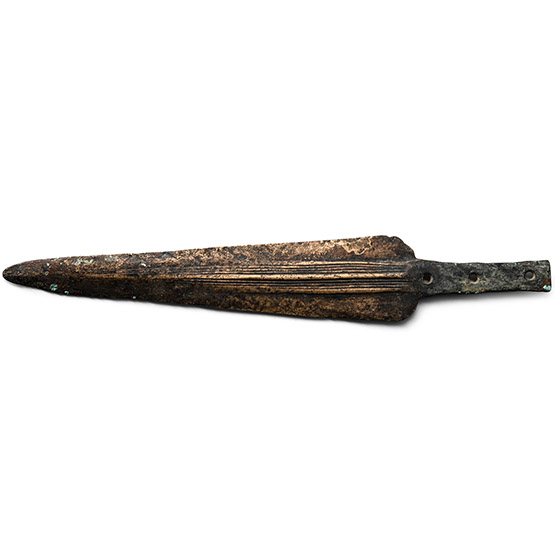
Luristan Bronze Dagger Blade
800-600 B.C.Sold for (Inc. bp): £195
With a triangular blade fitted with three fullers, with a handle cast onto the blade, showing three fastening holes. 72 grams, 20 cm
Ex Abelita family collection, 1980s-2000s.
These weapons belong to the Early Median and Achaemenid Period. The blades were often inserted inside an openwork scabbard, cast with the lost wax process, while the handle was instead cast onto the blade. -
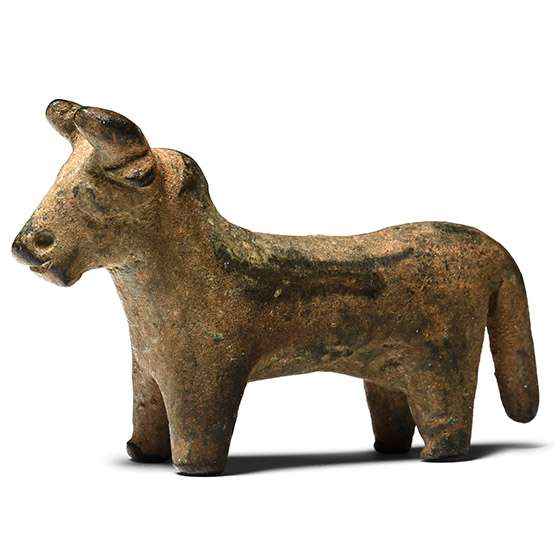
Elamite Bronze Votive Bull
2500-1000 B.C.Estimate: £500 - 700 (+bp*)
Opening Bid: £250
Modelled in the round standing zebu with prominent horns. 64.3 grams, 53 mm
UK private collection before 2000. Acquired on the UK art market. Private collection, London, UK.
