
Loading, please wait...
LOT 1387
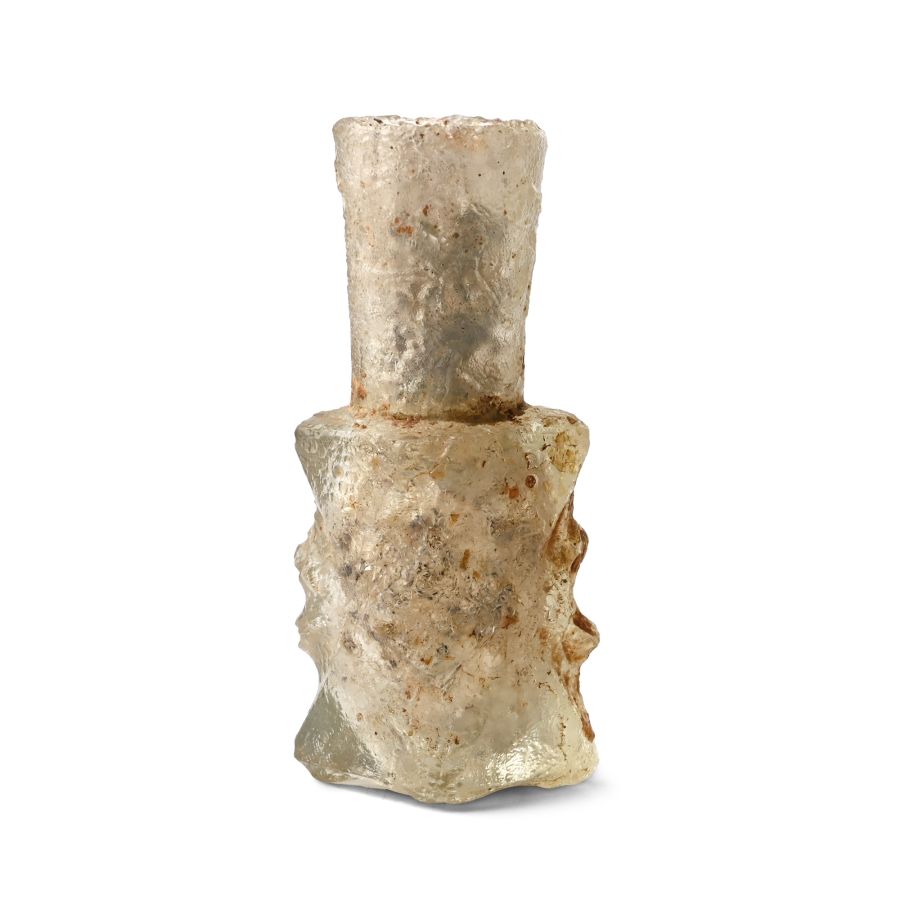
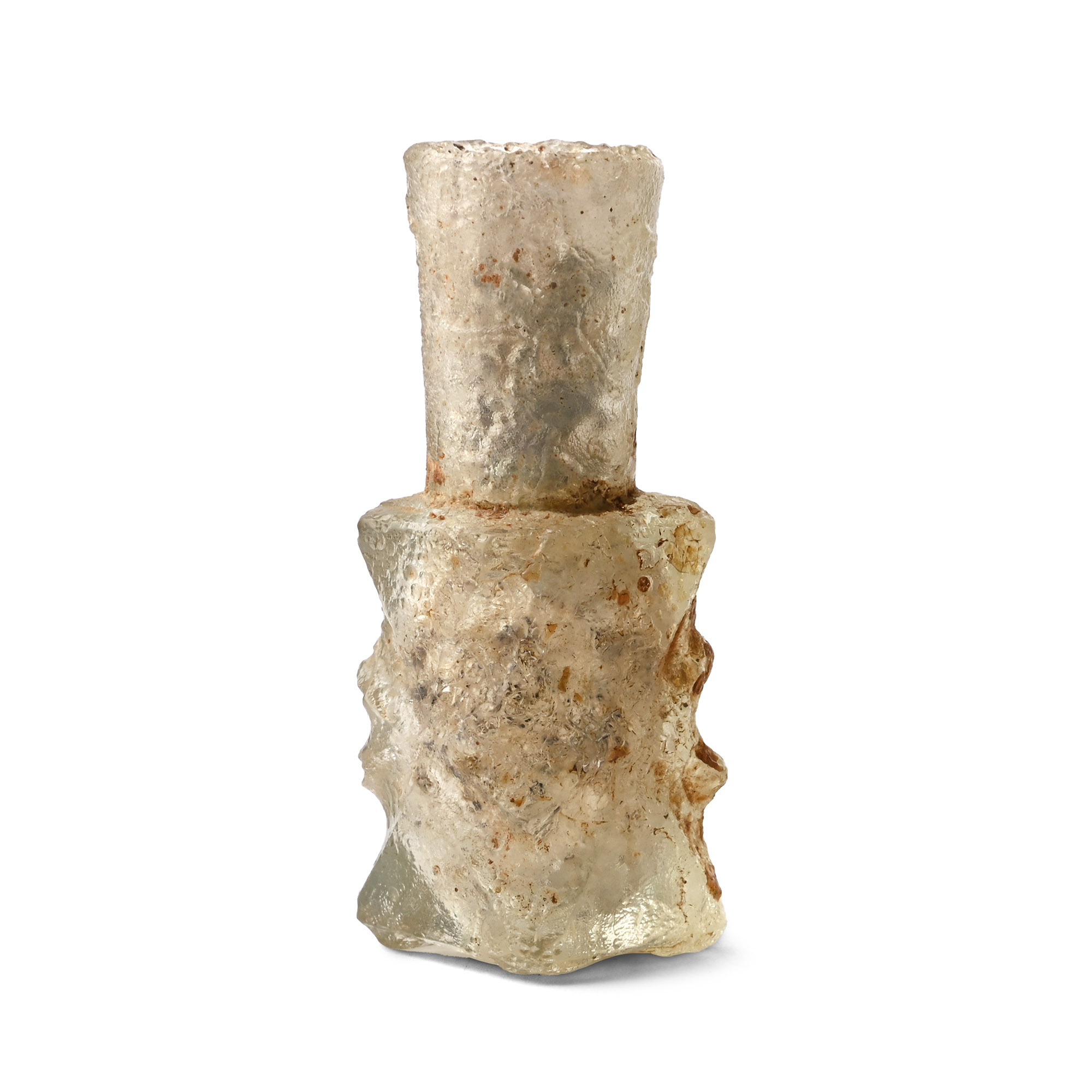
Western Asiatic Molar Glass Vessel
CIRCA 9TH-11TH CENTURY A.D.
1 7/8 in. (16.26 grams, 48 mm).
With segmented body and expanding tubular neck, four stub feet to the underside.
ProvenanceFrom a London, UK, collection of glass, 1970-2000s.
CONDITIONTimeLine Auctions follows a vetting process to ensure the authenticity and legality of all items, reinforcing our commitment to integrity and responsible trading. Each antiquity, antique, and coin lot undergoes thorough examination by a vetting committee of at least ten external specialists, professional trade association members, scientists, and archaeologists: Our Vetting Process
AUCTIONS:
TimeLine is a leading auction house specialising in antiquities, ancient art, collectables, natural history, coins, medals, and books. Our auctions offer museums, collectors, historians, and enthusiasts the opportunity to acquire unique and historically significant pieces.
LOT 1387
Western Asiatic Molar Glass Vessel
Estimate £100 - 140€120 - 160 (for guidance only)$140 - 190 (for guidance only)
-
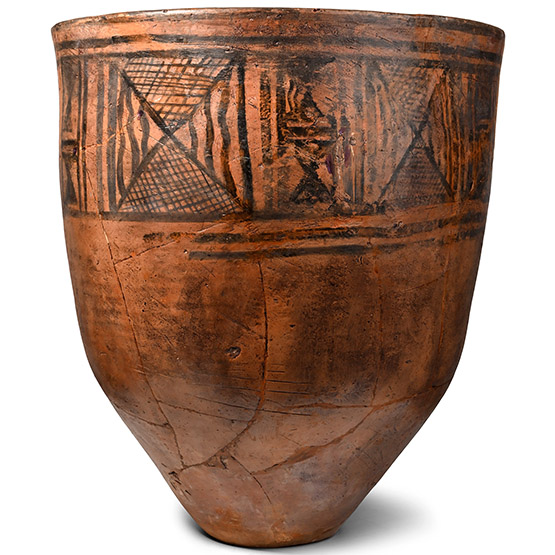
Monumental Western Asiatic Pottery Jar
Circa 3000 B.C.Estimate: £1,500 - 2,000 (+bp*)
Opening Bid: £600
Comprising a sharply tapering lower body, parallel-sided upper body and rounded rim; decorated in dark brown with thirteen square panels with central saltire on a hatched field; repaired. 17 kg, 64 cm high
with Mahboubian Gallery, London, UK, 1974. Private collection, London, UK. This lot has been checked against the Interpol Database of stolen works of art and is accompanied by search certificate number no.12972-245238. -
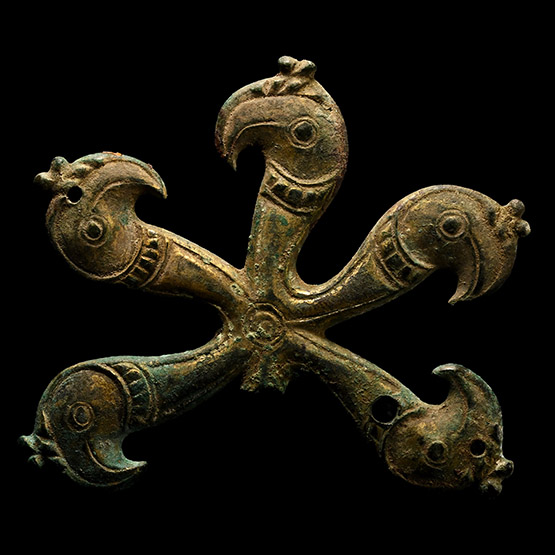
Ordos Gilt Bronze Zoomorphic Applique
Circa 4th century B.C.Sold for (Inc. bp): £494
Consisting of five (one absent) long-necked eagle heads facing in opposite directions, the beaked heads with raised eyes, necks decorated with a necklace imitating precious stones; three attachment holes. 44.5 grams, 77 mm
Acquired in the mid 1980s-1990s. Private collection, Switzerland, thence by descent.
Possibly an applique from a quiver. -
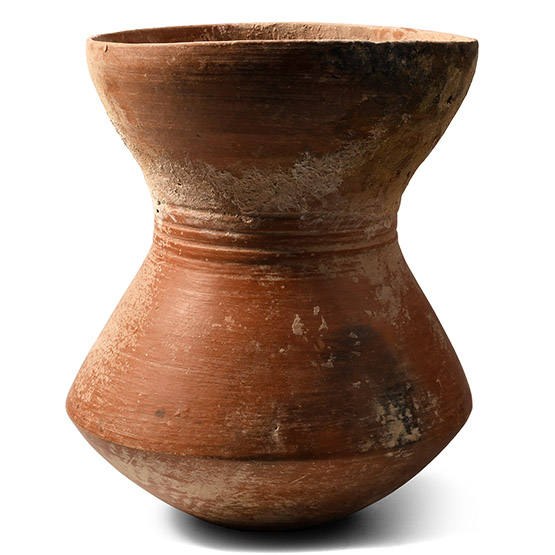
Western Asiatic Neck-Decorated Pottery Vase
1st millennium B.C.Sold for (Inc. bp): £117
Comprising a biconical body and tall conical neck, incised decorative bands at the junction. 446 grams, 16.5 cm
From the collection of a gentleman, 1988-2000s.
