
Loading, please wait...
LOT 0914
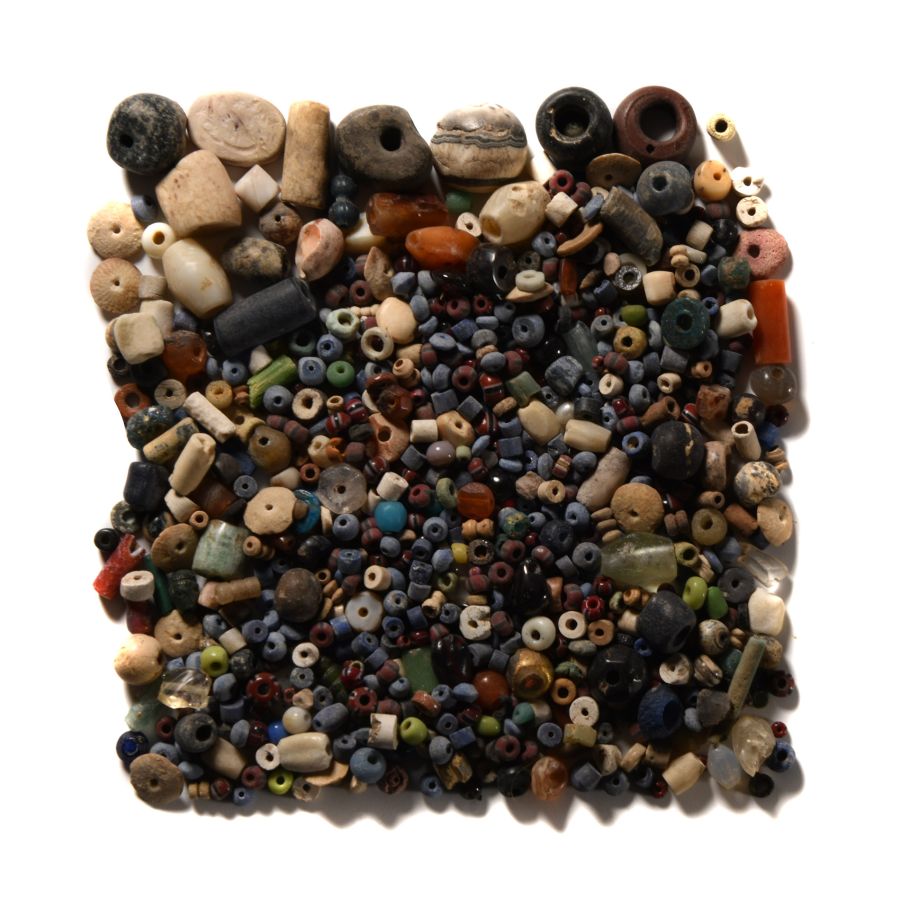
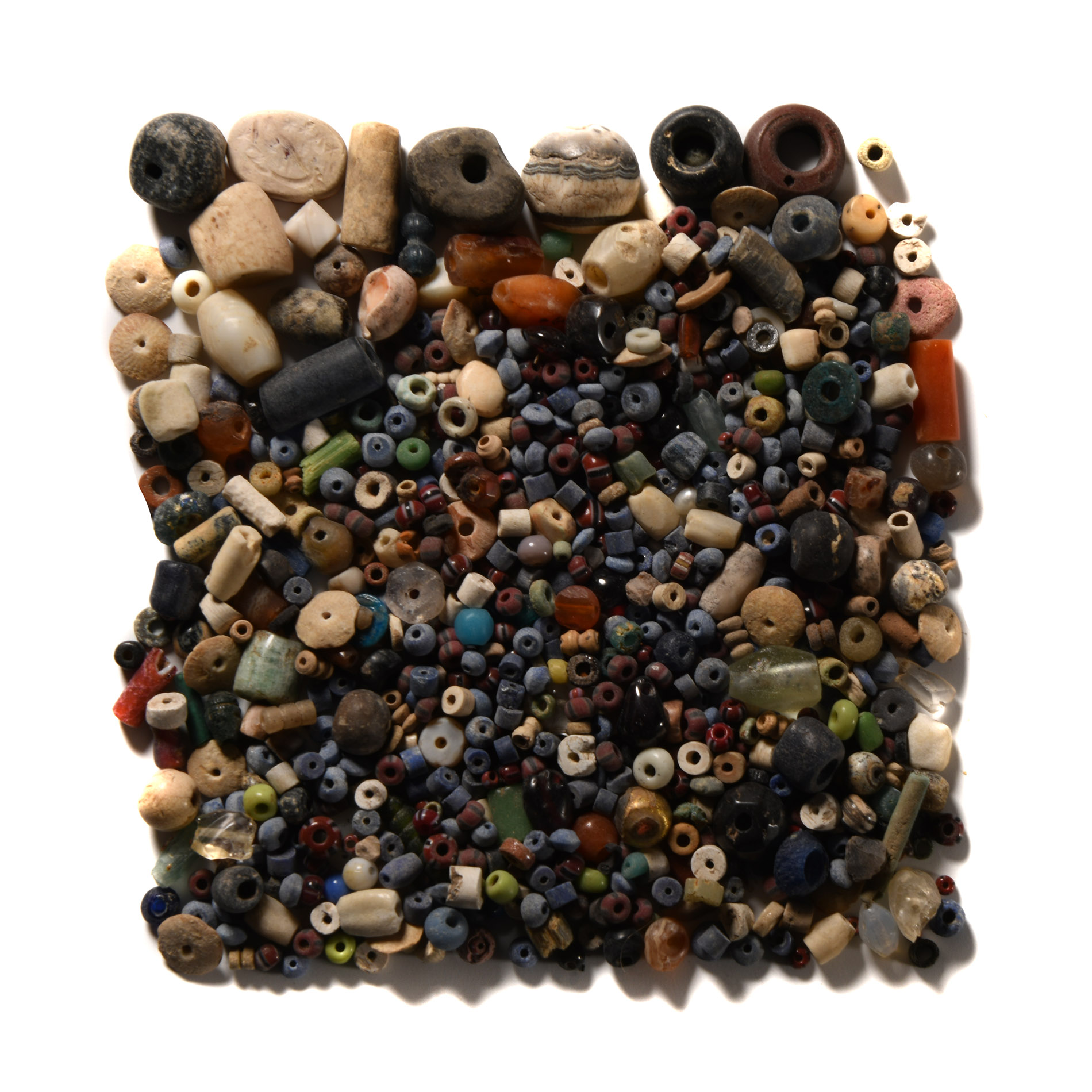
Western Asiatic Mixed Stone and Glass Necklace Bead Collection
1ST MILLENNIUM B.C. AND LATER
1/8 - 5/8 in. (84 grams total, 1-16 mm).
Comprising a quantity of small beads, mostly drawn coloured glass beads intended for embroidery.
ProvenanceUK gallery, early 2000s.
CONDITIONTimeLine Auctions follows a vetting process to ensure the authenticity and legality of all items, reinforcing our commitment to integrity and responsible trading. Each antiquity, antique, and coin lot undergoes thorough examination by a vetting committee of at least ten external specialists, professional trade association members, scientists, and archaeologists: Our Vetting Process
AUCTIONS:
TimeLine is a leading auction house specialising in antiquities, ancient art, collectables, natural history, coins, medals, and books. Our auctions offer museums, collectors, historians, and enthusiasts the opportunity to acquire unique and historically significant pieces.
LOT 0914
Western Asiatic Mixed Stone and Glass Necklace Bead Collection
Sold for (Inc. bp): £72
-

Western Asiatic and Other Mixed Stone and Glass Necklace Bead Collection
1st millennium B.C.-20th century A.D.Sold for (Inc. bp): £252
Composed of stone and glass beads in a variety of sizes, shapes and colours, some from Asia, North and West Africa, with some glass Venitian chevrons and millefiori trade beads. 95 grams total, 1-16 mm
UK gallery, early 2000s. -

Massive Central Asian Bronze Figural Compartmented Stamp Seal with Engraved Animal Backplate
Circa 2300-2000 B.C.Sold for (Inc. bp): £1,040
Accompanied by a typed and signed scholarly note written by Professor Wilfrid George Lambert FBA (1926-2011), historian, archaeologist, and specialist in Assyriology and Near Eastern archaeology, in the late 1980s and early 1990s, which states: 'This is round, with outer scalloped edge. The face is flat, and so is the back, with angular pierced handle mounted. The design on the face is both compartmented and open-work. It is repeated on the back with linear scratching. It shows a standing man holding a hare in each of his outstretched arms, while two birds are perched on his shoulders. The whole design is put within an outer band with the outer scalloped rim. This comes from west central Asia and dates to c. 2300-2000 B.C. It is extremely large and has a rare, possibly unique design. The engraving on the back is rare with its regularly notched edges to all the creatures. The outer rim is dented, and one small section of the outer band is lacking, but otherwise it is in good condition.' 82.8 grams, 87 mm
Ex S Collection, London, UK, 1970-1990s. Accompanied by a typed scholarly note signed by Professor Wilfrid George Lambert FBA (1926-2011), historian, archaeologist, and specialist in Assyriology and Near Eastern archaeology, in the late 1980s and early 1990s with reference no.R-910. -

Assyrian Clay Cuneiform Brick
13th century B.C.Sold for (Inc. bp): £4,420
Roughly tabular and bearing impressed cuneiform text arranged in vertical columns to five of its six faces. 682 grams, 17.5 cm
Ex French art market. with Boisgirard & Associés, Paris, 14 February 2005, lot 246. Private Swiss collection since 2005. This lot has been checked against the Interpol Database of stolen works of art and is accompanied by search certificate no.11638-198993.
