
Loading, please wait...
LOT 1316
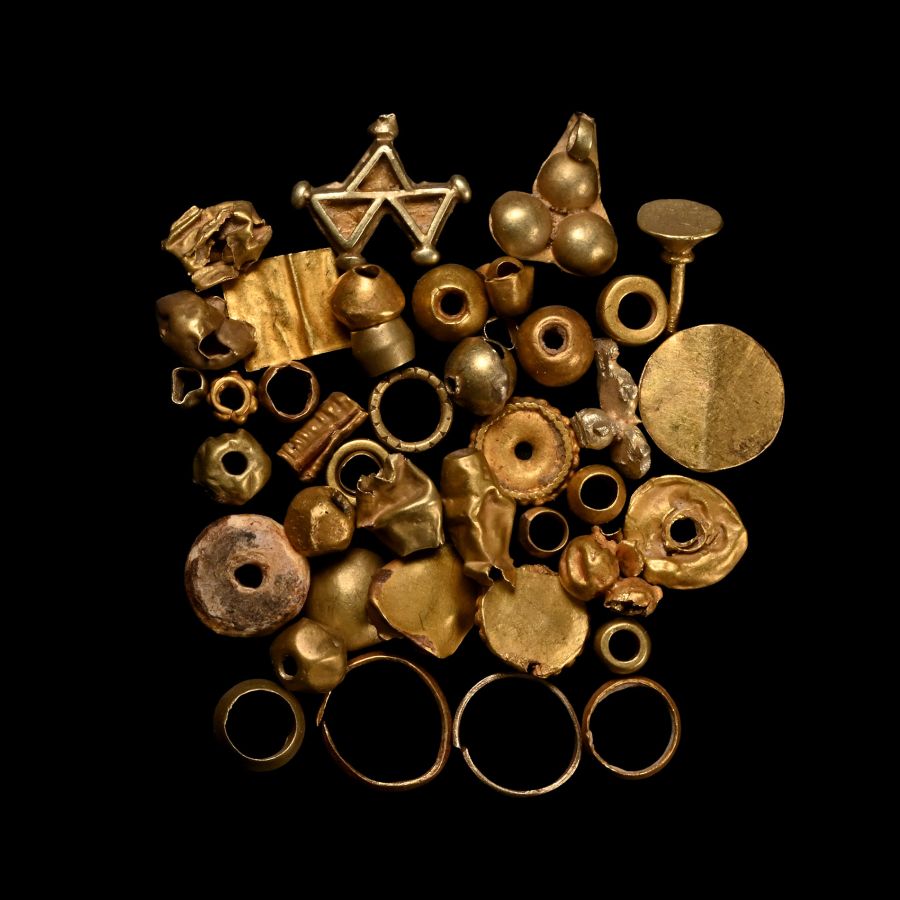
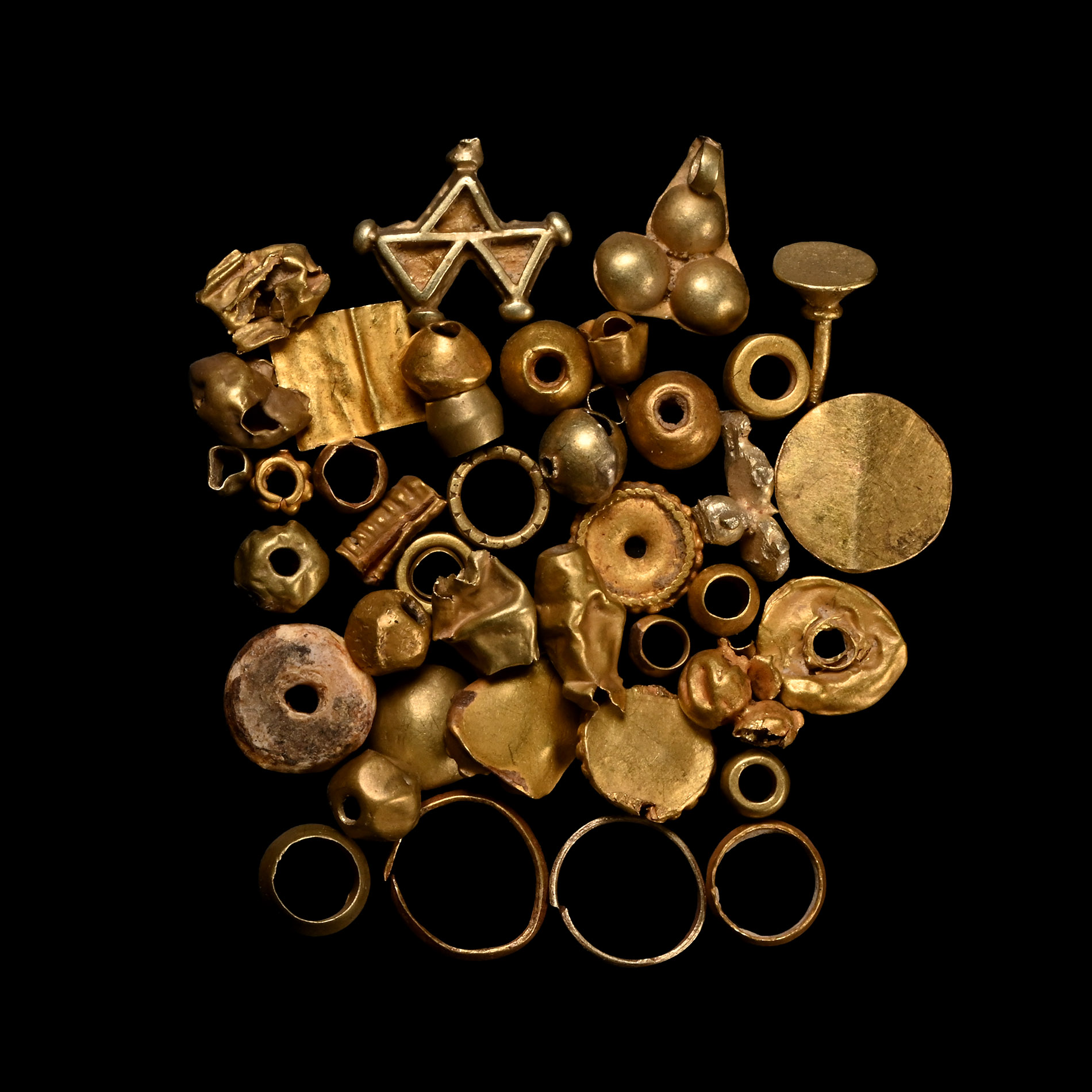
Western Asiatic Mixed Gold Bead Group
1ST MILLENNIUM B.C. AND LATER
1/8 - 3/8 in. (5.78 grams total, 2-9 mm).
A mixed group of small beads, pendants, and mounts. [42]
ProvenanceEx property of a late Japanese collector, 1970-2000s.
This lot has been cleared against the Art Loss Register database, and is accompanied by an illustrated lot declaration signed by the Head of the Antiquities Department, Dr Raffaele D'Amato.
TimeLine Auctions follows a vetting process to ensure the authenticity and legality of all items, reinforcing our commitment to integrity and responsible trading. Each antiquity, antique, and coin lot undergoes thorough examination by a vetting committee of at least ten external specialists, professional trade association members, scientists, and archaeologists: Our Vetting Process
AUCTIONS:
TimeLine is a leading auction house specialising in antiquities, ancient art, collectables, natural history, coins, medals, and books. Our auctions offer museums, collectors, historians, and enthusiasts the opportunity to acquire unique and historically significant pieces.
LOT 1316
Western Asiatic Mixed Gold Bead Group
Estimate £400 - 600€460 - 700 (for guidance only)$540 - 810 (for guidance only)
-
Large Format 'The Enlightenment' Quran Manuscript Page
Ottoman, early 19th century A.D.Sold for (Inc. bp): £104
Manuscript leaf with text from Surah 42, 'Ash Shurah' ('The Enlightenment'); ovate painted blue panel with tendril ornament. 23 grams, 43.5 x 26 cm
Acquired on the UK art market. Scottish private collection. This lot has been cleared against the Art Loss Register database, and is accompanied by an illustrated lot declaration signed by the Head of the Antiquities Department, Dr Raffaele D'Amato. -
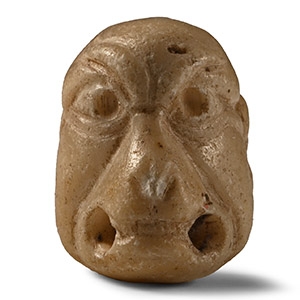
Mesopotamian Alabaster Amulet of Humbaba
Circa 800-600 B.C.Sold for (Inc. bp): £286
Modelled in the round with animal-like features and grimacing expression, drilled eyes and string eyebrows; perforated through the head and mouth. 4.13 grams, 18 mm
Ex property of the late Mr S.M., London, UK, 1970-1990s, thence by descent. Accompanied by a previous typed cataloguing card. This lot has been cleared against the Art Loss Register database, and is accompanied by an illustrated lot declaration signed by the Head of the Antiquities Department, Dr Raffaele D'Amato. -
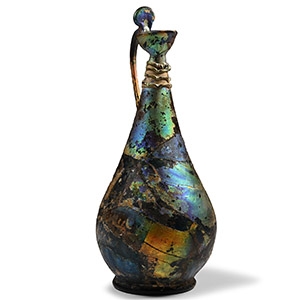
Large Western Asiatic Piriform Glass Jug with Iridescence
7th-9th century A.D.Sold for (Inc. bp): £1,053
Tall piriform body with applied basal ring and dimpled base, applied trails to neck, dished piriform mouth with strap handle and thumb-pad. 180 grams, 23.3 cm
Sotheby's, Islamic Art, London 28 March 1994, no.61. This lot has been cleared against the Art Loss Register database, and is accompanied by an illustrated lot declaration signed by the Head of the Antiquities Department, Dr Raffaele D'Amato.
