
Loading, please wait...

LOT 1423
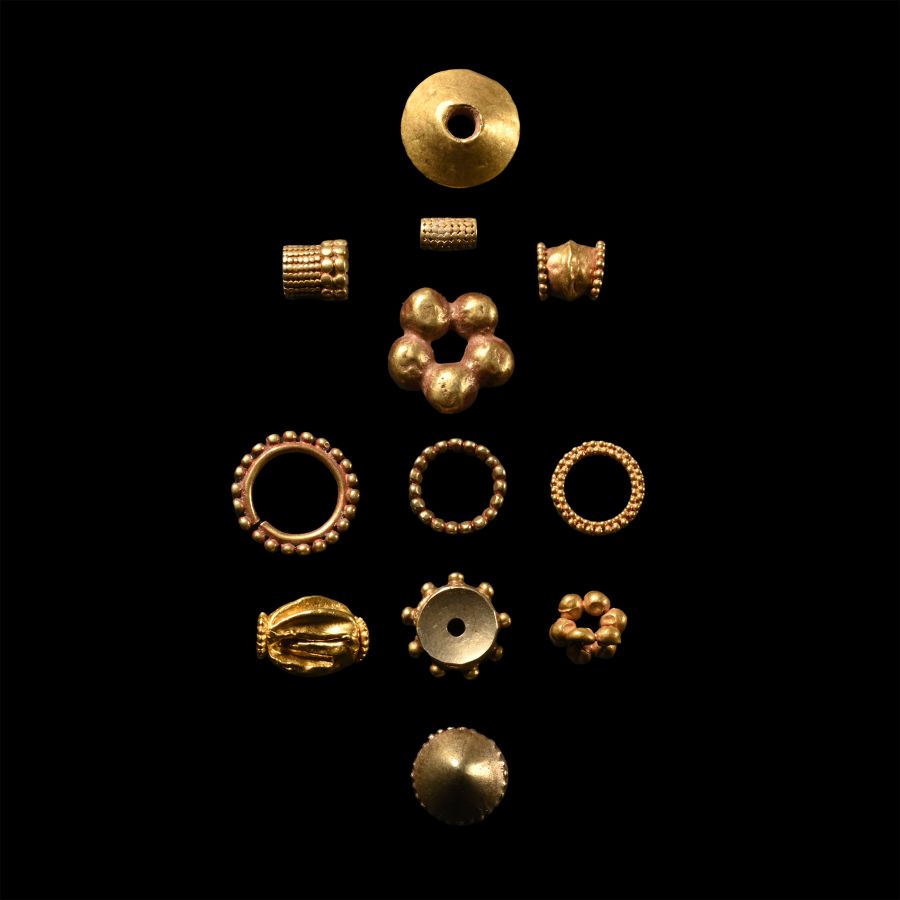
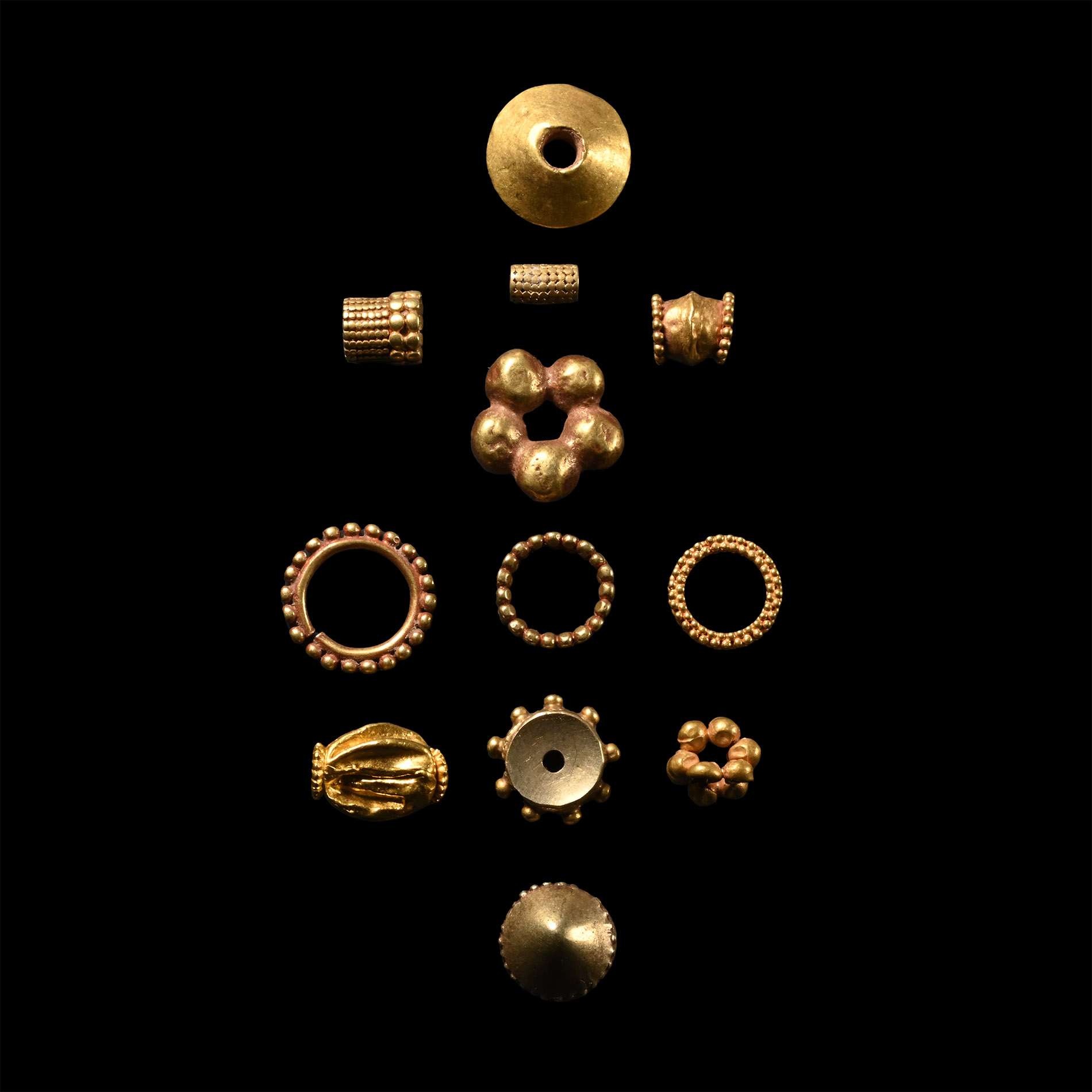
Western Asiatic Mixed Gold Bead Collection
1ST MILLENNIUM B.C.
1/4 - 1/2 in. (9.82 grams total, 7-13 mm).
Comprising beads of various shapes and sizes, including some granulated examples. [12]
ProvenanceEx property of a late Japanese collector, 1970s.
Accompanied by a previous typed cataloguing card.
This lot has been cleared against the Art Loss Register database, and is accompanied by an illustrated lot declaration signed by the Head of the Antiquities Department, Dr Raffaele D'Amato.
TimeLine Auctions follows a vetting process to ensure the authenticity and legality of all items, reinforcing our commitment to integrity and responsible trading. Each antiquity, antique, and coin lot undergoes thorough examination by a vetting committee of at least ten external specialists, professional trade association members, scientists, and archaeologists: Our Vetting Process
AUCTIONS:
TimeLine is a leading auction house specialising in antiquities, ancient art, collectables, natural history, coins, medals, and books. Our auctions offer museums, collectors, historians, and enthusiasts the opportunity to acquire unique and historically significant pieces.
LOT 1423
Western Asiatic Mixed Gold Bead Collection
Estimate £800 - 1,000€930 - 1,160 (for guidance only)$1,080 - 1,350 (for guidance only)
-
Western Asiatic Terracotta Standing Idol
3rd-2nd millennium B.C.Estimate: £300 - 400 (‡+bp*)
Opening Bid: £150
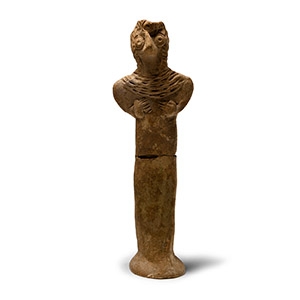
Freestanding, with a pinched face, elaborate applied hairstyle, circular eyes and prick-decorated collar, hand clasped with palms to chest; repaired. 69 grams, 15 cm high
Acquired in the 1970s. Ex European private collection. This lot has been cleared against the Art Loss Register database, and is accompanied by an illustrated lot declaration signed by the Head of the Antiquities Department, Dr Raffaele D'Amato. -

Luristan Bronze Arrowhead Group
Circa late 2nd millennium-6th century B.C.Sold for (Inc. bp): £234
Comprising heater-shaped, leaf-shaped, barbed-and-tanged, and other types. 280 grams total, 4.1-10.8 mm
Acquired 1980-2015. Ex Abelita family collection. This lot has been cleared against the Art Loss Register database, and is accompanied by an illustrated lot declaration signed by the Head of the Antiquities Department, Dr Raffaele D'Amato.
A number of arrowheads of this type have been excavated in Luristan and in the South-Caspian region. Many parallels are from a burial context, but a large hoard of them was found in a non-funerary context. This type of arrowhead was in use from the late 2nd millennium B.C. -
Early Dynastic Lapis Lazuli Cylinder Seal
Circa 2550-2400 B.C.Sold for (Inc. bp): £2,210
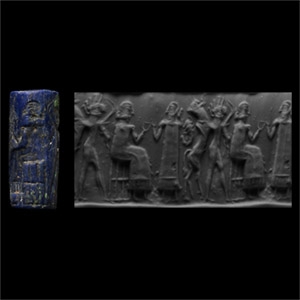
Engraved with a religious scene comprising a seated king on a throne-shaped chair, holding a cup and wearing a long garment; standing worshipper or priest before him; before them, a nude hero and a bull-man presented in a contest scene. 4.75 grams, 23 mm
From the 'S' collection, acquired 1970-1990s. The collection was seen and studied by W.G. Lambert, late Professor of Assyriology at the University of Birmingham, 1970-1993. Accompanied by a copy of a report from Assyriologist Hui Li. This lot has been checked against the Interpol Database of stolen works of art and is accompanied by a search certificate number no.12558-231428. This lot has been cleared against the Art Loss Register database, and is accompanied by an illustrated lot declaration signed by the Head of the Antiquities Department, Dr Raffaele D'Amato.
The clearly engraved facial features, the almond-shaped eyes, pointed noses, and abstract outlines shaping the bodies, attest to the iconic glyptic practices of the late Early Dynastic Period. The cup held by the king, containing holy ointment or oil, might have been used as an emblem to signify the elevated rank of a deified king. It may have also been used an alternative religious practice, connecting the secular authority and the divine power during the Early Dynastic Period.
