
Loading, please wait...
LOT 0897
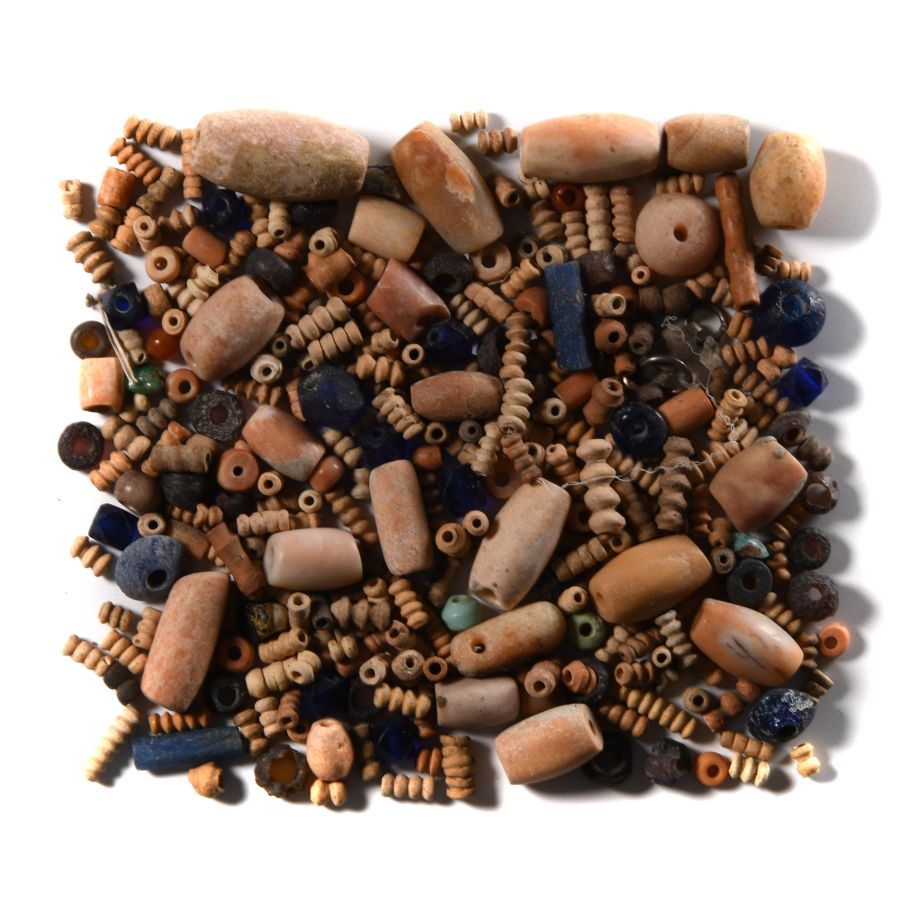
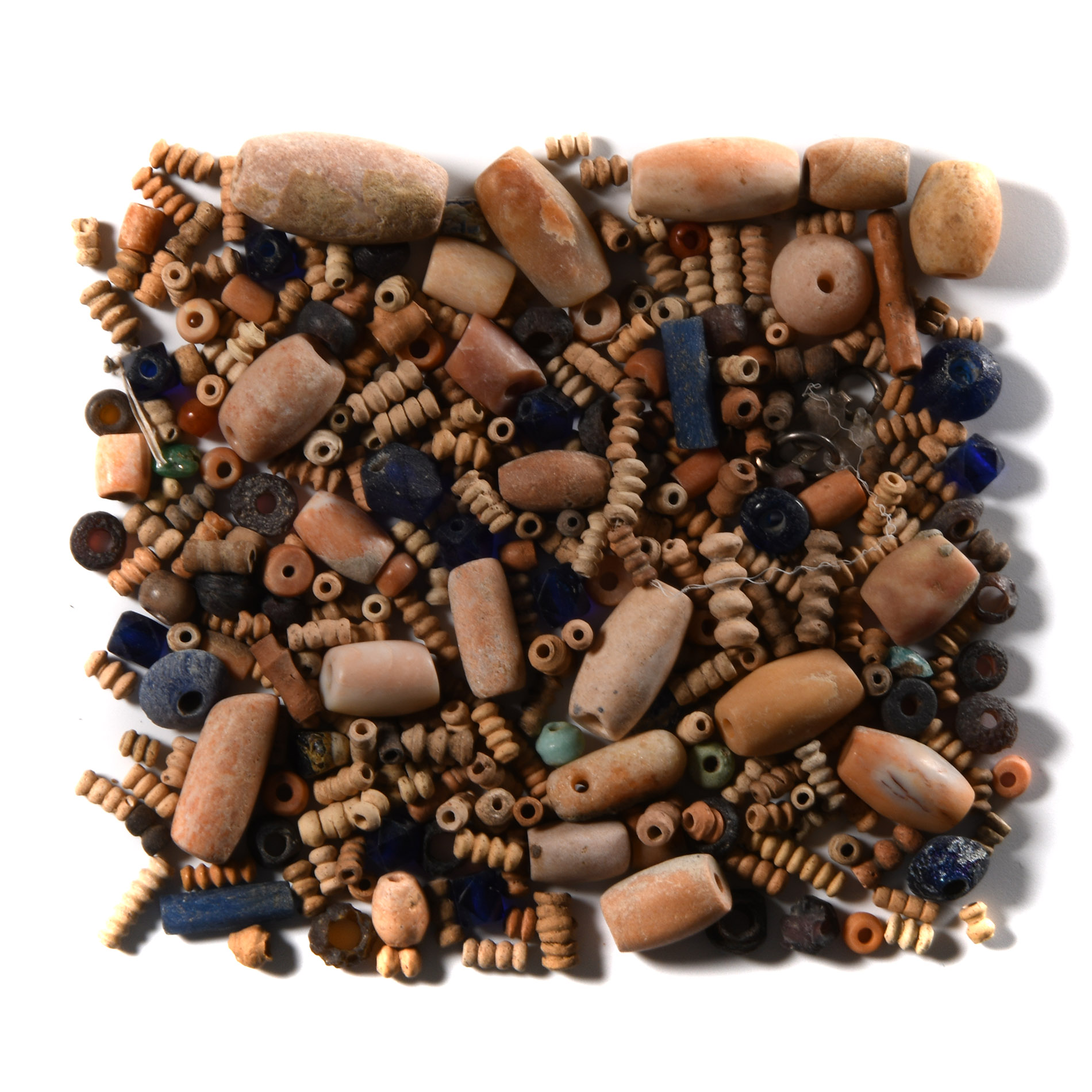
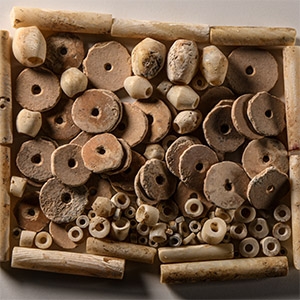
Western Asiatic Mixed Bead Group
1ST MILLENNIUM B.C. AND LATER
1/8 - 3/4 in. (43.6 grams total, 2-20 mm).
Mainly pottery and some glass, annular, tubular, fusiform and other types. [100+, No Reserve]
ProvenanceAcquired 1980-2015.
Ex Abelita family collection.
TimeLine Auctions follows a vetting process to ensure the authenticity and legality of all items, reinforcing our commitment to integrity and responsible trading. Each antiquity, antique, and coin lot undergoes thorough examination by a vetting committee of at least ten external specialists, professional trade association members, scientists, and archaeologists: Our Vetting Process
AUCTIONS:
TimeLine is a leading auction house specialising in antiquities, ancient art, collectables, natural history, coins, medals, and books. Our auctions offer museums, collectors, historians, and enthusiasts the opportunity to acquire unique and historically significant pieces.
-
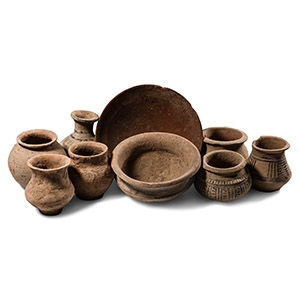
Western Asiatic Pottery Vessel Group
Circa 3rd-1st millennium B.C.Sold for (Inc. bp): £108
Comprising various types, including examples decorated with painted geometric motifs; two chipped. 2 kg total, 7.3 - 17 cm
Acquired 1980-2015. Ex Abelita family collection. -
Mesopotamian Shell Necklace Bead Group
Circa 4th millennium B.C. or laterSold for (Inc. bp): £182
Including beads of tubular, biconical, disc, annular and other types of varying sizes. 72.7 grams total, 3-41 mm
UK gallery, early 2000s. -
.jpg)
Large Bactrian Stone Stamp Seal with Bird
Circa 2500-2000 B.C.Sold for (Inc. bp): £650
Carved stone seal formed as a bird with the head reversed, with drilled eyes and feather detailing to the wings, underside with incuse bird-in-flight motif; neck pierced for suspension. 67 grams, 60 mm
Collected from 1969-1999. From the collection of the late Mr S.M., London, UK.
