
Loading, please wait...
LOT 1419
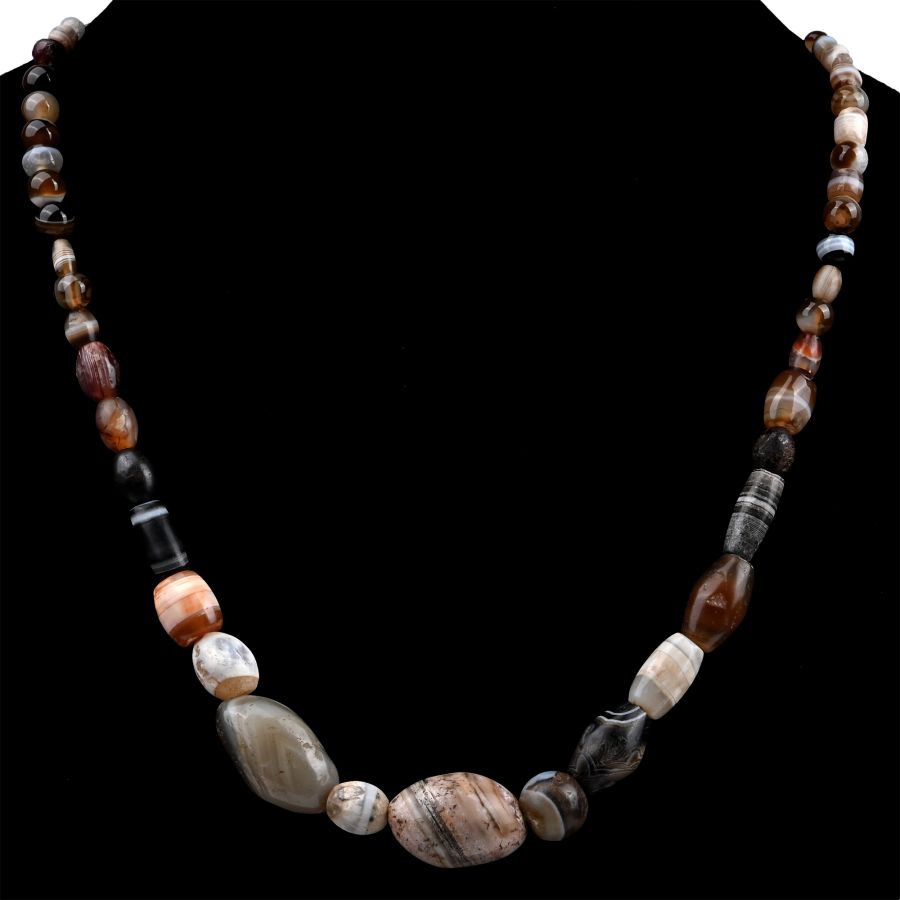
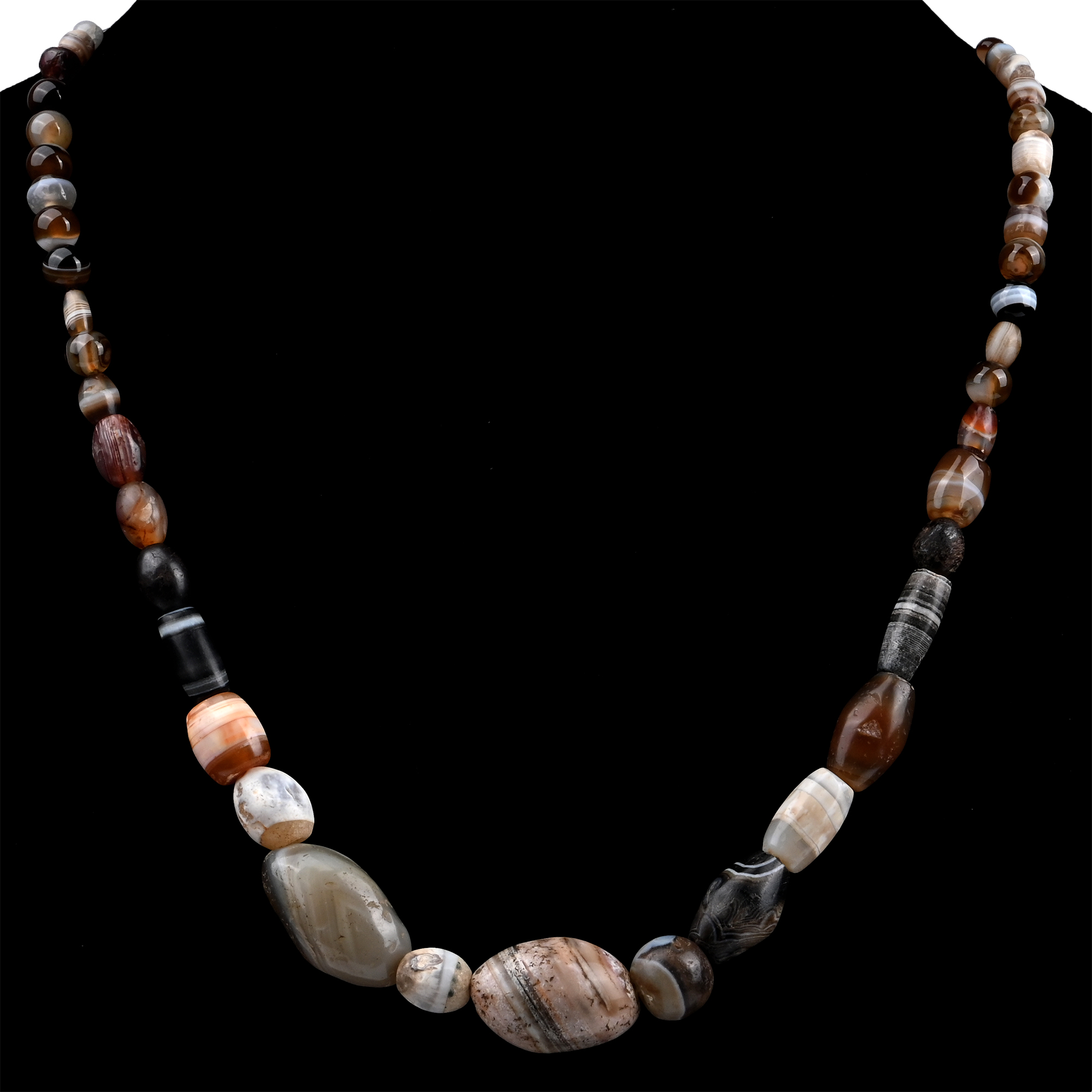
Western Asiatic Mixed Agate Bead Necklace
1ST MILLENNIUM B.C. AND LATER
18 1/8 in. (71 grams, 46 cm long).
Restrung designer necklace of banded agate beads in fusiform, tubular, barrel-shaped and other types.
ProvenanceFrom the collection of a gentleman, acquired on the London art market in the 1990s.
CONDITIONTimeLine Auctions follows a vetting process to ensure the authenticity and legality of all items, reinforcing our commitment to integrity and responsible trading. Each antiquity, antique, and coin lot undergoes thorough examination by a vetting committee of at least ten external specialists, professional trade association members, scientists, and archaeologists: Our Vetting Process
AUCTIONS:
TimeLine is a leading auction house specialising in antiquities, ancient art, collectables, natural history, coins, medals, and books. Our auctions offer museums, collectors, historians, and enthusiasts the opportunity to acquire unique and historically significant pieces.
-
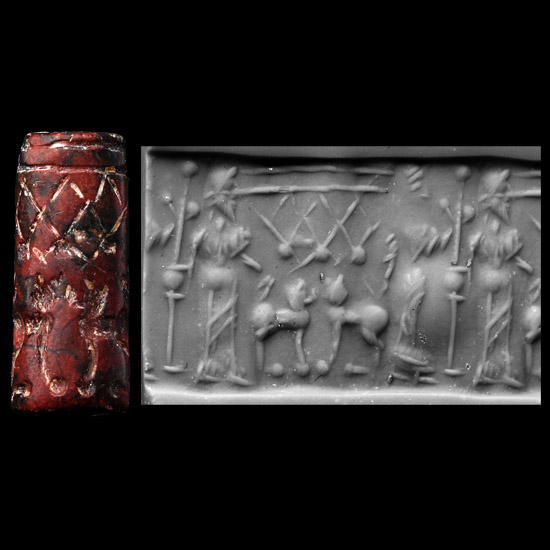
Western Asiatic Dark Red Jasper Cylinder Seal with Figural Scene
2nd-1st millennium B.C.Sold for (Inc. bp): £169
Frieze with two standing robed figures supporting a horizontal bar and grasping a vertical column, between them animals and other objects; supplied with a museum-quality impression. 1.38 grams, 17.25 mm
From the private collection of a European gentleman (1942-2024), formed since the 1970s. -
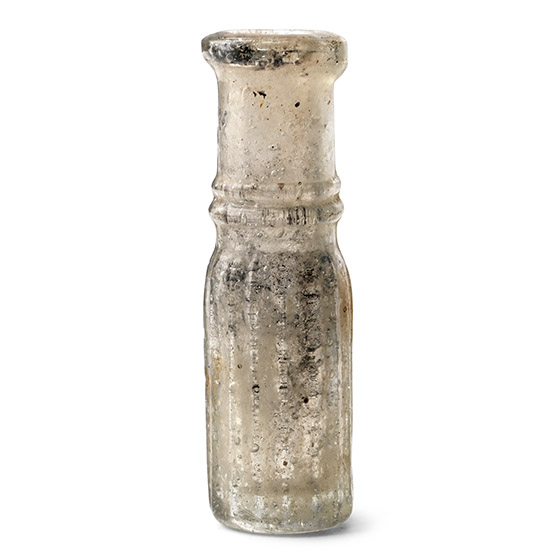
Western Asiatic Cosmetic Glass Vessel
8th-12th century A.D.Sold for (Inc. bp): £13
Ribbed round-section body with tubular neck and everted rim. 9.29 grams, 49 mm
From a London, UK, collection of glass, 1970-2000s. -
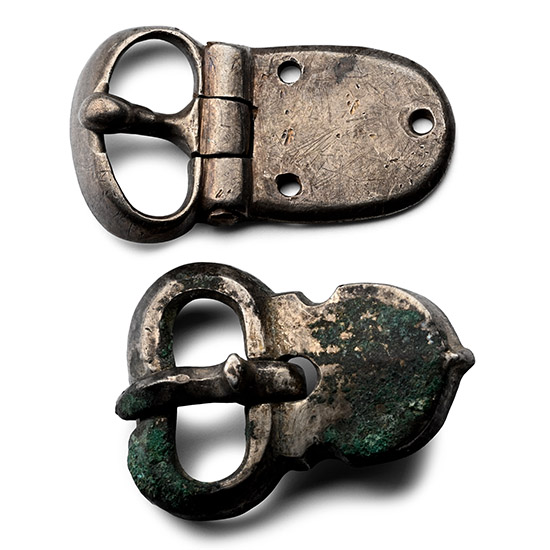
Western Asiatic Silver Buckle Group
6th-8th century A.D.Estimate: £100 - 140 (+bp*)
Opening Bid: £50
Each a kidney-shaped loop and a D-shaped buckle plate, one pierced to accept rivets and the other with pierced lugs to the underside. 21.48 grams total, 32-34 mm
Acquired before 1983. Ex London gallery, 1990s. Private collection, London, UK.
