
Loading, please wait...
LOT 1737
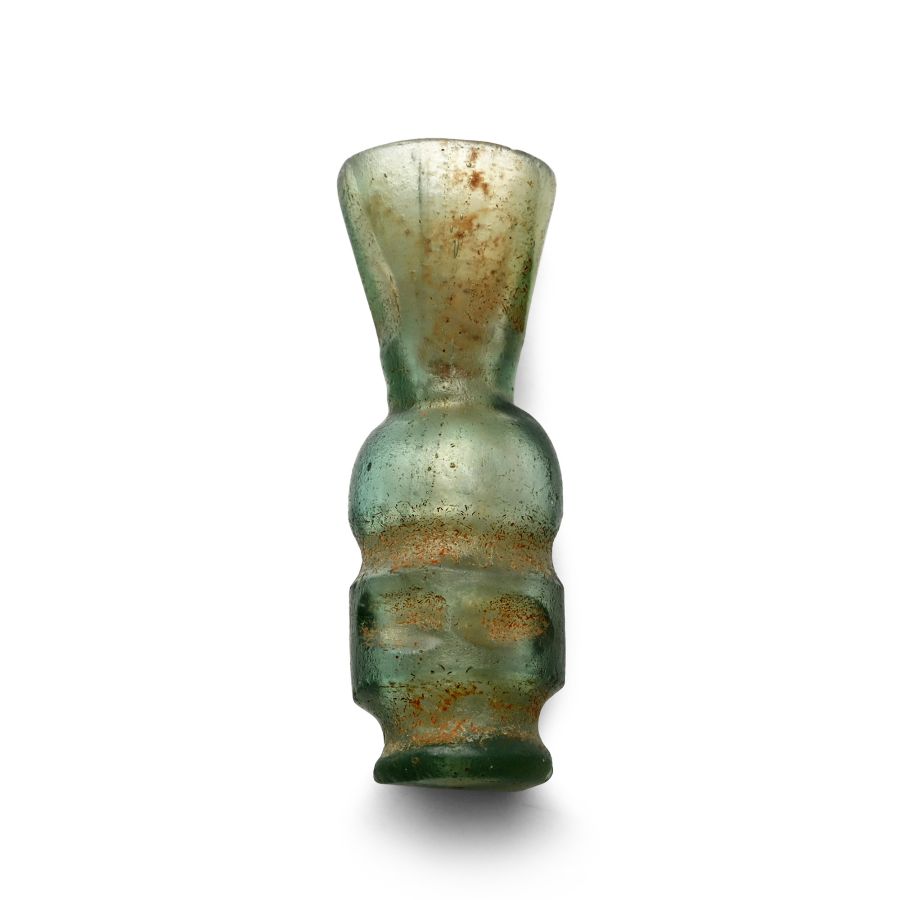
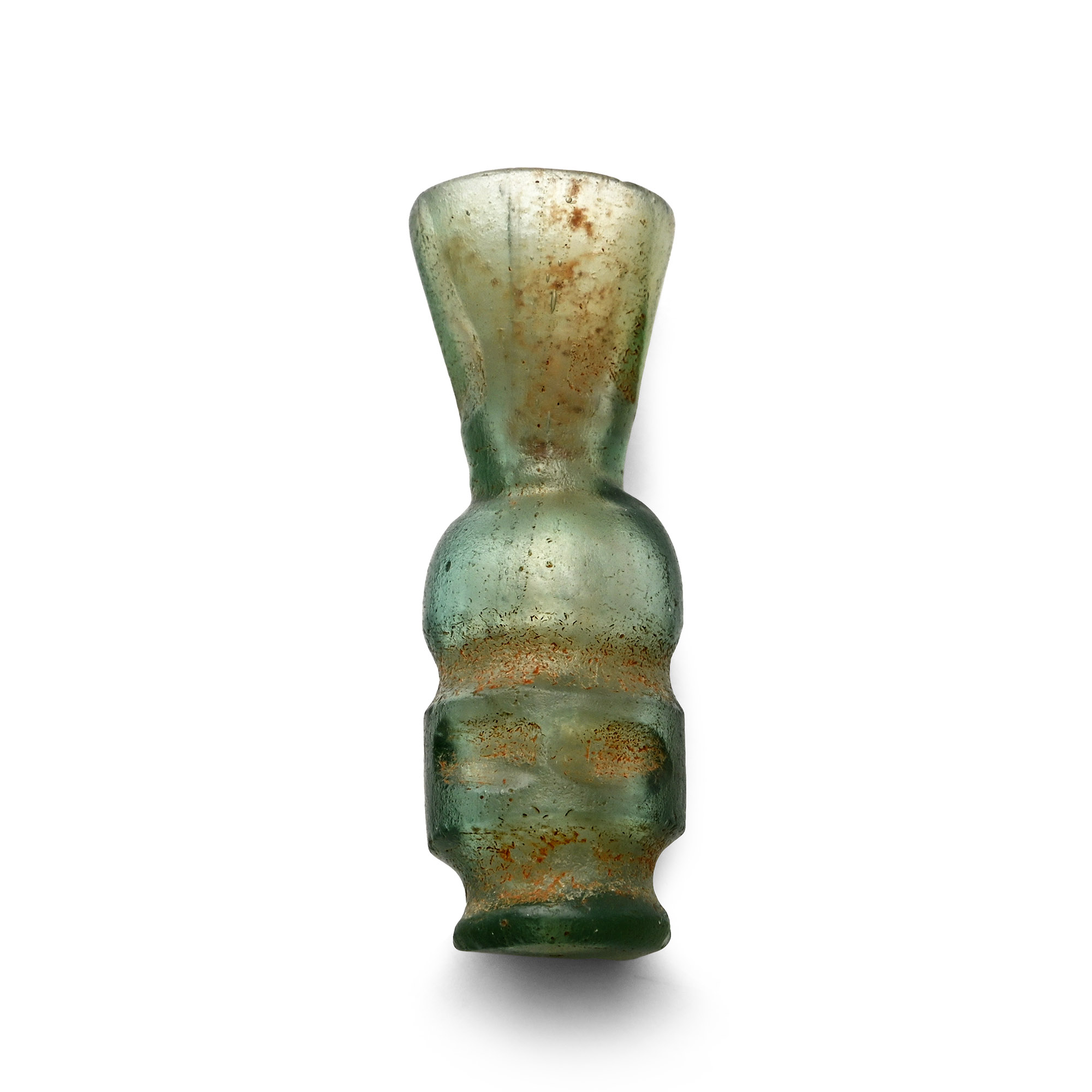
Western Asiatic Miniature Glass Vessel
8TH-12TH CENTURY A.D.
1 1/8 in. (3.05 grams, 31 mm).
With a tubular body, discoid chipped foot and round-section tapering neck. [No Reserve]
ProvenanceFrom a London, UK, collection of glass, 1970-2000s.
CONDITIONTimeLine Auctions follows a vetting process to ensure the authenticity and legality of all items, reinforcing our commitment to integrity and responsible trading. Each antiquity, antique, and coin lot undergoes thorough examination by a vetting committee of at least ten external specialists, professional trade association members, scientists, and archaeologists: Our Vetting Process
AUCTIONS:
TimeLine is a leading auction house specialising in antiquities, ancient art, collectables, natural history, coins, medals, and books. Our auctions offer museums, collectors, historians, and enthusiasts the opportunity to acquire unique and historically significant pieces.
-
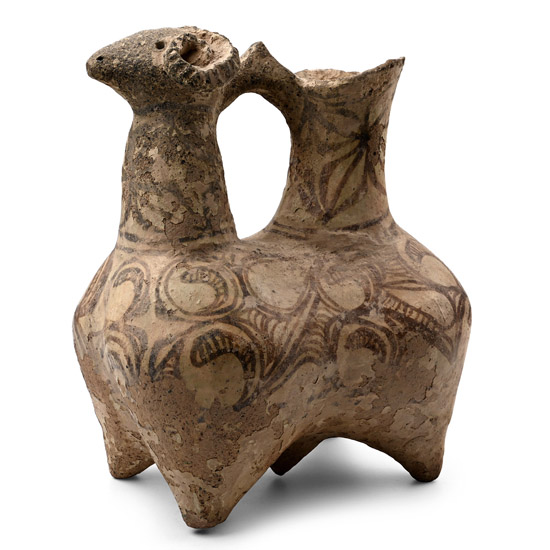
Western Asiatic Ceramic Zoomorphic Vessel
8th-9th century A.D.Sold for (Inc. bp): £468
Comprising four conical legs supporting a double globular body with conical neck and ram's head, spout to the rear with strainer connected by a bridging loop; applied painted hatched spiral detailing; old label to the underside: 'YAZDANI 211C LONDON'. 1.06 kg, 19.5 cm
UK collection, 1990s. Acquired on the UK art market, before 2000. Private collection, Mr M.V., a London-based businessman. -
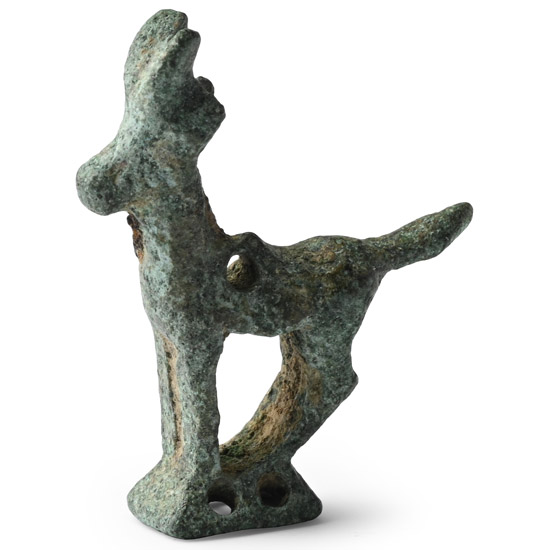
Luristan Bronze Standing Deer Statuette
1st millennium B.C.Sold for (Inc. bp): £65
Standing on a small base with an erect head and tail, pierced through the body. 12.3 grams, 36.8mm
From the private collection of a European gentleman (1942-2024), formed since the 1970s. -
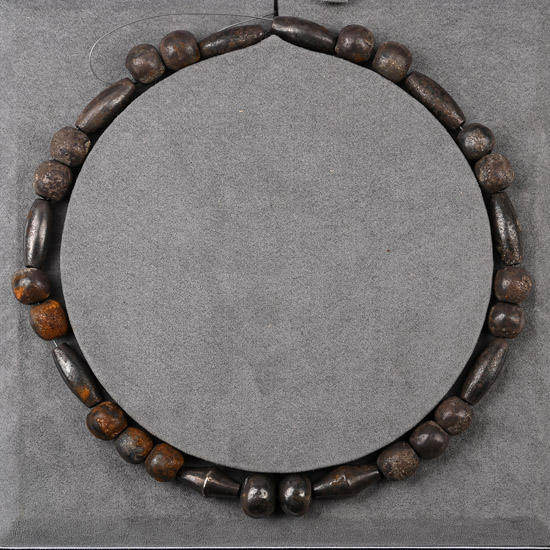
Mesopotamian Heavy Silver Bead Necklace
3rd-early 2nd millennium B.C.Estimate: £5,000 - 7,000 (+bp*)
Opening Bid: £2,500
Restrung and comprising mainly spherical, elongated ovals, oblates, and biconical shapes; accompanied by a custom-made lined display box. 224 grams, 56 cm
Numismatic and Ancient Art Gallery AG, Ancient Art of the Mediterranean World, No 8, no.5, c.1982. Taisei Gallery, Gold & Silver Auction, Part II, Ancient to Renaissance, 5 November 1992, The Conrad Salon, The Waldorf-Astoria, New York, no.39. Private collection, London. This lot has been checked against the Interpol Database of stolen works of art and is accompanied by search certificate number no.13265-253358.
The Sumerian word for silver is kú-babbar, which means ‘white metal’. Silver was mined from ores that contained significant amounts of other metals and impurities and therefore requires a great deal of further processing before it can be used. It was considered sacred and immutable, and an extremely high-status material, used for royal jewellery.
