
Loading, please wait...
LOT 0976
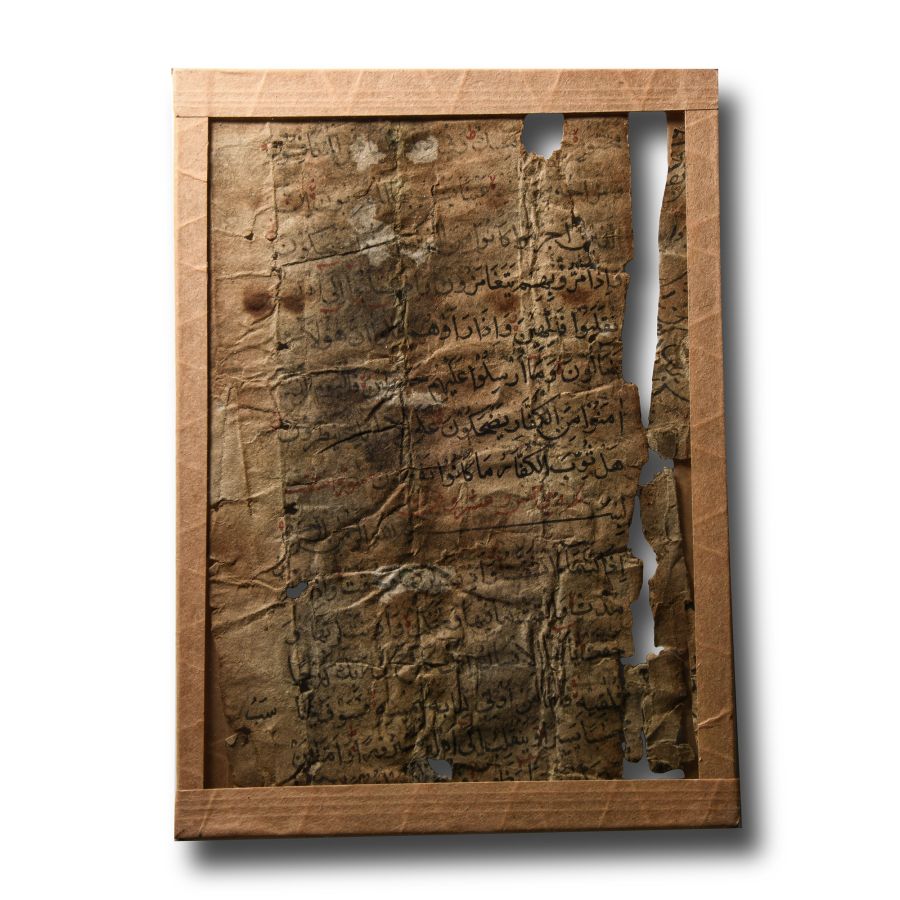
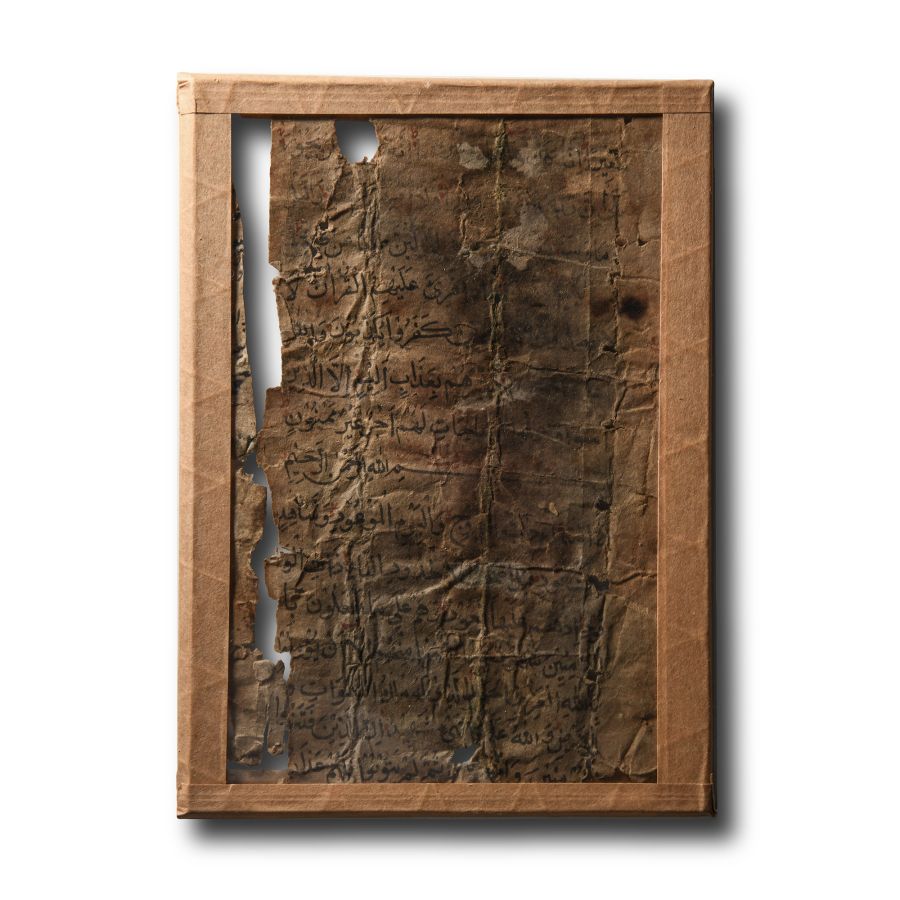
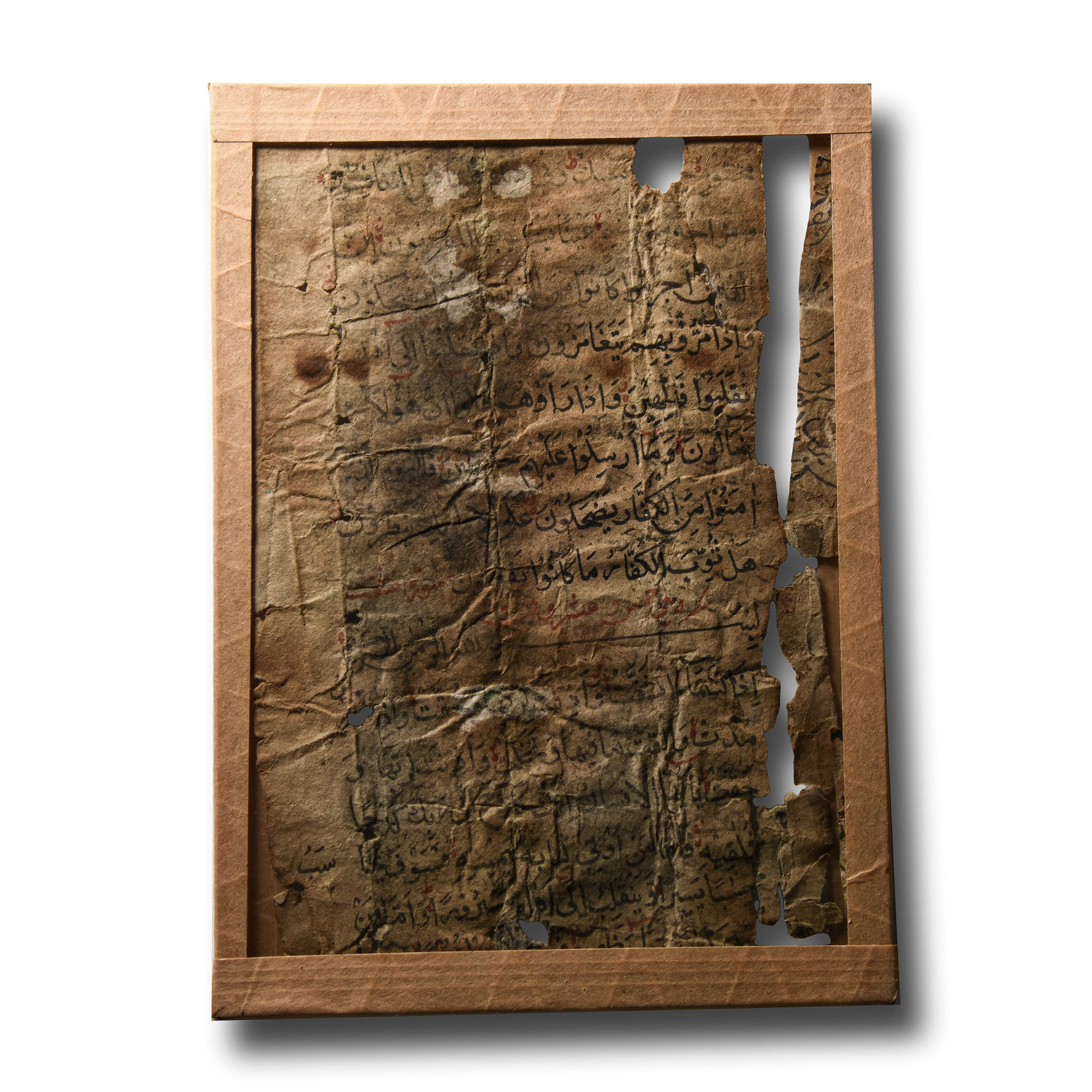
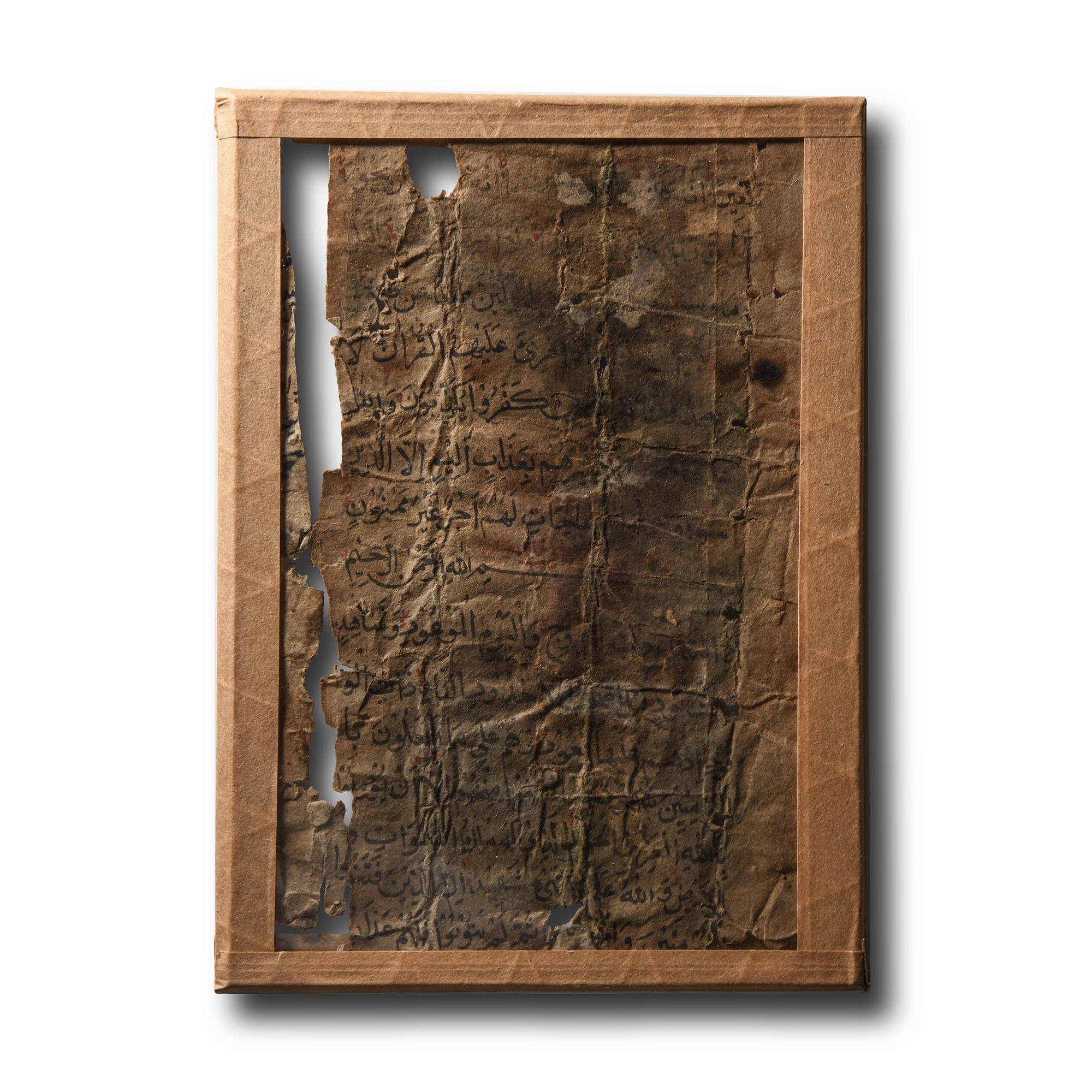
Western Asiatic Manuscript Fragment
14TH-16TH CENTURY A.D.
7 1/8 in. (213 grams, 18 cm).
Rectangular paper leaf with a block of text to each side in nastaliq script, black ink with red ink captions and diacritics; mounted in a bifacial glazed panel.
ProvenanceAcquired in the late 1980s-early 1990s.
Important North West London collection.
TimeLine Auctions follows a vetting process to ensure the authenticity and legality of all items, reinforcing our commitment to integrity and responsible trading. Each antiquity, antique, and coin lot undergoes thorough examination by a vetting committee of at least ten external specialists, professional trade association members, scientists, and archaeologists: Our Vetting Process
AUCTIONS:
TimeLine is a leading auction house specialising in antiquities, ancient art, collectables, natural history, coins, medals, and books. Our auctions offer museums, collectors, historians, and enthusiasts the opportunity to acquire unique and historically significant pieces.
-
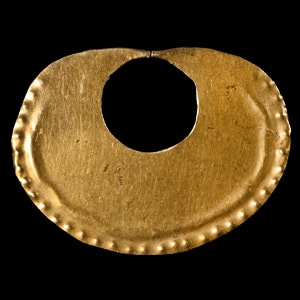
Large Western Asiatic Gold Lunar Pendant
Circa 2nd-1st millennium B.C.Sold for (Inc. bp): £546
Shaped as a crescent moon with pearled border. 5.08 grams, 45 mm
Acquired 1980-2015. Ex Abelita family collection.
The gold lunula was a characteristic type of necklace, collar, or crescent-shaped pendant of the late Neolithic, Chalcolithic, and most often early Bronze Age. The crescent appears in various forms in the material culture of the southern Levant. It also appears in Mesopotamian and Egyptian iconography. It is most frequently associated with the crescent moon and its related deity. Such pendants were worn at the neck, in contact with the body, as protective amulets. -
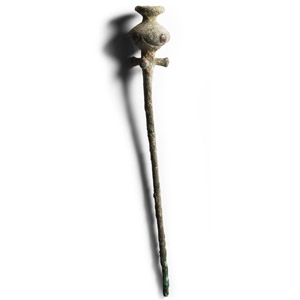
Luristan Poppy-Headed Cloak Pin
Circa 13th-8th century B.C.Sold for (Inc. bp): £52
Comprising a substantial round-sectioned pin with bulbous poppy-shaped head with three turrets below. 73 grams, 17.7 cm
UK private collection formed before 2000. Ex North London, UK, gallery. -
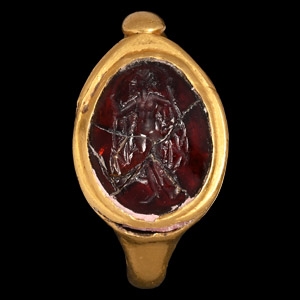
Sassanian Gold Ring with Garnet Intaglio
Circa 3rd century A.D.Estimate: £1,500 - 2,000 (‡+bp*)
Opening Bid: £750
Hollow-formed with ellipsoid stepped bezel, granule to one edge for alignment, inset cabochon intaglio of a nude male gripping the edges of an arch. 7.52 grams, 24.20 mm overall, 18.16 mm internal diameter (approximate size British K, USA 5 1/4, Europe 9.95, Japan 9)
Private Swiss collection, acquired 1999. Ex Surena collection, London, UK. Private European collection.
