
Loading, please wait...
LOT 0201
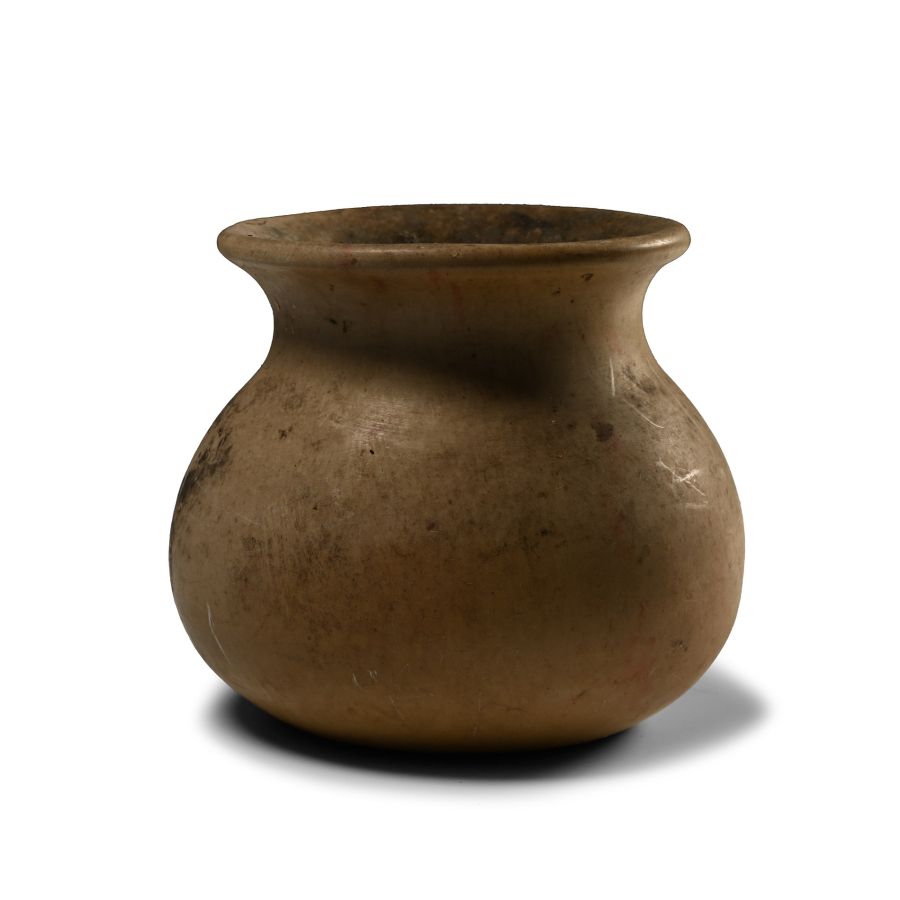
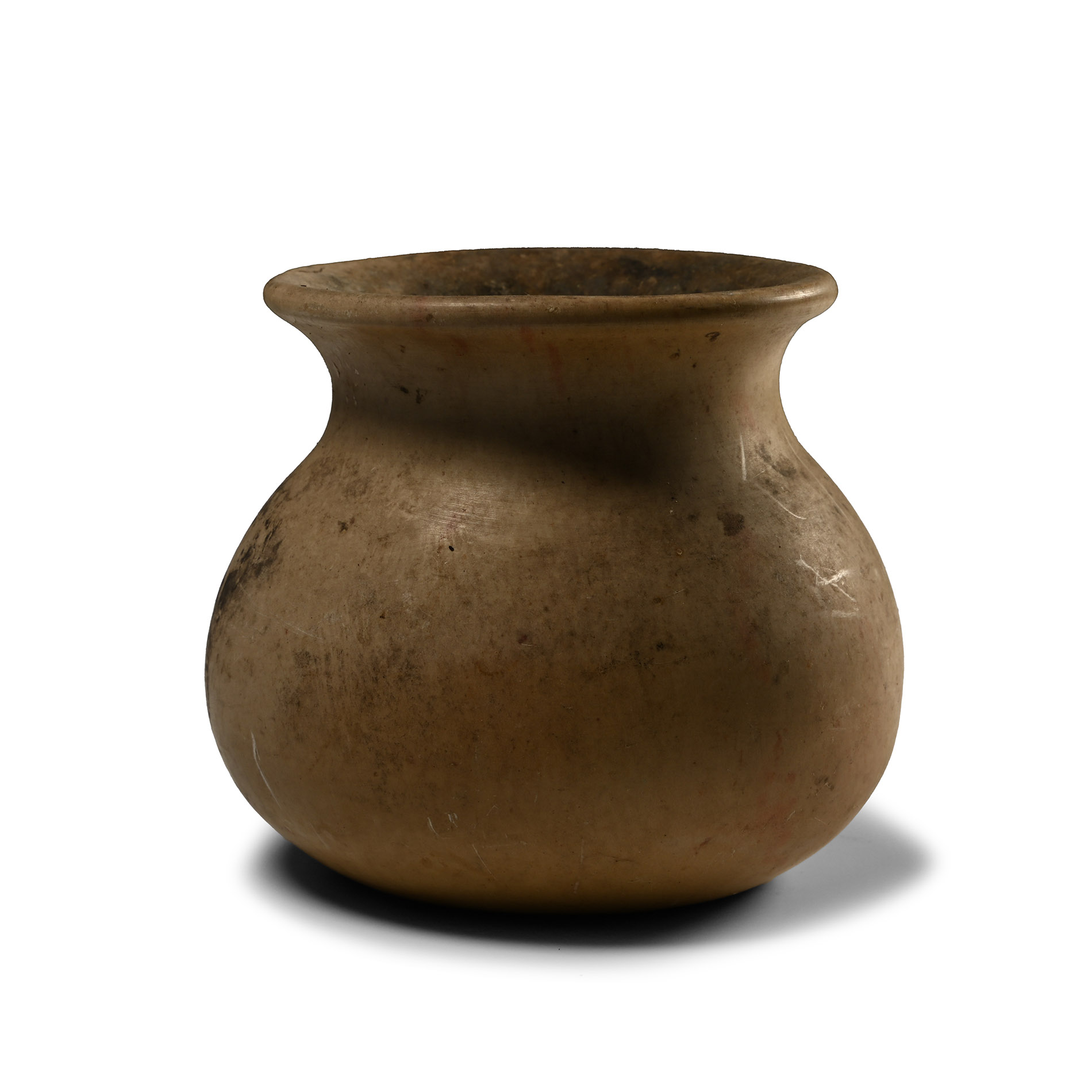
Western Asiatic Limestone Jar
1ST MILLENNIUM B.C.
3 1/2 in. (405 grams, 88 mm wide).
Indurate limestone vessel with squat profile, broad flat base, carinated shoulder and broad rounded rim.
ProvenanceFrom a London, UK, gentleman's collection of ancient pottery and artefacts, 1990s.
This lot has been cleared against the Art Loss Register database, and is accompanied by an illustrated lot declaration signed by the Head of the Antiquities Department, Dr Raffaele D'Amato.
TimeLine Auctions follows a vetting process to ensure the authenticity and legality of all items, reinforcing our commitment to integrity and responsible trading. Each antiquity, antique, and coin lot undergoes thorough examination by a vetting committee of at least ten external specialists, professional trade association members, scientists, and archaeologists: Our Vetting Process
AUCTIONS:
TimeLine is a leading auction house specialising in antiquities, ancient art, collectables, natural history, coins, medals, and books. Our auctions offer museums, collectors, historians, and enthusiasts the opportunity to acquire unique and historically significant pieces.
LOT 0201
Western Asiatic Limestone Jar
Estimate £600 - 800€700 - 930 (for guidance only)$810 - 1,080 (for guidance only)
-
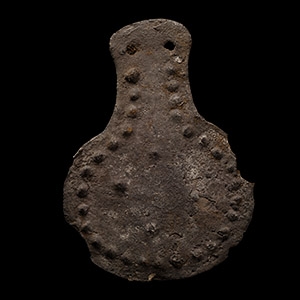
Early Bronze Age Silver Idol
Circa 2800-2100 B.C.Estimate: £1,500 - 2,000 (+bp*)
Opening Bid: £222
With round female body and short neck, depicted armless, perforated with two parallel holes at the top for suspension; the edges and the centre embossed with dots. 6.87 grams, 63 mm
From a private family collection formed since the early 19th century, thence by descent. Property of a New Zealand legal professional. Accompanied by an academic report by Dr Raffaele D’Amato. This lot has been checked against the Interpol Database of stolen works of art and is accompanied by search certificate number no.12319-223722. This lot has been cleared against the Art Loss Register database, and is accompanied by an illustrated lot declaration signed by the Head of the Antiquities Department, Dr Raffaele D'Amato.
These idols have a broad chronological and spatial range, with late variants known from Late Chalcolithic and Early Bronze Age burial contexts in central Europe and Western Asia. Some of these idols have round bodies, and heads in the form of tabs. They developed from the earlier stone idols, leading to the representation of the human form becoming even more stylised when crafted in silver or copper. -
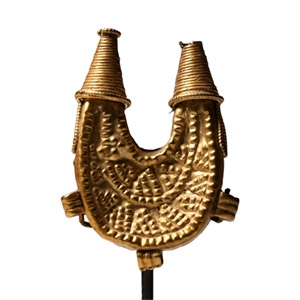
Sarmatian Gold Decorated Earring
9th-early 11th century A.D.Sold for (Inc. bp): £520
Hollow-formed U-shaped body with spiral-wound finial wire cones and granulated collars, repoussé pounced finial with beaded wire lateral loops, ribbed loops to the outer face; complete with custom-made stand. 8.87 grams, 41 mm (20.04 grams total, 68 mm including stand)
Acquired on the London art market, 1990s. Private collection, London. This lot has been cleared against the Art Loss Register database, and is accompanied by an illustrated lot declaration signed by the Head of the Antiquities Department, Dr Raffaele D'Amato. -
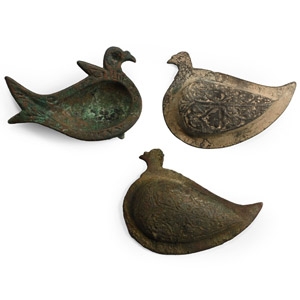
Western Asiatic Bronze Cosmetic Dish Group
12th-13th century A.D.Estimate: £150 - 200 (+bp*)
Opening Bid: £75
Comprising three shallow dishes, each comma-shaped with incised hatching to the narrow rim, bird-head detailing to the spur; one with three stub feet. 114 grams total, 74-78 mm
Ex London, UK, gallery, 1971-early 2000s. London, UK, collection. This lot has been cleared against the Art Loss Register database, and is accompanied by an illustrated lot declaration signed by the Head of the Antiquities Department, Dr Raffaele D'Amato.
